Definition
Мебель в лобби отеля is the contract-grade seating, tables and reception joinery that furnish a hotel’s arrival and public areas — sofas, lounge chairs, benches, coffee and side tables and the reception desk — built to survive constant public use, meet fire-safety regulations and carry the property’s standard from the first second a guest walks in.
A hotel lobby earns its keep in the first ten seconds of a stay, and the furniture does most of that work. The sofas, lounge chairs, benches and reception desk a guest meets on arrival set the property’s standard before anyone reaches the lift — which is why choosing hotel lobby furniture is a contract decision, not a decorating one. This guide walks a hotel, developer or interior studio through the whole brief: the pieces a lobby needs, the materials and fire rating that decide what it can take, how to lay it out, and how to budget and source it without surprises.
We build this furniture for a living, so every point here comes from the maker’s side of the table. A lobby runs a different shift to a guest room: it never closes, it carries the heaviest footfall in the building, and it stays on show to every guest, every visitor and every camera all day. Furniture that suits a home or even a quiet office gives up fast under that load. The pages below cover what changes when furniture has to perform in a public hotel space, and what to specify so a lobby still looks deliberate years after it opens.
Why Hotel Lobby Furniture Is a Contract Decision
The lobby is the one room every guest uses and the one space a property cannot hide. It greets arrivals, holds people waiting to check in, hosts informal meetings, and frames the photographs that sell the hotel online. Furniture that has to do all of that, all day, for years, sits in a different category to anything residential. Treat the lobby as a contract brief from the first sketch and the right choices follow; treat it as decoration and the space tires within a season.
The Lobby as the Property’s First Handshake
A guest forms a judgement about a hotel the moment the doors open, and the lobby furniture carries that first impression. A confident arrangement of lounge seating, a well-made reception desk and a coffee table that holds its finish tell a guest the property runs to a standard. Tired, mismatched or sagging pieces say the opposite before a guest reaches the desk. Because the lobby works this hard on perception, hotels invest in it out of proportion to its floor area — the return shows up in reviews, in repeat stays and in the rate a property can hold.
Contract-Grade Versus Residential — What Actually Changes
Contract-grade hotel lobby furniture differs from residential furniture in ways a buyer feels only after the order ships. The frames use heavier timber or welded steel, the foam holds a higher density so a sofa keeps its shape under hundreds of sitters a week, and the upholstery meets a commercial abrasion rating and a fire standard rather than a domestic one. Joints take reinforcement, legs take protection against vacuum cleaners and trolleys, and surfaces wipe clean instead of marking. None of this is visible in a showroom photograph, and all of it decides whether the lobby still looks right in year five. Specifying commercial hotel lobby furniture from the start costs a little more once and saves the early replacement that residential furniture forces.
One Space, Several Jobs
A hotel lobby is rarely one room doing one thing. It is an arrival hall, a waiting area, a lounge, a meeting spot and a thoroughfare, often all within the same open floor. The furniture has to serve each of those jobs without the space feeling cluttered or confused, which is why a lobby brief reads more like a layout problem than a shopping list. Get the mix of seating, tables and reception joinery right and the lobby flexes through the day — busy at check-out, calm mid-afternoon, social in the evening — without anyone rearranging a thing.
A guest judges a hotel in the first ten seconds. In a lobby, the furniture makes that judgement for you.
What Goes in a Hotel Lobby: The Pieces
Most hotel lobbies draw from the same family of pieces, scaled and styled to the property. Knowing what each one does — and where its depth lives — keeps a specification tidy and stops two pieces fighting for the same job. The list below is the working vocabulary of hotel lobby furniture, from the sofas a guest sinks into to the reception desk that anchors the room.
Быстрый ответ
What furniture goes in a hotel lobby? A typical hotel lobby needs lounge seating (sofas, settees and lounge chairs), occasional tables (coffee and side tables), a reception or front desk, and supporting pieces such as benches, console tables and luggage storage. Larger lobbies add defined seating zones, communal tables and screens or planters to divide the space. Every piece should be contract-grade and fire-rated for public use.
Lobby Seating — Sofas, Settees and Benches
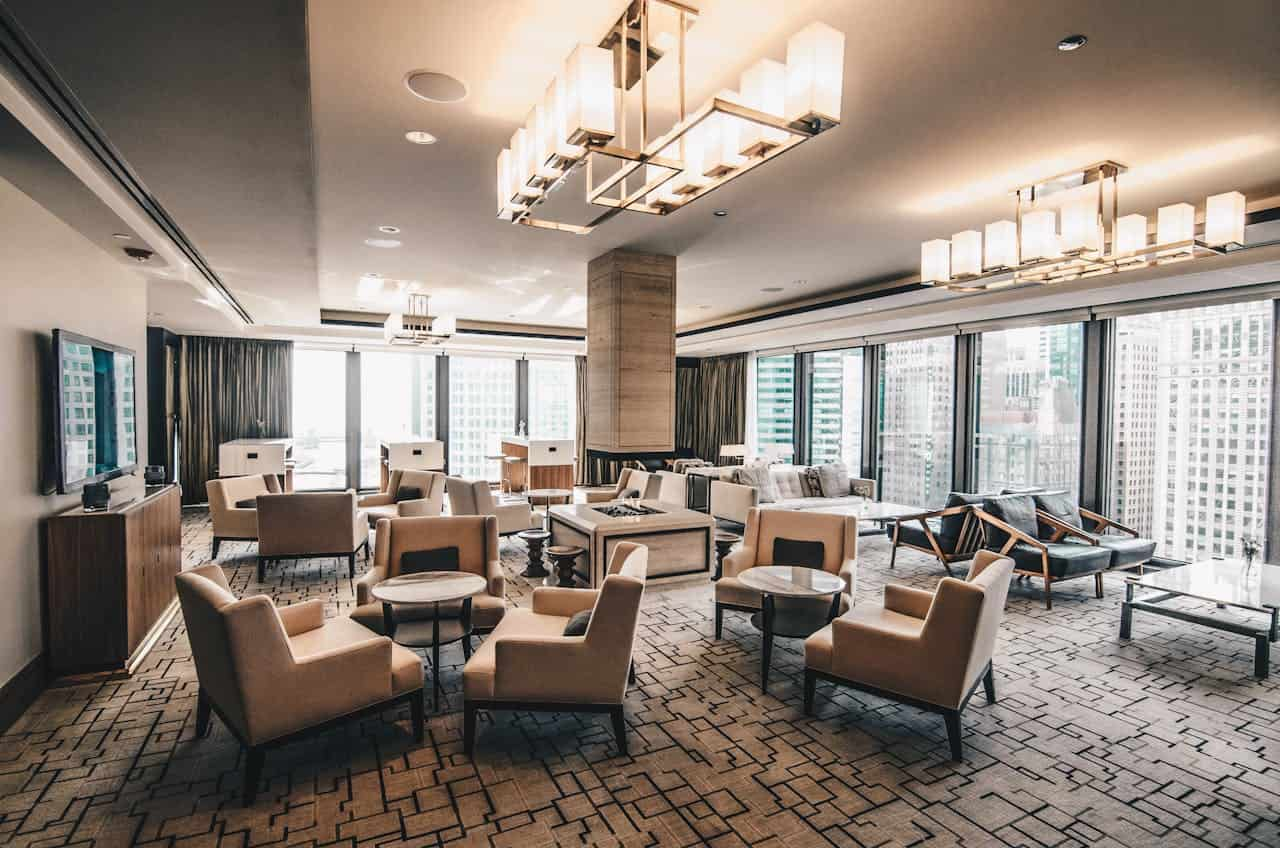
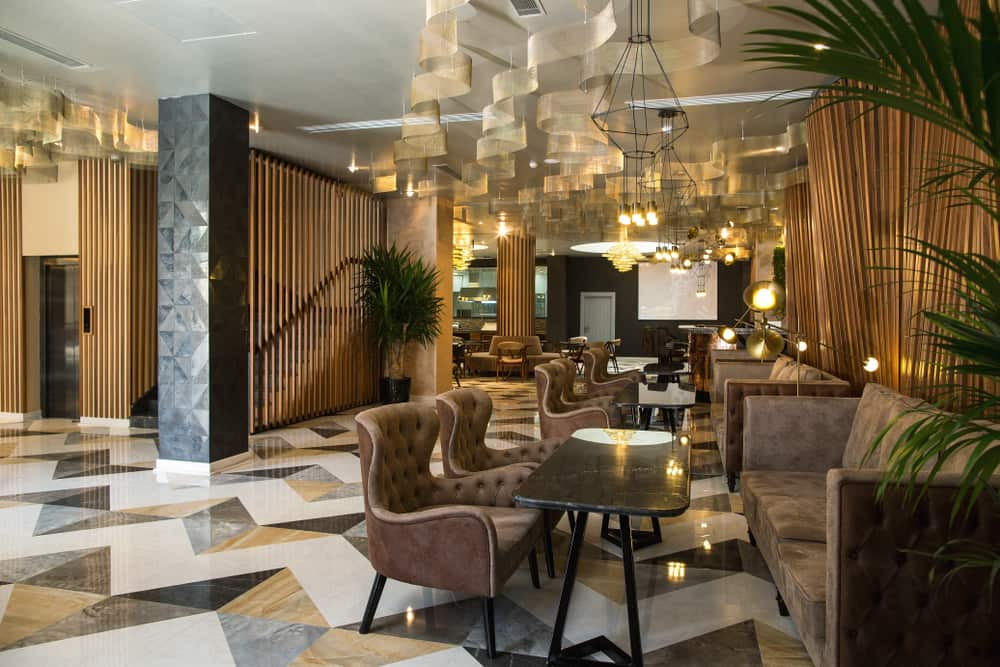
Seating is the heart of hotel lobby furniture and usually the largest line in the budget. Sofas and settees anchor the lounge zones, a round settee or a banquette can hold the centre of a larger lobby, and benches give quick, hard-wearing perches near the entrance and the lift. Because lobby sofas take constant public use, they need contract frames, high-density foam and abrasion-rated, fire-retardant upholstery — a domestic three-seater flattens and stains within months in this setting. We cover the seating range in depth, including the contract build behind a good hotel lobby sofa, on our hotel lobby seating страница.
Lobby Chairs and Lounge Seating
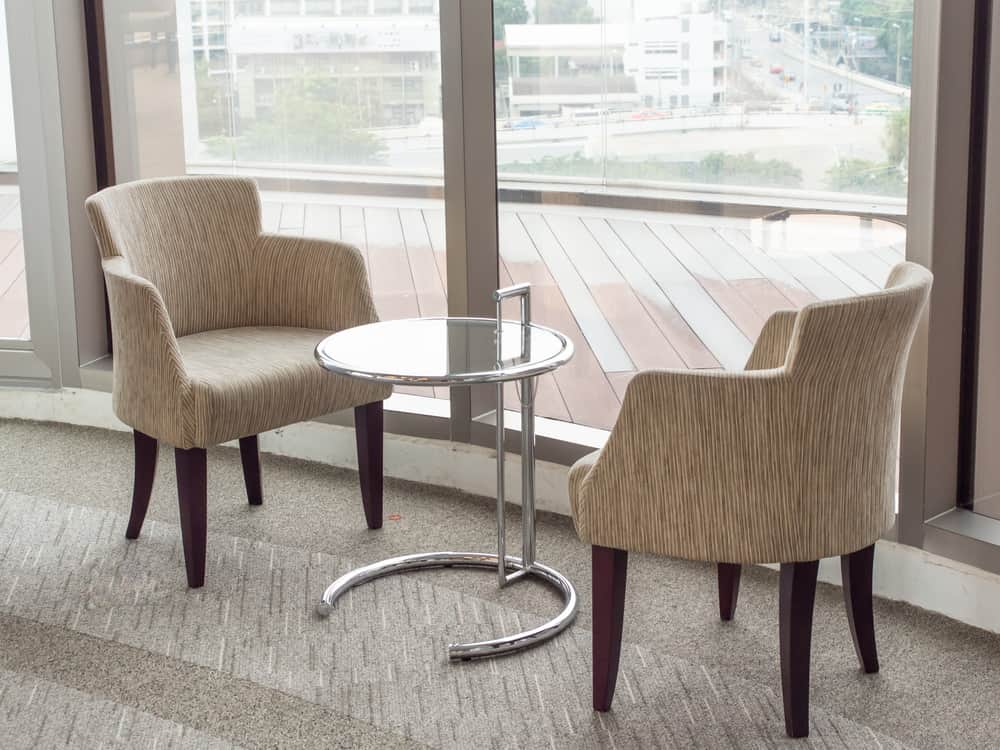
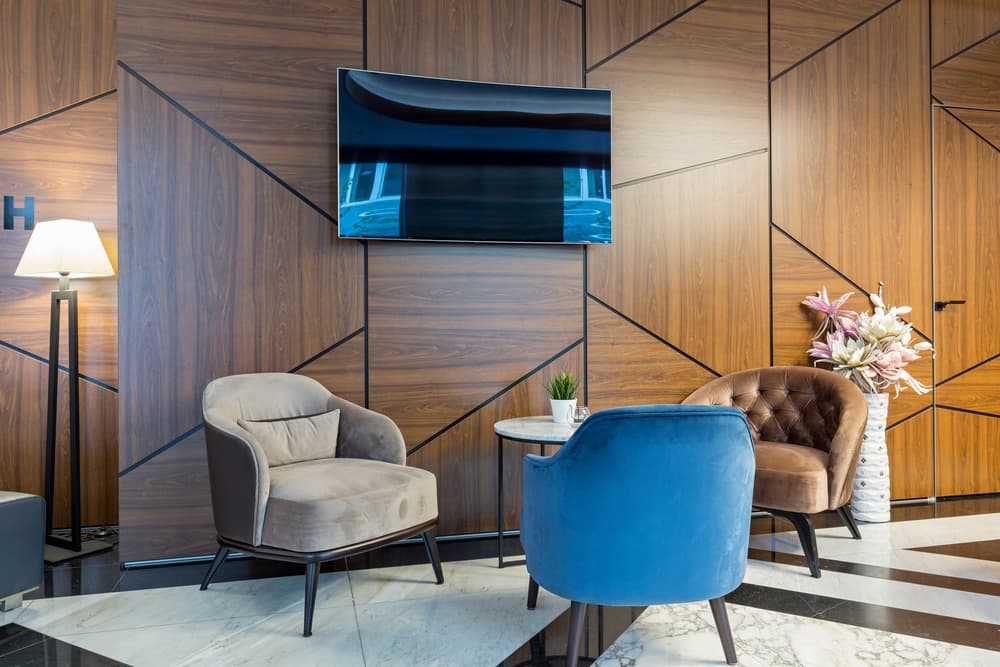
Lounge chairs and accent chairs do the social work of a lobby: they let two people sit and talk, fill the corners of a seating zone, and add the colour and character a long sofa cannot. Club chairs, tub chairs and high-back lounge chairs each suit a different mood, and the right mix keeps a lobby from reading as a waiting room. The choice of frame, foam and fabric matters as much here as on a sofa, since a lobby chair is sat in, leaned on and moved every day. Our guide to hotel lobby chairs goes through the seating types, comfort and the contract build in detail, and the wider hotel lounge furniture guide covers softer lounge and waiting zones beyond the lobby itself.
Tables — Coffee, Side and Console
Tables turn seating into a usable zone. A coffee table holds the centre of a lounge group and gives guests somewhere to set a drink, a laptop or a key card; side and end tables tuck beside chairs for the same job at arm height; and a console table dresses the wall behind a sofa or frames the entrance. In a lobby these tables meet feet, bags, drinks and the occasional stand, so the top has to resist scratches, heat and water — a sealed stone, a quality laminate or a protected veneer earns its place where a soft, untreated top would not. Size the coffee table to the seating group, not the catalogue, so the proportion reads right once the sofas are in.
The Reception Desk
The reception desk is the working heart of the lobby and often the single most photographed piece in the building. It has to look the part, stand up to constant leaning and equipment, and work for the staff behind it — the right height, the right cable management, an accessible lower section, and a finish that wipes clean at the end of a shift. Because it is bespoke joinery as much as furniture, the reception desk usually leads the lobby’s look: its material and form set the tone that the seating and tables then follow. A contract manufacturer builds the desk and the loose furniture as one coordinated package, so the front desk and the lounge read as a single, deliberate space.
Communal and Co-Working Tables
More lobbies now double as informal work and meeting spaces, and the furniture has to answer that. A communal table — a long, robust shared surface with power built in — lets guests work on laptops, hold a quick meeting or eat between check-in and their room, and it earns its floor space several times a day. Modular reception and lounge pieces extend the same idea, letting a property reconfigure the seating for an event one evening and a quiet morning the next. Where a lobby serves business guests, plan at least one communal or co-working zone with accessible power and a hard-wearing top, and the space works for the way people actually use a modern lobby.
A Piece-by-Piece Specification Table
The table below sets out the core pieces of hotel lobby furniture, the job each one does and what to specify so it survives public use. Use it as the skeleton of a lobby brief, then scale the mix to the property and the floor. For the fuller picture beyond the lobby, our guide to the типы гостиничного оборудования a property needs sets this range against guestrooms, dining and back-of-house.
| Piece | Role in the lobby | What to specify | Typical materials |
|---|---|---|---|
| Lobby sofa / settee | Anchors a lounge or waiting zone | Contract frame, high-density CMHR foam, fire-rated abrasion-tested upholstery | Hardwood frame, performance fabric or faux leather |
| Lounge / accent chair | Fills and softens seating groups | Comfort over long sits, stable base, cleanable fabric, stackable only where stored | Timber or metal frame, upholstered seat and back |
| Bench / round settee | Quick perch near entrance or lift; centrepiece in large lobbies | Robust base, wipe-clean top, scale to the floor | Upholstered top, timber or metal base, stone centre option |
| Стол для кафель | Centre of a lounge group | Scratch, heat and water-resistant top; size to the sofa group | Sealed stone, quality laminate, protected veneer |
| Side / console table | Arm-height surface; dresses walls and sofa backs | Stable footprint, durable top, finish to match the scheme | Veneer, laminate, metal and stone combinations |
| Рецепция | Working front desk and visual anchor | Bespoke joinery, staff ergonomics, cable management, accessible section, wipe-clean top | Veneer or laminate carcass, stone or solid-surface top |
| Luggage / support pieces | Storage, screens, planters, occasional tables | Match the scheme; zone the space without blocking flow | Timber, metal, upholstered and stone elements |
Beyond these core pieces, larger lobbies layer in communal tables for laptop work, screens or planters to divide an open floor, and hotel foyer furniture that softens the transition from the entrance into the lounge. The same contract rules apply to every one of them: built for public traffic, cleanable, and fire-rated.
Materials, Durability and Fire Safety
Material is where hotel lobby furniture either lasts a refurbishment cycle or fails in a season. A lobby sees more bodies, bags, drinks and cleaning than any other public area in the hotel, so every surface and every fill has to earn its place against that load. Run each piece past the same three questions — will it take the traffic, will it clean, and does it pass fire — before the look enters the conversation. Our guide to the materials used in luxury hotel furniture goes deeper into how those choices play out across a property.
Upholstery for High-Traffic Seating
Lobby seating lives or dies on its upholstery. Contract fabric for a hotel lobby needs a high abrasion rating — tens of thousands of rubs on the Martindale or Wyzenbeek scale — plus stain resistance and a fire rating, because guests eat, drink and wait on this seating all day. Performance weaves, treated velvets and quality faux leather all suit a lobby; delicate domestic fabrics do not, and they show wear within months. Specify the fabric for the way the lobby actually runs, not for the swatch on the desk, and a sofa keeps its face for years instead of seasons.
Frames, Foam and What Holds the Shape
The part of lobby furniture a guest never sees decides how long it lasts. Behind the fabric, a reinforced hardwood or engineered frame keeps a sofa square under constant use, and high-density, combustion-modified foam holds its shape where a cheap foam flattens within a year. Ask what sits inside a piece, not only what wraps it — the frame and the foam separate a lobby sofa that still looks plump in year five from one that sags by year two. On chairs and benches, the equivalent check is the base and the joints, which decide whether a piece takes daily knocks without loosening.
Surfaces — Stone, Veneer and Laminate Tops
Table tops, reception surfaces and console tops take the hardest physical use in a lobby: hot cups, wet glasses, keys, laptops and the steady scuff of bags. Sealed natural stone and engineered stone shrug all of that off and read as quality, which is why they suit reception desks and statement coffee tables — our guide to natural stone for hotels covers the options and where each one earns its place. A quality laminate or a well-protected veneer covers the rest at a lower cost, with the right edge banding to resist chipping. Match the top to the job: stone where the surface is on show and worked hard, laminate or veneer where budget matters more than the statement.
Bases, Legs and Floor Protection
The base of a piece takes abuse a buyer rarely thinks about until it shows. Sofa and chair legs meet vacuum cleaners, trolleys and feet every day, so a contract piece uses a solid timber or welded-metal base with protected or replaceable feet rather than a thin domestic leg that scuffs and loosens. Glides and floor protectors keep both the furniture and the lobby floor intact, and a recessed or sled base lets housekeeping clean underneath without lifting the piece. These details cost little and decide whether a lobby still looks tidy at the skirting line in year three — the place wear shows first and a guest notices last.
Fire rating is the first gate, not a final detail
Upholstered lobby furniture has to meet the local fire-safety standard — fire-retardant fabric and foam, certified by the maker — and a piece that fails compliance cannot go in a public area however good it looks. Treat the fire rating as the first gate every sofa and chair has to clear, not a box to tick once the design is final. A serious contract manufacturer supplies the certificates as standard and will not ship upholstery that does not pass, and a property keeps those certificates on file because an inspector may ask for them long after the lobby opens.
Cleanability and Maintenance
Housekeeping cleans a lobby more than any other public space in the hotel, so furniture that cleans easily saves money every single day. Wipe-clean tops, removable or treated seat cushions, and bases that a vacuum can reach all keep a lobby looking fresh without slowing housekeeping down. The opposite — fussy trims, light untreated fabrics, awkward gaps that collect dust — turns daily cleaning into a chore and shows wear fast. Specify for the housekeeping trolley as much as for the guest, and the lobby holds its look between deep cleans.
Planning the Layout and Zoning
Hotel lobby furniture only works once it is laid out well. The same sofas and tables can read as a calm, confident lounge or as a cluttered waiting room depending entirely on the plan. A lobby layout balances three demands at once — flow, comfort and capacity — and the furniture has to deliver all three without the space feeling either empty or crammed. Settle the layout against the real floor plan, not the render, so the proportion reads right when the pieces arrive.
Reading the Space and the Traffic Flow
Every lobby has a few fixed lines a guest walks: door to desk, desk to lift, door to lounge. The furniture has to sit clear of those lines, never across them, so people move through the space without weaving around a sofa. Map the routes first, place the seating in the calm pockets either side, and the lobby flows even at its busiest. A common mistake is filling the centre of the floor and forcing traffic to the edges; the better plan keeps the through-routes open and gathers the furniture into defined zones along them.
Creating Seating Zones
A good lobby reads as a set of small, deliberate seating zones rather than a field of chairs. A sofa, two lounge chairs and a coffee table on a rug make one zone; a pair of tub chairs and a side table make another; a bench by the window makes a third. Each zone gives a different kind of guest somewhere to land — a group waiting together, two people in a quiet conversation, one guest with a laptop — and the gaps between them keep the room breathing. Zoning is where the choice of pieces pays off, and it is the heart of good hotel lobby design.
Быстрый ответ
How much seating does a hotel lobby need? As a working rule, plan lobby seating for roughly five to ten per cent of the hotel’s room count at peak — enough to absorb a check-in rush and a few waiting groups without crowding the floor. Split that across two or more seating zones rather than one large block, keep clear circulation routes of at least a metre between zones, and leave space for accessible seating. Scale up for conference or resort hotels, where the lobby doubles as a social space.
Clearances, Accessibility and Circulation
The space between the furniture matters as much as the furniture itself. Leave generous circulation routes so guests with luggage, wheelchairs or strollers move through easily, and keep at least one clear, level path from the entrance to the reception desk. Coffee tables sit close enough to the seating to use but far enough to pass, and no zone should box a guest in. Designing the clearances and accessible seating into the layout from the start — rather than squeezing furniture in afterwards — keeps the lobby compliant, comfortable and calm under pressure.
Scaling the Plan to the Property
A boutique hotel lobby and an airport-hotel lobby need the same thinking at very different scales. A small property might run two tight seating zones and a compact reception desk; a large convention hotel needs communal tables, multiple lounge clusters and benches to absorb a coach-load at once. The furniture mix flexes to match, but the principle holds at every size: clear routes, defined zones, and enough seating to take the peak without filling the floor. Plan the lobby for its busiest ten minutes, and it works comfortably for the other twenty-three hours.
Style, Brand Standard and First Impressions
Once you settle the pieces and the plan, style decides how the lobby feels. Hotel lobby furniture carries the property’s identity more visibly than any other furniture in the building, so the look has to match the class of the hotel and the brand it answers to. Style is the layer guests notice first and remember longest — and the one that sells the property in every photograph. We go further into how these choices shape perception in our piece on the impact of furniture design on the hotel guest experience.
Matching Furniture to the Property’s Class
A lobby’s furniture should read at the level guests expect from the rate they pay. A luxury hotel lobby carries deeper upholstery, richer materials and statement pieces; a focused-service or budget property reads cleaner and simpler, with hard-wearing furniture that still looks deliberate. Neither is harder to specify than the other — the skill is matching the furniture to the property so the lobby feels honest rather than over- or under-dressed. Modern hotel lobby furniture suits a contemporary brand, while a classic property leans on timber, warmer tones and traditional forms.
Modern, Luxury and Boutique Directions
Most lobby briefs land in one of a few directions. A modern lobby runs clean lines, low seating and a restrained palette; a luxury lobby layers texture, stone and bespoke joinery for a richer feel; a boutique lobby leans into character, colour and one or two pieces that tell the property’s story. The furniture supports each direction in its frame, finish and fabric, and a contract maker builds to the chosen direction rather than offering a fixed range — which is what lets a lobby feel specific to the property rather than picked from a catalogue.
The lobby is the photograph that sells the hotel
The lobby is the shot a property leads with online — on its own site, on the booking platforms, in every guest’s photos. That single image does more to sell rooms than any other furniture in the building, which means the spend on good hotel lobby furniture returns far more than its share of the budget. A confident, well-made lobby photographs as a property worth the rate; a tired one undercuts the price before a guest reads a single review. For a space that does this much marketing on its own, the lobby is the last place to economise on the furniture.
Coordinating with Lighting, Rugs and Finishes
Furniture never works alone in a lobby. Lighting sets the mood, rugs define the seating zones, and the wall and floor finishes frame everything — and the furniture has to sit inside all of it as one scheme. Choose the upholstery against the rug and the wall tone, the table tops against the floor, and the reception finish against the lighting, so nothing fights. A contract manufacturer that supplies the seating, the tables and the reception joinery together keeps that coordination tight, because one workshop controls the finishes across every piece. The seating types and comfort side of this sit in our hotel lobby chairs guide.
Sourcing: Custom, Cost and Contract Terms
With the pieces, materials, plan and style settled, the brief turns to sourcing — and this is where a contract manufacturer earns its place. Hotels buy lobby furniture as a coordinated project rather than picking it off a shelf, so the questions that matter are whether a maker can build it to your design, what drives the price, and the terms on which it ships. Getting these right protects both the look and the budget, and our wider guide to how hotels source their furniture walks through the process property-wide.
Off-the-Shelf Versus Custom and Bespoke
A property can furnish a lobby from a standard range, go fully bespoke, or land somewhere in between — and most projects sit in that middle ground. Standard pieces cost less and ship faster; bespoke pieces match a brand standard, a tricky floor plan or a specific look exactly. Custom hotel lobby furniture lets a property size a sofa to a wall, match a fabric to a scheme, or build a reception desk no catalogue carries. A contract maker who designs and manufactures in one place can move along that scale freely, adjusting a standard frame or building from a drawing, so the lobby fits the brief rather than the brief bending to the range. Share an AutoCAD drawing or a reference, and a serious manufacturer returns a sample before the full run.
Cost, Budget and What Drives the Price
The cost of furnishing a hotel lobby spans a wide range, because a maker can specify the same room modestly or richly. The drivers are predictable: the quantity and size of the seating, the grade of the upholstery, whether the tops are stone or laminate, how much is bespoke, and the level of finish on the reception desk. A focused-service lobby costs a fraction of a luxury one, and most of the difference sits in the materials rather than the labour. The honest way to budget is piece by piece against the spec table earlier in this guide, then to ask a manufacturer for factory pricing on the actual list — not to work from a single headline figure. Buying direct from the factory removes the layers that inflate a lobby budget without adding quality.
Lead Times, Terms and Multi-Property Rollouts
Contract furniture runs on lead times and shipping terms a buyer needs to plan around. As a manufacturer we ship hotel lobby furniture on FOB or CIF terms with a four-to-eight-week lead time and a two-year warranty, made to the project and delivered worldwide. For a group rolling out several properties, the same drawings and finishes repeat across sites, so a brand standard lobby looks identical in every location and reorders run quickly. Settle the terms, the lead time and the rollout plan as part of the order, not after it, and a lobby — or a portfolio of them — lands on schedule and on brand.
Sustainable and Eco-Friendly Lobby Furniture
Sustainability now sits in many lobby briefs, and it is a fair question to put to a manufacturer. Eco-friendly hotel lobby furniture comes from responsibly sourced timber, lower-impact foams and fabrics, durable construction that delays replacement, and a factory that controls its own waste and finishing. The most sustainable lobby furniture is often simply the longest-lasting — a contract sofa that survives ten years beats a cheaper one replaced twice in the same span, on cost and on footprint alike. Ask a maker about certified materials and the build quality that keeps furniture out of a skip, and the lobby answers both the brand standard and the environmental brief at once.
Choosing a Lobby Furniture Manufacturer
The supplier decides whether all of the above holds together. A manufacturer that builds for hospitality understands fire compliance, contract-grade construction and the realities of a working lobby, and supplies the certification, the samples and the after-sales a hotel project needs. Look for a maker who designs and produces in one place, supplies hotel lobby seating, tables and reception joinery as one coordinated package, and stands behind the work with a warranty — rather than a reseller assembling pieces from several sources. The right manufacturer turns a lobby brief into a single, deliberate space; the wrong one leaves a property managing a patchwork.
Lobby Furniture That Lasts the Refurb Cycle
Good hotel lobby furniture earns its place for the whole refurbishment cycle — seven to ten years of constant public use without sagging, staining or dating. Choose the pieces the lobby actually needs, insist on contract-grade and fire-rated materials, lay them out for flow and capacity, match the style to the property, and source them as one coordinated package, and the lobby quietly carries the property’s first impression for years. Each piece is part of a wider set, and specifying them together — seating, tables and reception desk — is what makes a lobby read as one room rather than a collection of furniture. If the seating already looks tired before that cycle is up, our piece on the signs a hotel needs renovation sets out the wear to watch for.
Bring in a manufacturer who builds hotel lobby furniture to a contract standard — fire-rated, custom to your brand, on FOB or CIF terms with a four-to-eight-week lead time and a two-year warranty — and the furniture that greets every guest holds its look as long as the property needs it to. Specify the lobby once, properly, and it keeps making the right first impression long after the doors open.
Часто задаваемые вопросы
What furniture goes in a hotel lobby?
A hotel lobby needs lounge seating — sofas, settees and lounge chairs — plus coffee and side tables, a reception desk, and supporting pieces such as benches, console tables and luggage storage. Larger lobbies add communal tables and screens or planters to divide the floor into seating zones. Every piece should be contract-grade and fire-rated, because a lobby takes constant public use all day.
What is the best material for hotel lobby furniture?
The best materials for hotel lobby furniture are contract-grade ones built for high traffic: abrasion-rated, stain-resistant and fire-retardant upholstery over high-density foam and reinforced frames for the seating, and sealed stone, quality laminate or protected veneer for the table and reception tops. Domestic fabrics and untreated finishes wear and stain fast in a lobby, so durability and cleanability come before the look.
Does hotel lobby furniture need to be fire-rated?
Yes. Upholstered furniture in a hotel lobby must meet the local fire-safety standard, which means fire-retardant fabric and foam certified by the maker. A piece that fails compliance cannot go in a public area however good it looks, so the fire rating is the first thing to confirm. A contract manufacturer supplies the certificates as standard, and the property keeps them on file in case an inspector asks.
How much does it cost to furnish a hotel lobby?
The cost of furnishing a hotel lobby varies widely, because a maker can specify the same room modestly or richly. The main drivers are the quantity and size of the seating, the grade of the upholstery, whether the tops are stone or laminate, how much is bespoke, and the finish of the reception desk. The most reliable way to budget is piece by piece, then to ask a manufacturer for direct factory pricing on the actual list rather than working from a single headline figure.
Can hotel lobby furniture be custom-made for several properties?
Yes. Contract manufacturers build hotel lobby furniture to a brand standard, so the same drawings, fabrics and finishes repeat across every property in a group and reorders run quickly. Custom lobby furniture lets a hotel match a fabric to a scheme, size a sofa to a wall, or build a reception desk no catalogue carries. Sharing a drawing or reference, then approving a sample, gives an identical, on-brand lobby across a whole portfolio.
What is the difference between contract and residential lobby furniture?
Contract lobby furniture suits constant public use, where residential furniture suits a home. The frames are heavier, the foam is higher density, the upholstery meets a commercial abrasion and fire rating, and the surfaces wipe clean. None of this shows in a showroom photo, but it decides whether a lobby still looks right in year five. Residential furniture in a hotel lobby sags, stains and dates within a season under the same load.