Вкратце
A hotel bed feels so good because it is a system, not a single product: a quality medium-firm mattress on a supportive bed base, a plush topper, crisp laundered linens and plump pillows — each layer chosen, maintained and replaced on a schedule a home rarely keeps.
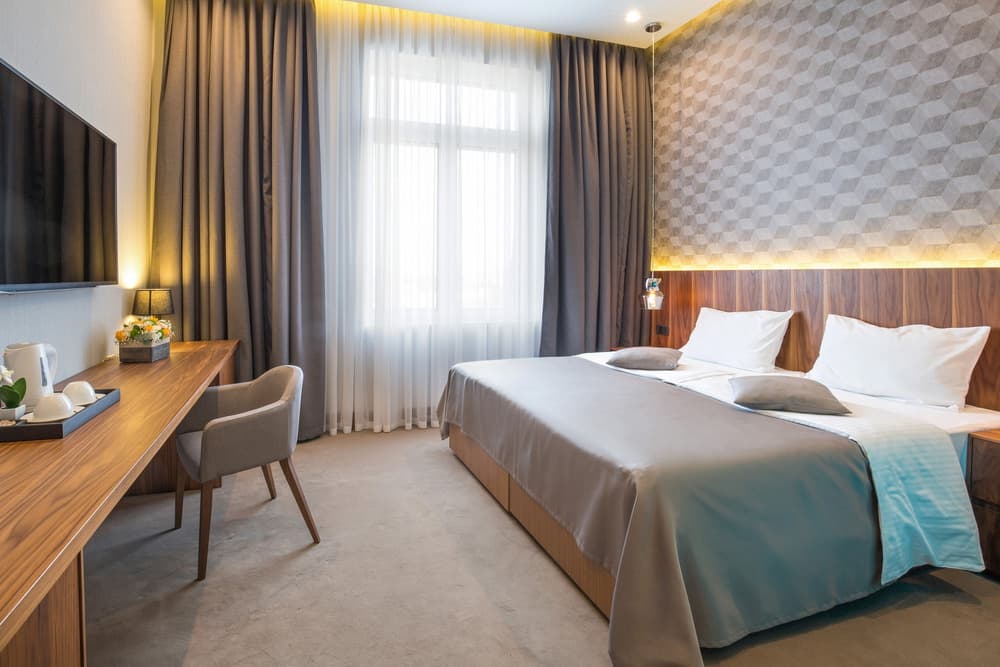
There is a moment every traveller knows: you drop your bags, fall back onto the bed, and it just feels right. So why are hotel beds so comfortable, when the one at home so often is not? The honest answer is that a hotel engineers the bed as a layered system, and a hotel buys it as мебель гостиничных номеров built to a contract standard rather than picked off a showroom floor. Each layer has a job, and the comfort you feel is all of them at once.
This guide takes the bed apart layer by layer, from the base under the mattress to the last pillow on top, and explains what hotels do that homes usually skip. It is written from the maker’s side, so it covers not just what feels good but why it lasts — because in a hotel the bed has to feel this good on night one and night a thousand. For the wider room around it, our guide on creating a comfortable hotel room picks up where the bed leaves off. By the end you will know exactly what to copy at home, and what only a hotel’s routine can really deliver.
Why Are Hotel Beds So Comfortable? It Starts With the Mattress
Strip away the linens and the pillows and the bed comes down to two things: a mattress and the base it sits on. Get these right and everything above them feels better; get them wrong and no amount of soft bedding can rescue the night. This is where a hotel bed and a home bed first part ways, and almost everything a guest praises later traces back to these two layers being right.
The Mattress Hotels Choose
Hotels rarely chase the softest mattress on the market. They choose a medium-firm one, usually pocket-sprung or hybrid, because it supports the widest range of guests — the side sleeper and the back sleeper, the light traveller and the heavy one all settle on the same bed. Pocket springs move independently, so weight presses in where it needs to and stays supportive everywhere else, and a quality build holds that support for years rather than dipping into a hollow. Firm enough to hold the spine, soft enough on top to feel welcoming: that balance is the first reason a hotel mattress feels considered where a sagging home one does not. It is a tested choice, not a luxury splurge, because the softest mattress for one guest is wrong for the next, so hotels pick the one that works for nearly everyone.
Support Without the Sag
The reason a medium-firm hotel mattress stays comfortable is that it holds its shape. A cheaper mattress feels fine in the showroom, then softens unevenly within a year or two, dipping where the sleeper lies and leaving a ridge down the middle of a double. A contract mattress uses denser foams and better-gauged springs, often with reinforced edges so the sitting edge does not collapse, and it keeps its profile flat and even for far longer. That even support is half of why hotel beds are so comfortable night after night: the surface you lie on holds the same shape in year five as it had on the first night.
The Bed Base Does Half the Work
The layer guests never think about is the one under the mattress. A proper bed base — sprung or solidly built — gives the mattress a stable, quiet foundation, absorbs movement so a restless partner does not wake the other, and lifts the bed to an easy sitting height. It also protects the mattress, sharing the load so the surface wears evenly and lasts longer. Pair a good mattress with a flimsy frame and the bed rocks, creaks and dips early; pair it with a contract base and the whole thing feels solid underfoot and under back. Our hotel mattresses and bed bases are built as a matched pair for exactly this reason. Specified together, base and mattress wear at the same rate and stay quiet and supportive for the life of the room.
Why a Hotel Mattress Beats the One at Home
Most home mattresses soldier on for a decade or more, slowly losing the support they started with, and the sleeper rarely notices the decline. Hotels do not allow that. They buy contract-grade mattresses made for heavy nightly use and replace them on a set cycle, so guests almost always lie on a mattress still in its prime. Add professional cleaning, regular rotation and a base built to share the load, and the hotel bed quietly beats the one at home not because the home mattress was bad on day one, but because the hotel never lets its bed grow tired. A home bed loses a little comfort every year so gradually that nobody decides to fix it; a hotel simply never gives its bed the chance.
A guest forgets the wallpaper by checkout. They remember whether they slept well — and that is the bed.
The bed drives the review more than any other piece
Ask guests what made a stay good and sleep quality comes up before the decor, the view or the bathroom. The bed carries the room’s reputation: a great night turns into a five-star review and a rebooking, while a poor one undoes everything else the property got right. That is why a serious hotel spends on the bed out of proportion to its footprint — it earns the return that the rest of the furniture cannot.
The Layers That Make a Hotel Bed
Above the mattress sits a stack of layers, each adding a specific kind of comfort. None of them works alone — the magic is the order and the quality of the whole pile. The table below sets out the layers and the small hotel trick behind each one. Read it from the bottom up and you are reading the order housekeeping builds the bed in every morning.
Быстрый ответ
Why do hotel beds feel so comfortable? A hotel bed stacks a supportive bed base, a medium-firm mattress, a plush topper, crisp laundered sheets, a plump duvet and several pillows into one layered system. No single layer does it alone — the comfort comes from good components working together and kept fresh through constant maintenance.
| Layer | What it adds | The hotel trick |
|---|---|---|
| Подушка для кровати | A stable, quiet foundation | A sprung or solid contract base, not a cheap frame |
| Матрас | Core support and comfort | Medium-firm, pocket-sprung or hybrid, replaced on a cycle |
| Topper | A soft, cloud-like surface | A plush topper over a supportive mattress |
| Сетки | A crisp, cool feel on the skin | Quality cotton, freshly laundered and pressed |
| Duvet | Light, even warmth | A plump duvet in a clean, crisp cover |
| Ковры | Support and a sense of plenty | A pillow menu in several firmnesses |
The Mattress Topper Nobody Sees
The secret behind that plush, cloud-like first impression is usually a topper. A hotel lays a soft mattress topper over the firm, supportive mattress, so the surface gives a gentle, cushioned welcome while the support underneath stays intact. It is the best of both worlds — a body that holds you up and a top that wraps around you. The topper also takes the daily wear, protecting the mattress beneath and keeping the whole bed feeling fresh. Guests credit the mattress for the softness they feel, but more often than not it is the hidden topper doing the work. Replace a flattened topper and a tired-feeling bed comes back to life without anyone touching the mattress at all.
Crisp, High-Quality Linens
Run your hand across a hotel sheet and you feel the difference at once: cool, smooth and crisp, with a slight weight to it. Hotels use good cotton, laundered and pressed to a standard a home washing machine cannot match, and they dress the bed tightly so the surface stays smooth rather than rumpling under you. White is no accident either — it signals cleanliness and lets housekeeping wash everything to the same high heat. That crisp, cool, spotless sheet is a large part of why a hotel bed feels luxurious before you have even pulled back the duvet.
The Duvet and the Layers on Top
Between the crisp sheet and the pillows sits the duvet, and hotels treat it as carefully as everything else. A plump, evenly filled duvet gives light, consistent warmth without the weight of old-fashioned blankets, and a clean, well-fitted cover keeps it fresh and easy to launder between guests. Many hotels build the bed up in layers — a fitted sheet, a flat sheet, the duvet and a runner across the foot — so the bed looks tailored and the guest can adjust the warmth by peeling a layer back. The result suits a warm sleeper and a cold one without either having to ask, and it answers much of the question every tired traveller asks at check-in: why are hotel beds so comfortable to climb into at night?
The Pillow Menu
The pile of pillows on a hotel bed does two jobs. It gives every guest a choice — a firmer one to prop up and read, a softer one to sink into — and it signals abundance, a small luxury that makes the bed feel generous. Good hotels keep pillows plump and replace them before they flatten, and many offer a pillow menu so guests can request the feel they prefer. A bed crowned with several full, well-kept pillows reads as cared-for, and it lets each guest tune the one variable that bedding alone cannot fix: how their head and neck are held. For many guests that single adjustment decides whether they sleep well, which is why hotels treat pillows as a choice rather than a fixed part of the bed.
Why Are Hotel Beds So Comfortable Beyond the Bedding
The components explain most of the comfort, but not all of it. Two hotels can buy the same mattress and bedding and end up with very different beds, because part of the answer is not what the bed is made of but how a hotel keeps it. This is the part homes find hardest to copy, and it explains why two beds built from the same parts can feel a world apart.
Fresh, Rotated and Maintained
A hotel bed feels new because the hotel works to keep it that way. Housekeeping changes and launders the bedding between guests, so you lie on fresh, clean layers every stay. Staff rotate and flip mattresses on a schedule to spread the wear, swap out flattened pillows and tired toppers, and retire the whole mattress on a planned cycle long before it sags. None of this is glamorous, but it is the difference between a bed that feels cared-for and one that feels used. The maintenance is invisible to the guest and central to the comfort. Nobody sees the rotation schedule or the laundry standard, but they feel the result the moment they lie down on a bed that has been kept, not just bought.
The Perfectly Made Bed
The last reason is the one you see before you feel anything. A crisply made bed — taut sheets, square corners, a plump duvet, pillows stacked and standing — looks inviting in a way a thrown-together bed never does, and that first impression primes you to find it comfortable. The tight make also keeps the surface smooth and the layers in place through the night. A home bed made in ten careless seconds simply cannot send the same signal as a bed dressed with care, and that signal is part of why the hotel bed wins before you have lain down. Hotels know this, which is why they train housekeeping to make the bed to a standard rather than simply tidy it.
The Habits Homes Skip
Step back and the gap between a hotel bed and a home bed is mostly habit. A home launders sheets every week or two; a hotel changes them for every guest and presses them flat. A home keeps a mattress until it visibly sags; a hotel retires it on a calendar. A home owns a pair of pillows; a hotel keeps a deep stock and renews them before they flatten. None of these habits is expensive on its own, and you can borrow any of them at home, but kept together every night they remain a hotel routine, and they are a large part of why a hotel bed feels so much fresher than the one you left this morning. Put simply, that bundle of small disciplines is much of why hotel beds are so comfortable in a way a home bed, however good its mattress, struggles to match.
One cheap layer shows through the rest
The bed only feels when every layer matches the others. A fine mattress on a tired base rocks and creaks; crisp linens over a flat, worn topper still feel hard; a good bed made carelessly looks unloved. Hotels that get the bed right treat it as one specification — base, mattress, topper, linens and pillows ordered and renewed together — so no weak layer gives the game away.
What the Room Around the Bed Contributes
Guests credit the mattress for a good night, but part of the answer sits outside the bed. A hotel room controls light, sound and temperature far more tightly than a bedroom at home, and each of those shapes how the same mattress feels.
Darkness You Cannot Get at Home
Blackout curtains and a properly sealed pelmet drop a room to near-total darkness. Most bedrooms leak streetlight around the edges of a blind. That difference alone shortens the time a guest takes to fall asleep, and guests attribute the result to the bed.
The Headboard Does More Than Decorate
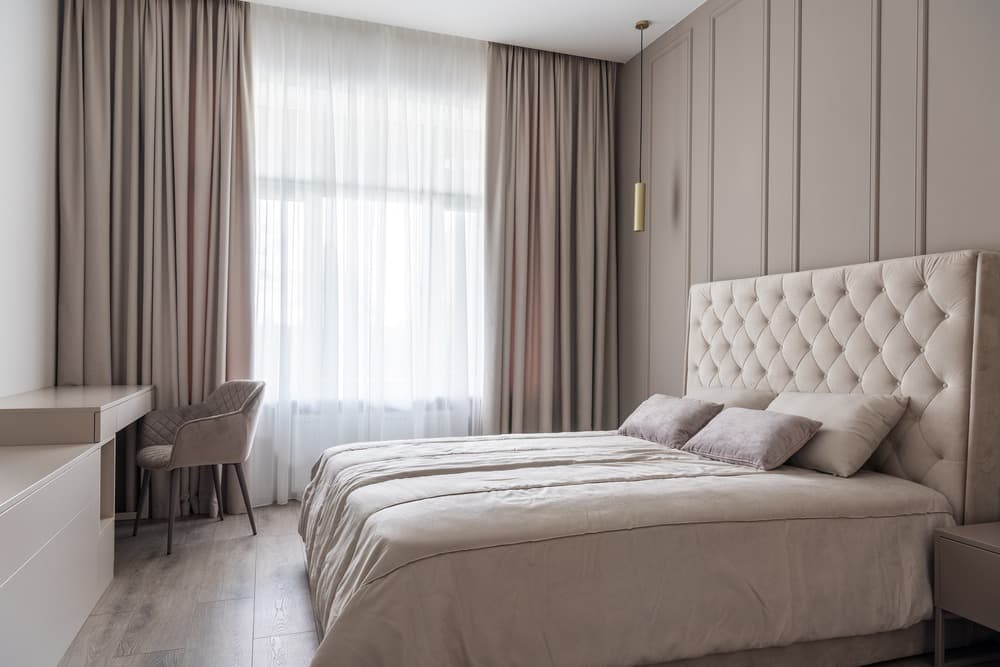
A full-width upholstered headboard absorbs sound, insulates the sleeper from a cold wall, and gives a guest something soft to sit against while reading. It also hides the wiring for reading lights and sockets, which keeps the bedside clear. Our столы для гостиной run wall to wall for exactly these reasons, and our guide to choosing headboards covers the sizing and upholstery decisions behind them.
Light, Sockets and the Reach Test
A guest should reach a reading light, a master switch and a socket without leaving the pillow. Get that wrong and the last action before sleep becomes standing up in a dark room. Nightstands with an integrated socket and a surface big enough for a phone, a glass and a book solve most of it.
Air, Sound and Surface
Hotels hold rooms between 18 and 21 degrees, which sits inside the range most people sleep best in. Solid doors, carpet and upholstered surfaces soak up the noise that bare walls bounce around. None of this is the bed, yet all of it decides how the bed performs.
Field insight
Fix the room before you upgrade the mattress
When sleep scores drop, operators reach for a new mattress first. Check the curtains, the corridor door seal and the night-time room temperature before signing that order. Those three cost a fraction of a mattress programme and they explain a surprising share of the complaints.
How to Specify a Hotel Bed for a Property
Everything above describes the guest experience. Buying it for two hundred rooms is a different exercise, and it comes down to six decisions.
1. Fix the Bed Sizes Before Anything Else
Room mix drives bed mix. Agree how many twins, doubles, king rooms and connecting rooms the property needs, then lock the sizes. Changing a bed size after production starts changes the base, the headboard, the linen order and sometimes the room layout.
2. Choose the Mattress for Ten Years, Not for the Sample Room
A mattress that feels perfect in a showroom can soften badly by year three. Ask for the spring count, the comfort layer densities and the manufacturer’s expected service life. Ask what happens at year five, because that is when a poorly chosen mattress starts generating complaints across a whole floor at once.
3. Match the Base to the Mattress
A pocket-sprung mattress on a slatted base with wide gaps sags between the slats within a year. Buy the mattress and the base together where you can. Our hotel mattresses and bed bases are built as matched pairs so the support layer under the mattress behaves the way the mattress expects.
4. Confirm the Fire Certificates for Your Market
Mattresses, bases and headboards all carry fire requirements in commercial accommodation, and the standard changes by country. Ask for the certificates at sample stage. Our explainer on Crib 5 covers the test that applies across much of the United Kingdom market.
5. Plan the Rotation Programme on Day One
Rotation only happens when housekeeping has a schedule and the labels to follow it. Ask the manufacturer to print a rotation label into the mattress border. A bed rotated every quarter outlasts an identical bed left alone by several years.
6. Order Spares With the First Container
Two spare mattresses per hundred rooms, a spare base and a spare headboard cost very little inside the original order and save a room from going out of service later. Spare headboard fabric matters most, because dye lots move and a replacement ordered in year four rarely matches.
| Decision | Ask the manufacturer | Почему это важно |
|---|---|---|
| Матрас | Spring type, comfort layer density, expected service life | Decides how the bed feels in year five, not year one |
| База | Sprung or platform, slat spacing, edge support | A mismatched base ruins a good mattress |
| Наклонный поднос | Fixing method, fabric rub count, fire certificate | Wall-fixed units survive; free-standing ones drift and mark |
| Topper | Fill weight, washability, replacement cycle | The layer guests feel first and laundries destroy fastest |
| Spares | Quantity, storage, fabric dye lot held | Keeps rooms selling when something fails |
Key definition
Contract bed specification — the full package of mattress, base, headboard, topper and protector, specified together with matching fire certificates, a rotation plan and held spares, rather than bought as five separate items from five suppliers.
What This Costs and What It Returns
A contract bed package sits well above a residential equivalent, and the gap closes faster than most owners expect. The arithmetic is worth doing before the value engineering starts.
Cost Per Year, Not Cost Per Bed
A residential mattress in a hotel room usually needs replacing in three to four years. A properly specified contract mattress, rotated on schedule and protected, runs eight to ten. Divide each price by those years and the contract bed almost always wins, before anyone counts the labour of two extra replacement cycles or the rooms taken out of service to do them.
What a Good Bed Actually Earns
Sleep quality shows up in guest scores more reliably than almost any other element of a room, and review scores move rate. A bed also outlives two refurbishment cycles of soft furnishings, so it carries the guest experience through a period when the rest of the room looks tired.
Field insight
Where owners cut and later regret it
The topper and the mattress protector are the first two items struck from a budget, and they are the two that protect everything underneath. Removing them saves a little per room and shortens the life of the mattress they were meant to defend.
We build mattresses and bed bases, headboards и hotel bedding in one facility in Istanbul, which is how the base, the mattress and the headboard arrive matched. See the range at our factory and showroom или send us your room mix for a bed-by-bed specification.
Building a Hotel Bed Guests Remember
For a hotelier, the lesson in all of this is simple: treat the bed as one specification, not a shopping list of separate parts. Choose a medium-firm contract mattress, set it on a base built to match, add a plush topper, dress it in crisp cotton and keep a generous stock of pillows — then maintain and renew the whole stack on a schedule. Specify it that way and the bed delivers the comfort guests rate, review and rebook on, every night for the life of the room. Bought piecemeal, the same money buys a bed that disappoints in one layer or another; that, in a sentence, is why hotel beds are so comfortable when they are bought as a system and merely adequate when they are not.
Work with a manufacturer who builds the bed as a coordinated, contract-grade system — mattress, base, headboard and the case goods around it — on FOB or CIF terms, with a four-to-eight-week lead time and a two-year warranty, and the comfortable hotel bed stops being a happy accident and becomes something you can repeat across every room. That is the real answer to why hotel beds are so comfortable: someone designed them to be, and kept them that way.
Guests rarely describe a hotel bed in detail. They say they slept well, and they book again. Behind that sentence sits a mattress chosen for its tenth year, a base built to match it, four layers of bedding washed to a standard no home keeps, a pillow that suits how that guest sleeps, and a housekeeping routine that resets all of it every single day. Specify those five things properly and the bed does the rest.
Часто задаваемые вопросы
Why are hotel beds so comfortable?
Hotel beds feel so comfortable because they layer a quality medium-firm mattress on a supportive bed base, add a plush topper, then dress it in crisp, freshly laundered linens and plump pillows. Hotels also rotate and replace mattresses on a schedule, so the bed never sags or feels tired.
What mattress do hotels use?
Most hotels use a medium-firm pocket-sprung or hybrid mattress, often with a pillow-top, chosen to suit the widest range of guests. Contract mattresses are built for heavy nightly use and replaced on a cycle, which is why a hotel mattress keeps its support far longer than a typical home one.
Why are 5-star hotel beds so comfortable?
Five-star hotel beds combine a premium mattress and bed base with a deep topper, high-quality linens and a generous pillow menu. The bedding is laundered and pressed to a professional standard and the bed is renewed often, so every layer feels fresh, plush and carefully kept.
What bedding do hotels use?
Hotels use crisp cotton sheets in white, a plump duvet in a clean cover, a soft mattress topper and several pillows in different firmnesses. White bedding signals cleanliness and washes to a high heat, which is why almost every hotel dresses its beds the same way.
Why do hotel beds feel firmer?
Hotel beds often feel firmer because hotels choose a medium-firm mattress that supports the widest range of guests and holds up to heavy use. A solid bed base under the mattress adds to that firm, stable feel, while a soft topper keeps the surface comfortable to lie on.
Can you make your bed feel like a hotel?
You can make your bed feel like a hotel by adding a supportive base and a plush topper, dressing it in crisp white cotton sheets, using a plump duvet and several pillows, and making the bed neatly every day. Fresh, well-pressed linens do most of the work.
How often do hotels replace their mattresses?
Most hotels replace mattresses every five to seven years, and well-specified contract mattresses that are rotated and protected reach eight to ten. Rotation every three months and a mattress protector on every bed add years to that life. Replacement usually happens floor by floor so rooms stay in service.
What should I look for when buying beds for a hotel?
Fix the bed sizes to the room mix first, then choose the mattress for its performance in year five rather than year one. Buy the base and mattress as a matched pair, confirm the fire certificates for your market at sample stage, plan the rotation programme before the beds arrive, and order spare mattresses and matching headboard fabric with the first container.