Definition
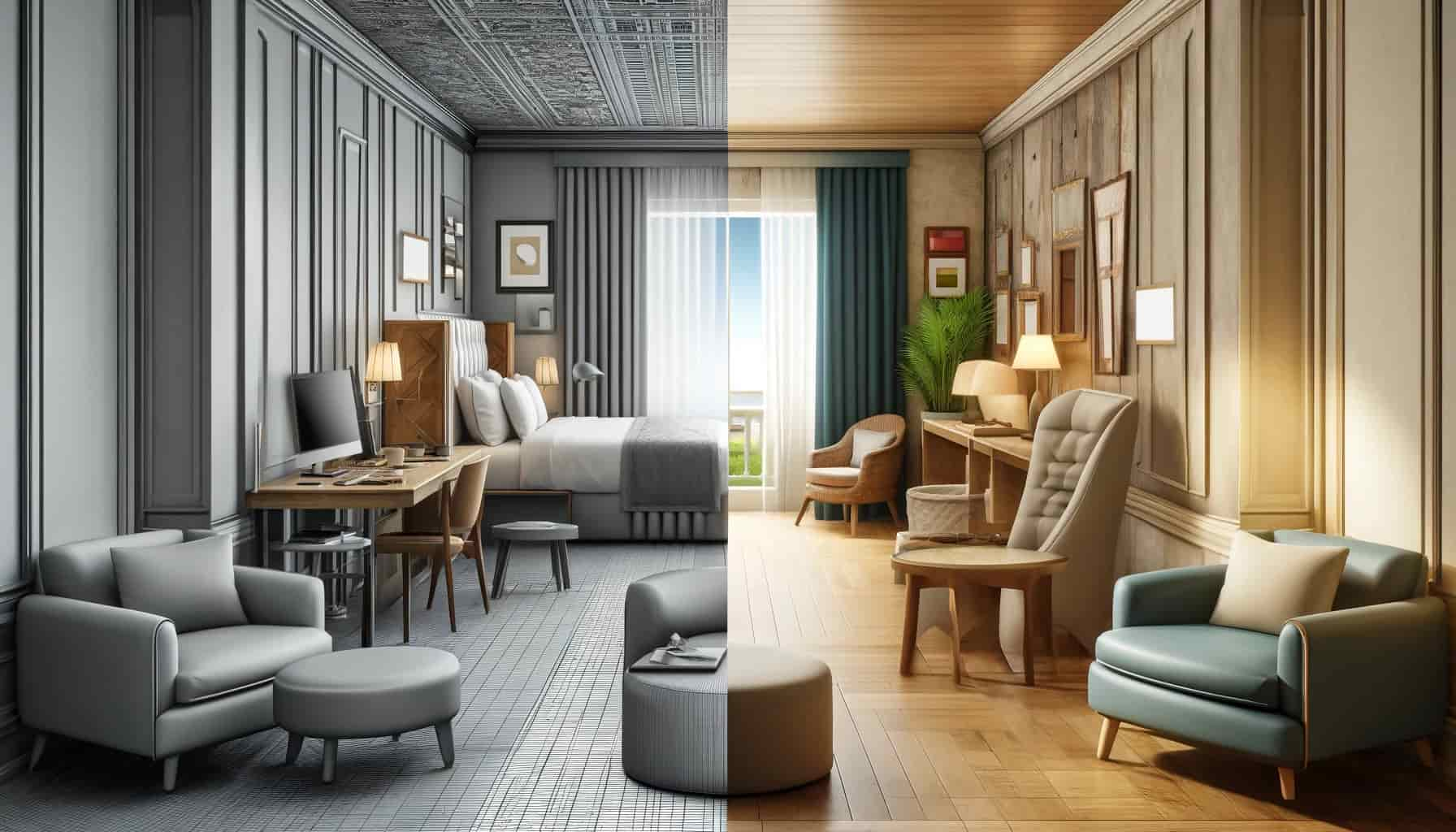
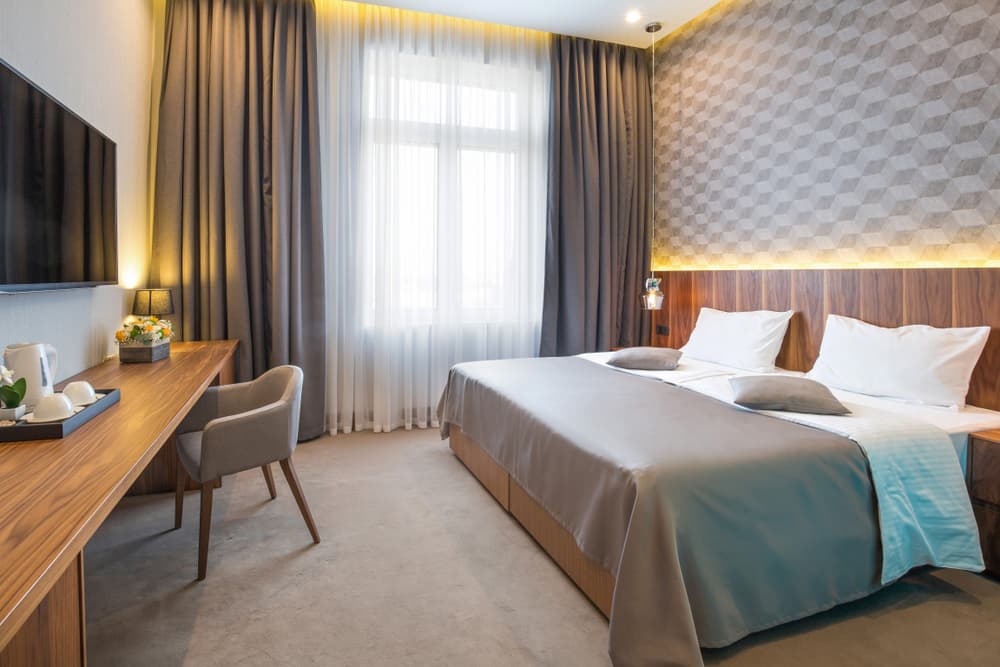
Hotel room furniture design is the practice of shaping a guest room’s furniture — its proportion, style, materials and finish — so each piece works for the guest, the set reads as one coherent look, and the design suits both the room and the brand.
Strong hotel room furniture design is what separates a room that works for a decade from one that looks dated in a season and loosens in two. Design is not decoration laid over the furniture — it is the decisions behind every piece: its proportion, its finish, its style and how it sits with everything around it. Those decisions shape your hotel guest room furniture long before a guest ever sees it, and they decide whether the room reads as considered or merely assembled.
This guide covers hotel room furniture design from the maker’s side: what good design gets right, the styles that define it, how materials and finishes carry the look, and the process that turns a concept into a finished room. Every point assumes a contract setting, where a design has to repeat cleanly across dozens or hundreds of rooms and hold its look through constant use. Get the design right and the furniture quietly carries the room for a decade; get it wrong and no styling laid on top rescues the result.
What Good Hotel Room Furniture Design Gets Right
Good hotel room furniture design answers three questions at once: does each piece serve the guest, does the set hold together as one look, and does it fit the room it lives in. Miss any one and the design fails however handsome the individual pieces. The best work makes all three feel effortless — a guest never notices the design, only that the room feels right. That invisible rightness is the whole job of hotel room furniture design. Everything below unpacks those three tests — the guest, the set and the room — one at a time.
Design That Serves the Guest First
Form follows the guest in a working hotel room. A desk has to sit at the right height for a laptop, a nightstand has to land level with the mattress, a wardrobe has to open without fouling the bathroom door. Design that ignores these basics for the sake of a striking silhouette punishes the guest every day of the stay. The strongest design hides its cleverness inside pieces that simply work — the storage that swallows a suitcase, the headboard that doubles as a reading rest, the desk that conceals its cabling. Beauty earns its place only after a piece works, and a room that looks good but works badly fails the one test that matters. Function-led design also ages better: a piece sized and built for its job stays useful long after a purely decorative one has dated.
A Design Language, Not a Pile of Pieces
A room reads as designed when every piece speaks the same language. One timber tone, one upholstery family, one metal finish, one set of proportions — repeated across the bed, the desk, the wardrobe and the seating — turns separate objects into a coherent set. Mismatched pieces, even good ones, read as a budget afterthought. A clear design language also makes a property recognisable: a guest who books twice should feel the same hand at work the second time. Coherence is the cheapest luxury in hotel room furniture design, because it costs discipline rather than money. That discipline is easiest to hold when one maker designs the whole set, so the proportions and finishes match by intent rather than by luck.
Design for the Room It Lives In
Scale decides whether a design works in the flesh. A wardrobe sized for a render swallows a real eighteen-square-metre room; a headboard drawn bold on paper sits too low once housekeeping dresses the bed. Good design starts from the room’s true dimensions and the walkways a guest needs, then sizes every piece to leave the floor open and the route clear. The same set, scaled wrong, turns a comfortable room cramped. Design on the plan, then confirm it in the room before a single piece goes into production. A scaled drawing and a tape measure on site settle more design arguments than any render ever does.
A guest never notices good furniture design. They only notice that the room feels right.
The best design is the one guests never notice
Guests rarely praise furniture design directly; they say the room felt calm, easy and well put-together. That ease is the design working. A room a guest cannot stop noticing — a chair in the walkway, a finish that clashes, a drawer that sticks — is a design that failed. The goal of hotel room furniture design is not to draw admiration but to disappear into a room that simply works.
Styles That Define Hotel Room Furniture Design
Style gives a property its character, and most hotel room furniture design sits in one of a few families. The right one depends on the brand, the location and the guest it serves. The table below sets the common styles against the feel they create and the property each suits, so a design choice starts from identity rather than fashion.
Réponse rapide
What is hotel room furniture design? Hotel room furniture design is the practice of shaping a guest room’s furniture — its proportion, style, materials and finish — so the pieces work for the guest, hold together as one coherent look, and suit both the room and the brand. It covers the design of each piece and the way the whole set reads together.
| Style | The feel it creates | Where it fits |
|---|---|---|
| Modern minimalist | Clean lines, calm, uncluttered | City and business hotels |
| Classic / transitional | Warm, timeless, reassuring | Established and upscale hotels |
| Boutique character | Distinctive, personal, memorable | Independent and lifestyle hotels |
| Resort / natural | Relaxed, tactile, light | Leisure and coastal properties |
| Contemporary luxury | Refined, considered, quiet | Five-star rooms and premium suites |
Modern and Minimalist Design
Modern hotel furniture design strips a room to clean lines, flat finishes and a tight palette. It photographs well, suits compact city rooms and reads as calm and current — which is why it dominates business and mid-scale properties. The risk is coldness: minimalism with no warmth feels like an office. The fix is texture and tone rather than ornament — a warm timber, a soft headboard, a tactile fabric — so the room stays simple without turning clinical. Done well, a modern room feels uncluttered and restful; done carelessly, it feels bare. The discipline that saves a modern room is editing: every piece that stays must earn its place, because in a spare design there is nowhere for a weak one to hide.
Classic and Boutique Character
Where modern design simplifies, classic and boutique design adds character. Classic, transitional pieces — warmer timbers, softer profiles, considered detail — suit established hotels that trade on reassurance and longevity. Boutique design goes further, leaning on a signature piece, an unexpected colour or a local material to make a room memorable and personal. Both reward restraint: one strong idea, carried through the set, lands harder than a room full of competing statements. Character in hotel room furniture design comes from a clear point of view, not from quantity, and a single confident gesture outperforms a dozen timid ones.
Resort and Contemporary Luxury
Two further families round out most hotel room furniture design. Resort and natural styling leans on light timbers, woven textures and an easy, tactile feel that suits leisure and coastal properties where guests come to slow down; the design stays relaxed without tipping into theme-park. Contemporary luxury works the opposite register — refined, quiet and considered, with rich materials handled sparingly so the room feels expensive rather than loud. It suits five-star rooms and premium suites, where the design earns its rate through restraint and the quality of every finish rather than through obvious ornament. Both prove the same rule: a clear style, applied with discipline, beats a mix of borrowed ideas every time. The style a property picks should outlast a trend, since the furniture has to look right for a decade, not a season.
How Materials and Finishes Shape Hotel Room Furniture Design
Materials and finishes carry more of a design’s look than the shapes do. The same piece in pale oak veneer and in dark lacquer reads as two different rooms, so material choice is a design decision, not only a durability one. In hotel room furniture design, the finish is where a brand’s identity becomes visible — and where a contract maker turns a drawing into a surface a guest will touch a thousand times.
Finishes That Read as Quality
A finish sets the tone before a guest registers the shape. Veneer fronts give warmth and a real-timber grain on a stable contract core; high-pressure laminate offers a crisp, hard-wearing surface in almost any colour; a lacquer or matt finish reads contemporary and rich. The design choice is matching the finish to the feel the room wants — a warm oak for a calm, classic room, a deep matt for a contemporary suite. Edge detail matters as much as the face: a clean, well-banded edge reads as quality, while a rough or peeling one undoes the whole piece however good its shape. The contract setting raises the stakes, because a finish in a hotel meets daily cleaning and constant handling; the design has to look right and survive the trolley at once.
Designing for Brand and Identity
The strongest hotel room furniture design makes a brand visible in the furniture itself. A signature headboard shape, a house colour carried through the upholstery, a recurring detail across every piece — these turn a generic room into a property a guest recognises. This is where custom design earns its place: a bespoke set locks the look to the brand exactly, where a standard range can only approximate it. The choice between custom and standard is its own subject, and our guide on how to choose hotel guest room furniture covers when custom is worth the cost. Here the point is the design itself — one coherent identity, expressed in every piece a guest touches. A design that carries the brand this consistently also does quiet commercial work, since a room a guest can place to one property is a room they remember when they book the next trip.
Material reads before shape
Show two guests the same wardrobe in pale ash and in dark walnut and they will describe two different rooms. Finish drives the first read of a piece more than its silhouette does, which is why a design that nails the shape but defaults on the finish still misses. Treat material and finish as the loudest design decision in the room, not the last one.
From Concept to Room: The Design Process
Hotel room furniture design is a process, not a single moment of inspiration. A good one moves from a brief to a concept, from a concept to a spec, and from a spec to a room signed off in person — each step catching the problems the last one missed. Skip the steps and the design surprises you at scale, when the surprise is most expensive to fix.
Concept and Mood
Design starts with a brief, not a drawing. The brand, the guest, the location and the room’s constraints set the direction before anyone sketches a single piece. A clear concept — the feel, the palette, the references — keeps every later decision pulling the same way, so the desk, the headboard and the wardrobe arrive as one idea rather than three unrelated ones. A muddled brief produces a muddled room however skilled the maker, which is why the best projects spend real time here before anything is drawn. The clearest briefs name the guest the room is for — the business traveller, the family, the weekend couple — because a design aimed at everyone tends to move no one.
Spec, Sample and Mock-Up
A concept becomes real in the spec and proves itself in a sample. Detailed drawings fix the dimensions, the materials and the finishes; a sample piece confirms the finish reads as intended and the build holds. Then one full mock-up room, built and walked before the main order, catches what paper hides — the wardrobe that fouls the door, the headboard that sits low, the finish that shifts under the room’s real light. A mock-up costs a single room and saves the mistakes a flawed design would otherwise repeat across two hundred. The mock-up is also where a design earns sign-off with confidence: a room you have walked is a room you can order in volume without second-guessing.
Designing Each Piece for Its Job
Good design treats every piece on its own terms. Design a headboard for easy cleaning and a comfortable lean; a desk for a laptop, accessible power and a guest who works late; a wardrobe for real hangers and quiet hinges; a luggage bench for a full case and a wipeable top. The set holds together in style, yet each piece earns its design from the job it does. Piece-level design is where hotel room furniture design stops being a mood board and becomes a room that genuinely works for the guest who lives in it for a few nights. Treating each piece this way, inside one shared style, is the balance the whole craft of hotel room furniture design turns on — unity in look, precision in function.
Furniture Design That Lasts a Decade
Hotel room furniture design succeeds when a room still looks considered ten years after it opened. Serve the guest first, hold the set to one design language, let the finish carry the brand, and prove the design in a mock-up before the full order. None of it depends on the largest budget — it depends on a clear point of view, carried through every piece. For the comfort layer that sits on top of a good design, our note on creating a comfortable hotel room goes further.
Bring in a manufacturer who designs and builds the whole set to a contract standard — on FOB or CIF terms, with a four-to-eight-week lead time and a two-year warranty — and the design survives the years a hotel needs it to. Design the room once, properly, and it keeps earning its look long after the doors open. That long look is the real return on hotel room furniture design — a room that still earns its rate years after the spend is forgotten.
Foire aux questions
What is hotel room furniture design?
Hotel room furniture design is the practice of shaping a guest room’s furniture — its proportion, style, materials and finish — so each piece works for the guest, the set holds together as one look, and the design suits both the room and the brand. It covers individual pieces and how the whole set reads.
What makes good hotel room furniture design?
Good hotel room furniture design serves the guest first, speaks one design language across every piece, and fits the real dimensions of the room. Function comes before form, finishes carry the brand, and the whole set reads as coherent rather than assembled from separate buys.
What are the main hotel room furniture design styles?
The main styles are modern minimalist, classic or transitional, boutique character, resort or natural, and contemporary luxury. Each creates a different feel and suits a different property — minimalist for city hotels, classic for established ones, boutique for independents, and resort styling for leisure properties.
How do materials and finishes affect hotel room furniture design?
Materials and finishes drive the first read of a design more than shape does. The same piece in pale veneer and dark lacquer reads as two different rooms. Finish is where a brand becomes visible, so it should match the room’s intended feel, with clean, well-banded edges that read as quality.
What is custom hotel furniture design?
Custom hotel furniture design means shaping bespoke pieces to a property’s exact brand, dimensions and concept, rather than adapting a standard range. It locks the look to the brand and fits irregular rooms precisely. Whether custom is worth the cost over standard is a separate decision, covered in our guide to choosing guest room furniture.