
Definition
Loose furniture is movable, free-standing furniture — beds, chairs, sofas, tables, lamps — that a hotel can lift, rearrange and replace. Fixed furniture attaches to the structure and stays for the life of the fit-out.
Loose furniture is the movable, free-standing furniture in a hotel — the beds, chairs, sofas, tables and case pieces that staff can lift, rearrange and replace — as opposed to fixed furniture attached to the structure. The distinction runs through every hotel project, because it decides which budget a piece sits in, how easily a property refreshes it, and who supplies it. Most of what we make as a Meubles d'hôtel manufacturer is loose furniture, specified to a brand standard and shipped ready to place. This guide explains what loose furniture is, how it differs from fixed furniture, the examples that fall into each, and how a project specifies and sources it.
The terms sound simple, but the loose-versus-fixed split is one of the most useful distinctions in hospitality furnishing. It maps directly onto how hotels budget, procure and refurbish, and getting it clear early saves confusion later in a project. The sections below define loose furniture, set it against fixed furniture side by side, run through the examples, and close on specifying loose furniture for a hotel.
What Loose Furniture Means in a Hotel
Loose furniture, sometimes called free-standing or movable furniture, is any furniture that sits in a room without attachment to the building. You can lift it, slide it, rearrange it and take it out, which is the single feature that defines it. In a hotel, loose furniture is the layer a property changes most often, and it carries much of the look and comfort a guest experiences.
Loose Furniture Defined
Loose furniture is free-standing furniture that rests on the floor under its own weight rather than attaching to a wall, floor or ceiling. A bed, an armchair, a desk chair, a sofa, a coffee table, a luggage bench, a floor lamp — each stands on its own and moves without tools, which makes it loose. The defining test is simple: if you can pick it up or slide it out without unscrewing it from the structure, it is loose furniture. This movability is what separates it from the fixed, built-in pieces covered below, and it shapes everything from how a room cleans to how it refurbishes.
Fixed Furniture in One Line
Fixed furniture is the opposite — furniture built into and attached to the structure, such as a fitted wardrobe, a built-in headboard, a vanity unit or wall panelling, which stays put for the life of the fit-out. The two categories together cover almost everything in a hotel room, and the line between them drives the budgets and the supply. For the full picture of the built-in side, our guide on what fixed furniture is covers it in depth; here the focus stays on loose furniture and how it compares.
Réponse rapide
What is the difference between loose and fixed furniture? Loose furniture is movable, free-standing furniture — beds, chairs, sofas, tables, lamps — that a hotel can lift, rearrange and replace. Fixed furniture attaches to the structure — fitted wardrobes, built-in headboards, vanities, panelling — and stays in place for the life of the fit-out. Loose furniture sits in the FF&E budget and refreshes easily; fixed furniture sits in the millwork or fit-out budget and changes only in a full refit.
Loose vs Fixed: The Core Differences
Loose and fixed furniture differ in more than whether they move. The distinction runs through cost, flexibility, lifespan and procurement, and understanding those differences is what lets a project decide which pieces should be loose and which built in. The chart below sets the two side by side.
Mobility and Installation
The clearest difference is mobility. Loose furniture arrives finished and is simply placed, so it installs fast, moves for cleaning and access, and lifts out at the end of its life without touching the building. Fixed furniture goes into the structure — screwed, fitted or built in place — which takes trades, time and coordination, and removing it later means a small construction job rather than a delivery. That single difference cascades into everything else: how staff service a room, how fast it fits out, and how disruptive a future change will be.
Cost, Flexibility and Lifespan
Loose and fixed furniture follow different cost and lifespan logic. A hotel buys loose furniture as product, often at a lower per-piece cost, and replaces it on a shorter cycle as styles and wear dictate — which gives a hotel flexibility to refresh a room without rebuilding it. Fixed furniture costs more to make and install but lasts longer and resists wear, because it forms part of the structure and takes less knocking about. A hotel therefore leans on loose furniture for the elements it wants to keep current, and fixed furniture for the durable, permanent pieces it expects to keep for the life of the fit-out.
Where Each Belongs
Most hotel rooms use both, and the balance is deliberate. Loose furniture handles the seating, the beds, the tables and the pieces a property refreshes between refurbishments; fixed furniture handles the wardrobes, headboards, vanities and panelling that benefit from a tailored, built-in fit. Knowing which is which lets a project put each piece in the right budget and the right supply chain, rather than treating the room as one undifferentiated order. The table below collects the practical differences for quick reference.
| Factor | Loose furniture | Fixed furniture |
|---|---|---|
| Attachment | Free-standing, movable | Built into the structure |
| Installation | Placed; fast delivery | Fitted by trades on site |
| Budget line | FF&E | Millwork / fit-out |
| Cost per piece | Lower; bought as product | Higher; made and installed |
| Flexibility | Swapped easily on refresh | Changed only in a full refit |
| Durée de vie | Shorter refresh cycle | Built to last the fit-out |
| Examples | Beds, chairs, sofas, tables, lamps | Wardrobes, headboards, vanities, panelling |
Loose vs fixed is really a budget line — FF&E against millwork
For an operator, the loose-versus-fixed distinction is not academic; it decides which budget pays for a piece and who supplies it. Loose furniture falls under FF&E — furniture, fixtures and equipment — the procurement bucket a hotel refreshes on a cycle, ordered as product from a furniture maker. Fixed furniture falls under millwork or the fit-out budget, built and installed as part of the construction package. The same wardrobe can land in either bucket depending on whether it is a free-standing piece or a built-in unit, and that choice changes the cost model, the supplier and the refurbishment plan. Deciding loose-versus-fixed early, room by room, is what keeps an FF&E budget and a construction budget from blurring into each other.
Examples of Loose Furniture in a Hotel
The quickest way to grasp loose furniture is by example, area by area. Almost every movable piece a guest sees and uses is loose furniture, and listing them by space shows just how much of a hotel it covers.
Guest Room Loose Furniture
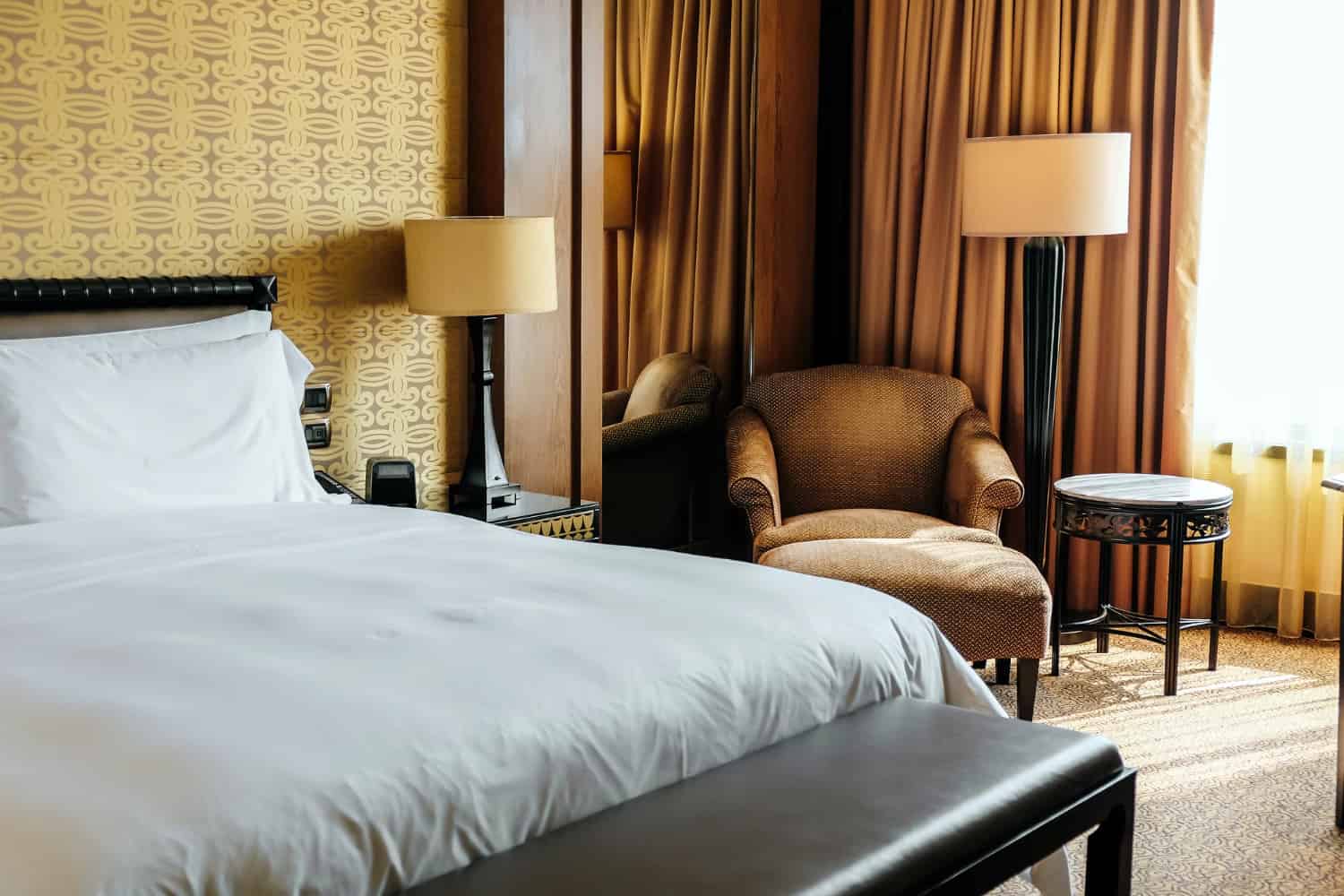
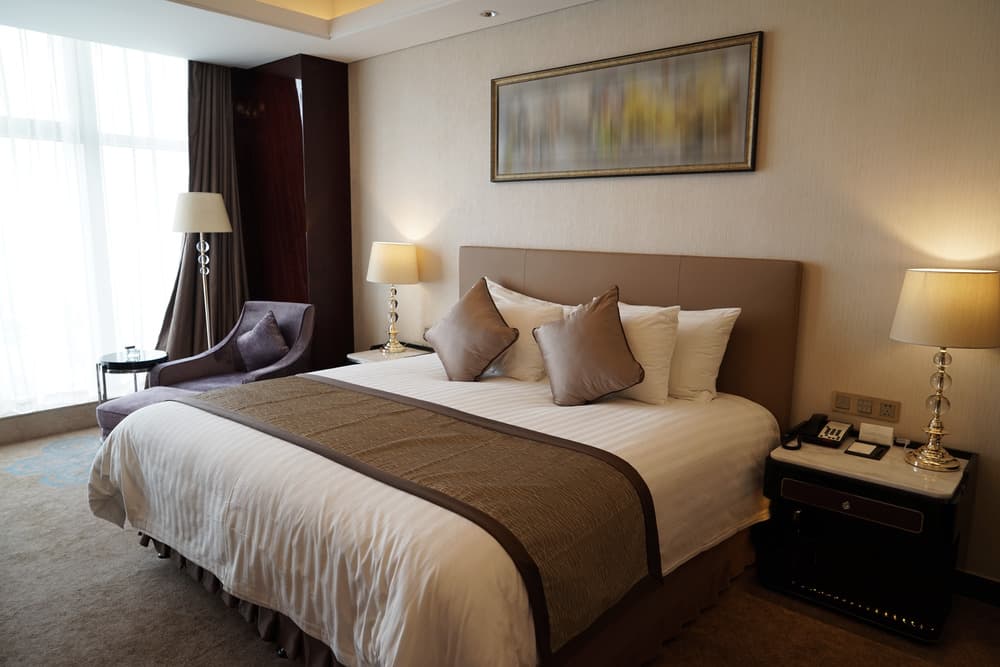
The guest room is full of loose furniture. The bed and its base, bedside tables, an armchair or lounge chair, a desk and desk chair, a luggage bench, an ottoman, a coffee table, floor and table lamps, and a free-standing wardrobe where a property uses one rather than building it in — all are loose. These are the pieces that carry the room’s comfort and style, and the ones a hotel most often updates to keep a room current. As a guest room furniture maker, this is the heart of what we supply: free-standing case goods and seating, finished to a brand standard and placed on delivery.
Lobby, Restaurant and Public-Area Loose Furniture
Beyond the room, the public areas run almost entirely on loose furniture. A lobby’s lounge chairs, sofas, coffee and side tables, and accent seating are loose, as are a restaurant’s dining chairs, tables, banquette-adjacent seating and bar stools, and the loungers and tables around a pool. These pieces define the look of the spaces guests gather in, and a property refreshes them to keep its public areas current. Our Meubles de lobby d'hôtel et Meubles de restaurant ranges are loose furniture in exactly this sense — movable, contract-grade pieces specified to the property.
Is a Bed Loose or Fixed?
A few pieces sit on the line, and the bed is the classic question. A free-standing bed frame and base are loose furniture — they stand on their own and move out for cleaning or replacement. The headboard, though, is often a fixed piece: a wall-mounted or built-in headboard counts as fixed furniture, while a headboard attached to the bed frame stays loose. The same piece can fall either way depending on how a maker builds it, which is exactly why a project specifies each element clearly rather than assuming. A bed is a good reminder that loose-versus-fixed is about attachment, not about the type of furniture.
Why Hotels Use Loose Furniture
Hotels lean on loose furniture for reasons that go beyond the obvious. Its flexibility, cost model and role in refurbishment make it the workhorse of hospitality furnishing, carrying most of the look and comfort while keeping a property adaptable.
Flexibility and Refurbishment
The biggest reason hotels favour loose furniture is flexibility. Because it moves and replaces without touching the building, a property can refresh a room or a lounge — new chairs, new tables, a new colour story — on a refurbishment cycle far shorter and cheaper than a full refit. Loose furniture lets a hotel keep its interiors current and respond to wear or changing taste, room by room, without closing for construction. For an operator that has to keep a property feeling fresh against the competition, that adaptability is exactly what loose furniture delivers.
Cost and Procurement
Loose furniture also suits how hotels buy. Ordered as FF&E product from a furniture manufacturer, it carries a clearer per-piece cost, a defined lead time and a straightforward supply chain, separate from the construction package. A property can specify a loose-furniture package to its brand standard, order it for a whole project, and have it delivered and placed without trades on site. That makes budgeting, sourcing and rollout simpler than for built-in furniture, and it is why the loose-furniture package is often the cleanest part of a hotel’s procurement.
Brand Consistency Across a Property
Loose furniture also carries a hotel’s brand, and at scale that means consistency. A property running many identical rooms needs the same chair, the same bed, the same finish in every one, so the loose-furniture package follows a single standard and runs in matching batches rather than piecemeal buying. That consistency is what makes a hotel read as one coherent property from the first room to the last, and it is far easier to hold with loose furniture ordered as one package than with pieces sourced separately. A contract maker holds the finish, the dimensions and the quality across the whole run, which is exactly what a brand standard demands.
The Four Types of Furniture
People often ask how many types of furniture there are, and loose-versus-fixed is one way to split it; another common framing names four broad types — seating, tables, storage and beds — which cuts across both loose and fixed. A loose-furniture package usually spans all four: seating in chairs and sofas, tables in coffee and dining tables, storage in free-standing case pieces, and beds in frames and bases. Whichever framing you use, loose furniture is the category that carries most of the movable, refreshable pieces, and our complete hotel furniture list sets out the full inventory a project specifies.
A hotel room is mostly loose furniture — which is why it refreshes so easily
Walk through a standard hotel room and most of what you touch is loose: the bed, the chair, the desk and its chair, the bench, the lamps, the tables. The fixed elements — the fitted wardrobe, the built-in headboard, the vanity — are fewer, and they are the ones that stay put for the life of the fit-out. That ratio is deliberate, and it is what keeps a hotel room refreshable: by keeping the bulk of the room loose, an operator can update the look and comfort on a short cycle while the durable, built-in elements carry on. When a property plans a refurbishment, the loose furniture is what changes, which is why getting the loose-furniture specification right has such a direct effect on how a hotel ages.
Specifying Loose Furniture for a Project
For a project, loose furniture is a package to specify, order and place — the FF&E side of furnishing a hotel. Specifying it well, and sourcing it from a contract maker, is what turns a furniture schedule into rooms ready to open.
Loose Furniture as FF&E
Loose furniture is the heart of an FF&E package, and a project specifies it as a schedule: every movable piece in every room type, sized, finished and quantified to a brand standard, then ordered for the whole project. Because it is product rather than construction, a property can lock the specification, set the lead time against the opening date, and roll it out room by room. Treating loose furniture as a clear FF&E package — separate from the fixed, built-in millwork — keeps the procurement clean and the budget accurate.
Sourcing Loose Furniture
A contract furniture maker builds the loose-furniture package to the project’s drawings and brand, in matching finishes across every room. As a workshop we produce hotel loose furniture — beds and bases, seating, case goods, tables and lounge pieces for guest rooms, lobbies, restaurants and public areas — custom to your specification, on FOB or CIF terms with a four-to-eight-week lead time and a two-year warranty, delivered worldwide and ready to place. For the wider picture of how furniture types fit a hotel, our types de mobilier d'hôtel guide sets out the full room-by-room view, and the fixed furniture guide covers the built-in side.
Loose furniture is the movable, free-standing layer of a hotel — the beds, seating, tables and case pieces a property places, rearranges and refreshes — set against the fixed, built-in furniture that stays for the life of the fit-out. Knowing the difference puts each piece in the right budget, the right supply chain and the right refurbishment plan: loose furniture as an FF&E package ordered from a furniture maker, fixed furniture as millwork built into the structure. Specify the loose furniture clearly, source it as a package, and a hotel keeps the flexibility to stay current room by room.
Foire aux questions
What is loose furniture?
Loose furniture is movable, free-standing furniture that rests on the floor under its own weight rather than attaching to the building — beds, chairs, sofas, tables, lamps and free-standing case pieces. In a hotel it is the layer a property places, rearranges and refreshes most often, and a hotel buys it as FF&E product from a furniture maker rather than building it in on site.
What is the difference between loose and fixed furniture?
Loose furniture is movable and free-standing, while fixed furniture attaches to the structure. A hotel can lift, rearrange and replace loose pieces — beds, chairs, tables — and they sit in the FF&E budget; fixed pieces — fitted wardrobes, built-in headboards, vanities, panelling — need trades to install, sit in the millwork budget, and change only in a full refit. The test is attachment: if it moves without unscrewing from the structure, it is loose.
Is a bed loose or fixed furniture?
A free-standing bed frame and base are loose furniture, since they stand on their own and move out for cleaning or replacement. The headboard can be either: a wall-mounted or built-in headboard counts as fixed furniture, while a headboard attached to the bed frame stays loose. The same piece falls either way depending on how a maker builds it, which is why a project specifies each element clearly.
What is FF&E and is loose furniture part of it?
FF&E stands for furniture, fixtures and equipment — the movable items a hotel buys and refreshes separately from the building construction. Loose furniture is the core of an FF&E package: the beds, seating, tables and case pieces ordered as product from a furniture maker. Fixed, built-in furniture, by contrast, usually sits in the millwork or fit-out budget rather than FF&E.
What are examples of loose furniture in a hotel?
In the guest room: beds and bases, bedside tables, armchairs, desks and desk chairs, luggage benches, ottomans, coffee tables and lamps. In public areas: lobby lounge chairs and sofas, side and coffee tables, restaurant dining chairs and tables, bar stools, and poolside loungers. Essentially every movable, free-standing piece a guest uses is loose furniture.
Why do hotels use loose furniture?
Hotels favour loose furniture for its flexibility and cost model. Because it moves and replaces without touching the building, a property can refresh rooms and lounges on a short refurbishment cycle, keeping interiors current without closing for construction. It is also bought cleanly as FF&E product with a clear per-piece cost and lead time, which makes budgeting, sourcing and rollout simpler than for built-in furniture.