Definition
Hotel lobby chairs are the contract-grade lounge and accent chairs — club, tub, high-back and armchairs — that seat guests in a hotel’s arrival and public areas, built to take constant use, clean easily, meet fire-safety regulations and hold their comfort and look across a full refurbishment cycle.
The chairs in a hotel lobby do quiet, constant work: they hold guests waiting to check in, give two people somewhere to talk, and fill the corners of a lounge with comfort and character. They also take a beating no home chair ever sees. That is why hotel lobby chairs sit at the heart of any мебель для гостиной отеля brief — chosen well, they read as comfort and luxury; chosen badly, they tire and date faster than anything else in the room. This guide covers lobby chairs from the maker’s side: the types, the comfort, the materials and the custom options that decide which chairs a hotel lobby can take.
A lobby chair lives a public life. A different guest sits in it every few minutes, housekeeping cleans it daily, and it stays on show from open to close. Comfort matters, but so does the build behind the comfort — the frame, the foam and the fabric that let a chair look and feel right for years rather than months. Read this alongside our wider guide on how to choose hotel lobby furniture, which sets the whole lobby in context; this page goes deep on the chairs themselves.
Why Hotel Lobby Chairs Are Contract Pieces
Hotel lobby chairs belong to the contract world, not the residential one. The difference is invisible in a showroom and obvious within a year of opening. A chair that suits a living room gives up fast under public use; a contract lobby chair takes the same load and still looks plump and square through a full refurbishment cycle. Treat the chair as a contract piece first and a decorative one second, and the right choices follow.
The Chair a Guest Meets First
The lobby chair is often the first seat a guest uses in a hotel — the one they sink into while staff prepare a room or a colleague arrives. That first sit sends a signal: a firm, comfortable, well-made chair says the property runs to a standard, while a sagging or worn one undercuts the rate before check-in. Because the chair carries that first impression, hotels invest in lobby seating out of proportion to its size. A confident set of lounge and accent chairs lifts the whole arrival, and a tired one drags down even a handsome lobby.
Contract-Grade, Not Residential
Contract lobby chairs differ from domestic ones in every layer. The frame uses heavier hardwood or welded steel, the foam holds a higher density so the seat keeps its shape under hundreds of sitters a week, and the upholstery meets a commercial abrasion rating and a fire standard rather than a domestic one. Joints take reinforcement, legs take floor protection against trolleys and vacuum cleaners, and the fabric wipes clean instead of marking. None of this shows in a photograph, and all of it decides whether a chair survives a busy lobby. The same contract logic runs through the rest of the room, which we cover on our hotel lobby seating страница.
A guest sits in the lobby chair before they reach their room. That first sit tells them what kind of hotel this is.
Types of Hotel Lobby Chairs
Most lobbies draw their seating from a small family of chair types, each suited to a different spot and mood. Knowing what each one does keeps a specification tidy and stops two chairs competing for the same job. The types below are the working vocabulary of hotel lobby chairs, from deep lounge chairs to compact accent pieces.
Быстрый ответ
What chairs do hotels use in their lobbies? Hotels mainly use lounge chairs, club chairs, tub chairs, accent chairs, high-back chairs and armchairs in their lobbies, usually mixed with sofas and benches. The right choice depends on the spot: deep lounge and club chairs for relaxed waiting, tub and accent chairs to fill seating groups, and high-back chairs where guests want a sense of privacy. Every type should be contract-grade and fire-rated for public use.
Lounge and Club Chairs
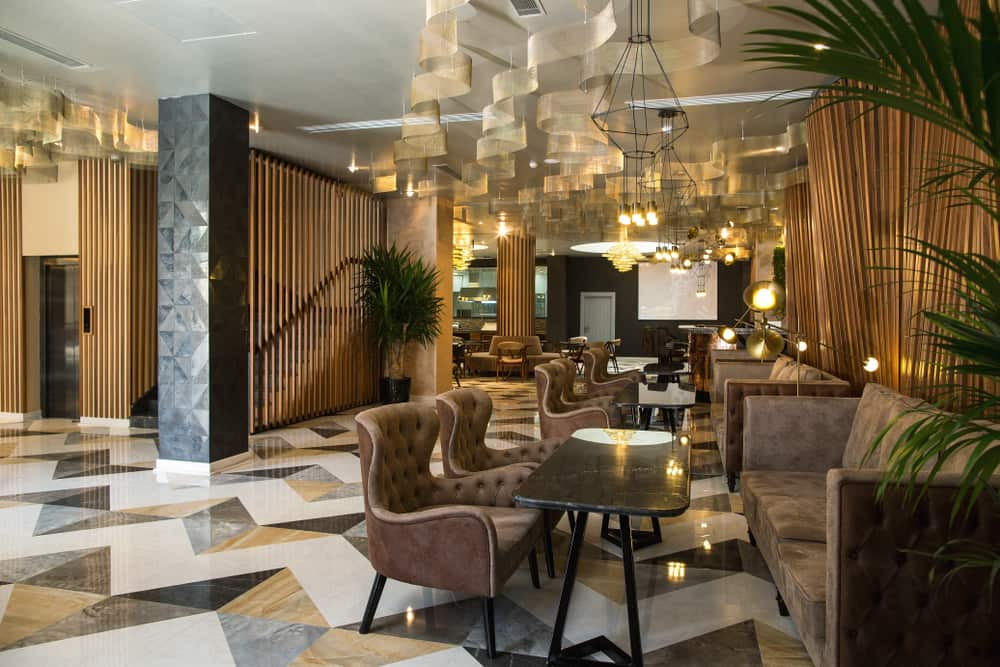
Lounge chairs and club chairs are the workhorses of lobby seating. Deep, padded and built for a relaxed sit, they suit the lounge zones where guests wait, read or talk, and they pair naturally with a sofa and coffee table to make a seating group. A club chair’s lower back and enveloping arms read as comfort and quiet luxury, which is why upscale lobbies lean on them. For a contract setting, the depth and padding have to sit on a frame and foam that hold their shape — a soft domestic lounge chair flattens within a season under public use.
Tub and Accent Chairs
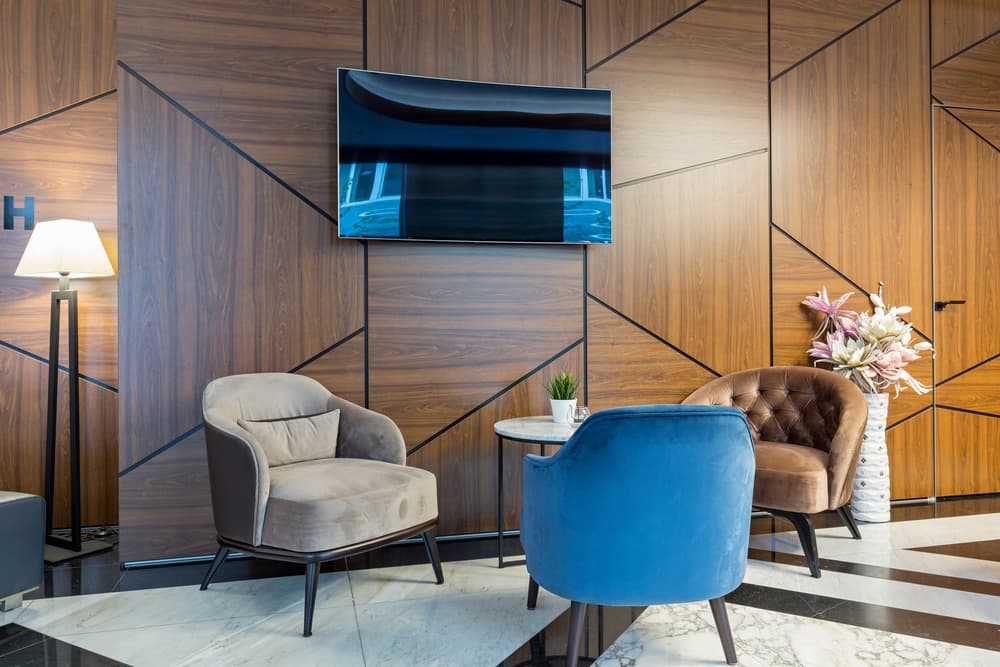
Tub chairs and accent chairs do the lighter, social work of a lobby. A tub chair’s curved, single-piece back wraps a guest neatly and tucks tidily into a corner; an accent chair adds the colour, pattern or shape a long sofa cannot, and gives a lobby its character. These chairs fill the gaps in a seating zone, hold a single guest with a laptop, or flank a console table. Because they move and turn often, the base and the joints matter as much as the look — a contract tub chair takes daily handling without loosening.
High-Back and Wing Chairs
High-back and wing chairs give a lobby a sense of shelter. The tall back screens a guest from the bustle of the arrival hall and creates a pocket of privacy in an open space, which suits quiet corners, co-working spots and premium lounges. A high-back chair also reads as a statement, anchoring a zone the way a sofa would. The trade-off is scale: these chairs need room to breathe, so they suit larger lobbies or defined alcoves rather than tight floors.
Armchairs, Benches and Settees
Armchairs round out the lobby chair family, giving guests support to push up from — a small detail that matters for older or less mobile visitors. Beyond the chairs themselves, benches and round settees extend the seating without adding more individual chairs: a bench gives a quick, hard-wearing perch near the entrance, and a round settee can hold the centre of a larger lobby. Our hotel lounge furniture guide covers the softer lounge and waiting zones beyond the lobby itself.
Comfort and Ergonomics
Comfort is the whole point of a lobby chair, and in a hotel it has to work for everyone who sits down — a guest resting for a minute, a family waiting an hour, an older visitor who needs support to rise. Good ergonomics make a lobby chair feel effortless; poor ones make a handsome chair a quiet complaint. The measures below decide how a chair actually feels under real use.
Seat Height, Depth and Support
A lobby chair has to suit a wide range of bodies, so its dimensions sit in a comfortable middle. A seat height around forty-five centimetres lets most guests sit and rise easily; a seat depth that supports the thighs without forcing short guests to perch keeps the chair comfortable for everyone; and a back that supports the lower spine turns a brief sit into a genuine rest. Get these right and a chair feels good to every guest; miss them and even a beautiful chair feels wrong within minutes.
Designing for Long Waits
Some lobby chairs hold guests for a few minutes; others hold them for an hour at a busy check-in or during an event. Where waits run long, the chair needs more support and better foam, because a soft seat that feels plush for two minutes grows uncomfortable over thirty. Armrests help guests settle and rise, and a slightly firmer high-density foam holds comfort across a long sit where a cheap foam bottoms out. Match the chair to the real dwell time of the spot, and guests stay comfortable instead of shifting and standing.
A comfortable lobby chair is quiet marketing
Guests rarely praise a comfortable lobby chair, but they always notice an uncomfortable one. A chair that supports a long wait, looks plump after a year and feels firm under every guest does marketing the rest of the furniture cannot — it tells a guest, without a word, that the property cares about the details. For a piece guests sit in before they reach their room, the spend on a well-made, well-proportioned chair returns far more than its size suggests.
Materials: Leather, Fabric and Frame
Material decides whether a lobby chair lasts a refurbishment cycle or fails in a season. A lobby chair meets hands, hair, drinks, bags and daily cleaning, so every layer — the cover, the foam and the frame — has to earn its place against that load. The biggest single choice is the cover, and it usually comes down to leather versus fabric.
Leather Versus Fabric for Lobby Chairs
Both leather and contract fabric suit hotel lobby chairs, and the right pick depends on the property and the spot. The table below sets out how they compare on the points that matter in a public lobby.
| Consideration | Leather & faux leather | Ткань для пошива |
|---|---|---|
| Простота в уходе | Wipes clean in seconds; ideal for high-traffic, food-and-drink areas | Cleans well if treated and stain-resistant; spot-cleaning needed |
| Устойчивость | Very high; quality faux leather resists abrasion and cracking | High with a strong abrasion rating (tens of thousands of rubs) |
| Look & feel | Reads as luxury; cool to the touch, formal | Warmer, softer; wide range of colour, texture and pattern |
| Fire rating | Available fire-rated; confirm with the maker | Must be fire-retardant and certified for public use |
| Лучше всего для | Reception lounges, bars, heavy food-and-drink zones | Lounge and accent chairs where colour and warmth matter |
Many lobbies mix the two — faux leather on the chairs nearest food and drink, contract fabric on the accent and lounge chairs that set the colour. Quality faux leather has closed much of the gap with real hide on look while beating it on cleanability and cost, which is why it suits so many contract lobby chairs.
Frames, Foam and Durability
The part of a lobby chair a guest never sees decides how long it lasts. Behind the cover, a reinforced hardwood or welded-metal frame keeps the chair square under constant use, and high-density, combustion-modified foam holds the seat’s shape where a cheap foam flattens within a year. Ask what sits inside a chair, not only what wraps it — the frame and the foam separate a chair that still looks plump in year five from one that sags by year two. On the base, protected or replaceable glides keep both the chair and the lobby floor intact.
Cleanability and Fire Rating
Housekeeping cleans a lobby chair more than almost any seat in the hotel, so a cover that wipes or spot-cleans easily saves money every day. Just as important, the upholstery has to meet the local fire-safety standard — fire-retardant fabric or leather and foam, certified by the maker.
Fire rating is a pass-or-fail gate
An upholstered lobby chair that fails fire-safety regulations cannot go in a public area, however good it looks. Contract upholstery uses fire-retardant fabric or leather and foam to meet the local standard, and a serious maker certifies it and keeps the paperwork on file. Treat the fire rating as the first gate every chair has to clear, not a detail to confirm later — a beautiful chair that does not comply is a chair you cannot use.
Style, Custom Work and Accessibility
Once you settle comfort and materials, style and customisation decide how the chairs sit within the lobby’s look — and whether the seating works for every guest who arrives.
Matching Chairs to the Lobby’s Look
Lobby chairs carry a property’s character more visibly than almost any other piece, so the style has to match the class of the hotel. A modern lobby runs clean-lined, low chairs in a restrained palette; a luxury lobby layers deep club chairs, richer fabrics and statement accent pieces; a boutique lobby leans into colour and one or two chairs that tell the property’s story. The chair supports each direction in its frame, finish and cover, and the colours should answer the rug, the walls and the lighting rather than fight them. Arranging the chairs well is a core part of good hotel lobby design.
Custom Lobby Chairs and Brand Standards
Contract makers build hotel lobby chairs to a brand standard, which is where custom work earns its place. A property can match a fabric to its scheme, size a chair to a tight floor, choose a frame finish to suit the joinery, or add a logo in embroidery or a branded plate — details that turn a standard chair into a piece specific to the property. For a group rolling out several hotels, the same custom chair repeats across every site, so a brand standard lobby looks identical in every location and reorders run quickly. Share a drawing or a reference, and a serious manufacturer returns a sample before the full run.
Accessibility and Inclusive Seating
A lobby serves every guest, so the seating has to include chairs that suit older and less mobile visitors. Chairs with sturdy armrests and a slightly higher, firmer seat let guests sit and rise without a struggle, and a clear, level approach to at least some of the seating keeps the lobby accessible. Building a few accessible chairs into the mix from the start — rather than treating it as an afterthought — keeps the lobby welcoming and compliant, and signals a property that thinks about all of its guests.
Arranging and Sourcing Lobby Chairs
The last step turns a set of chairs into a working lobby: arranging them well, then sourcing them from a maker who builds for hospitality.
Placing Chairs in Seating Zones
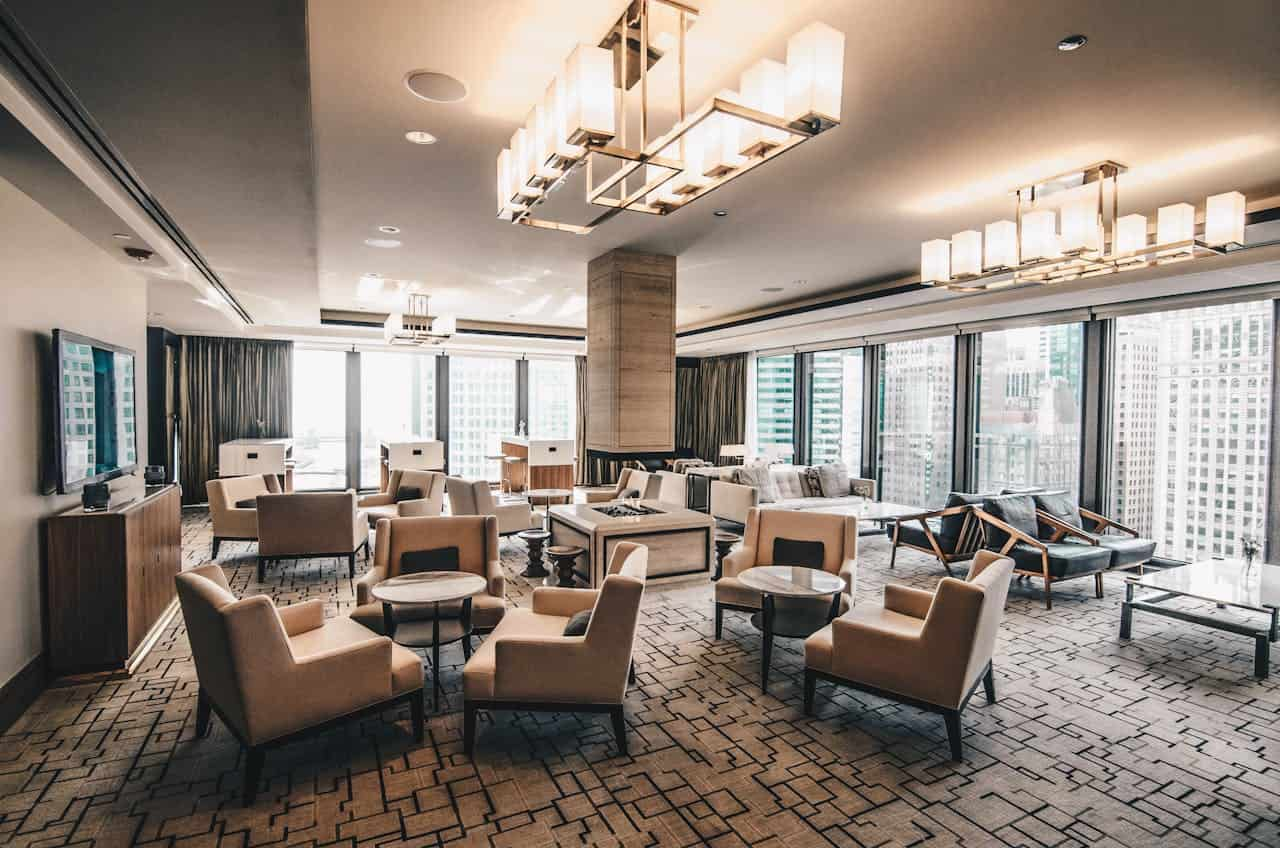
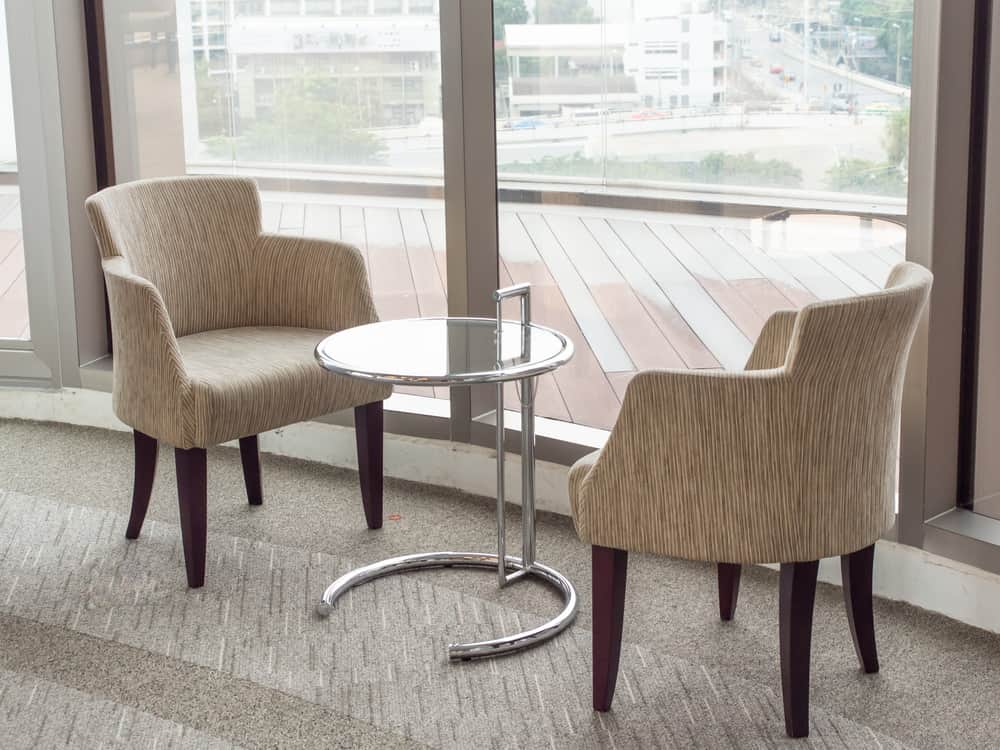
Lobby chairs work best gathered into small, deliberate seating zones rather than lined up like a waiting room. A pair of club chairs and a side table make a quiet conversation spot; a sofa flanked by two accent chairs makes a larger group; a single high-back chair by a window makes a reading nook. Keep clear routes between the zones so guests move through easily, and leave space around each chair so guests can use and pass it without a squeeze. The mix of chair types pays off here, giving different guests the right place to land.
Sourcing Contract Lobby Chairs
The supplier decides whether all of the above holds together. A manufacturer that builds for hospitality understands contract construction, fire compliance and the realities of a busy lobby, and supplies the certification, the samples and the after-sales a hotel project needs. As a maker we produce hotel lobby chairs — lounge, club, tub, accent and high-back — alongside the sofas and benches, on FOB or CIF terms with a four-to-eight-week lead time and a two-year warranty, custom to your brand and delivered worldwide. Buying the chairs and the rest of the hotel lobby seating from one workshop keeps the finishes consistent and the lobby reading as one room.
Choose the chair type that suits each spot, insist on contract-grade frames, foam and fire-rated covers, get the comfort and the proportion right, and arrange the chairs into zones — and the lobby seating quietly carries comfort and luxury for the whole refurbishment cycle. Specify the chairs once, properly, as part of the wider lobby, and they keep making the right first impression long after the doors open.
Часто задаваемые вопросы
What chairs do hotels use in their lobbies?
Hotels use lounge chairs, club chairs, tub chairs, accent chairs, high-back chairs and armchairs in their lobbies, usually mixed with sofas and benches. Deep lounge and club chairs suit relaxed waiting, tub and accent chairs fill seating groups and add colour, and high-back chairs give a sense of privacy. Every chair should be contract-grade and fire-rated for constant public use.
Should hotel lobby chairs be leather or fabric?
Both work. Leather and quality faux leather wipe clean in seconds and suit reception lounges, bars and heavy food-and-drink zones, while contract fabric offers more colour, texture and warmth for accent and lounge chairs. Many lobbies mix the two — faux leather near food and drink, fabric where colour matters. Whichever you choose, it must be abrasion-rated and fire-retardant for public use.
What makes a lobby chair commercial-grade?
A commercial-grade lobby chair uses a reinforced hardwood or welded-metal frame, high-density combustion-modified foam, and abrasion-rated, fire-retardant upholstery, with protected glides on the base. These details let the chair take hundreds of sitters a week without sagging, loosening or staining. A domestic chair uses lighter frames and softer foam that flatten and wear within a season under the same load.
Are hotel lobby chairs comfortable for long waits?
A well-specified lobby chair is. For spots where guests wait a long time — busy check-in, events — the chair needs a supportive back, armrests and firmer high-density foam that holds comfort across a long sit, rather than a soft seat that feels plush for two minutes and uncomfortable after thirty. Matching the chair to the real dwell time of the spot keeps guests comfortable.
Can hotel lobby chairs be custom-made with a logo?
Yes. Contract manufacturers build hotel lobby chairs to a brand standard, so a property can match the fabric to its scheme, choose the frame finish, size the chair to a tight floor, and add a logo in embroidery or a branded plate. For a group, the same custom chair repeats across every property so the lobby looks identical at each site. Sharing a drawing and approving a sample gives an exact, on-brand chair.
How do you arrange chairs in a hotel lobby?
Arrange lobby chairs in small, deliberate seating zones rather than rows. A pair of club chairs and a side table make a conversation spot; a sofa flanked by accent chairs makes a larger group; a high-back chair by a window makes a reading nook. Keep clear routes between the zones so guests move through easily, and leave space around each chair so guests can use and pass it comfortably.