Вкратце
Hotel furniture cost is driven by material grade, customization, order volume, manufacturing, and freight, then shaped by market conditions. Furniture is one part of the wider FF&E package, and a buyer reads a quote by judging the specification behind the price rather than the headline figure, then pricing a real specification with a manufacturer.
Hotel furniture cost is one of the largest line items in any fit-out, and it is also one of the most misunderstood. A buyer comparing two quotes for the same room often sees a wide gap and assumes one supplier is overcharging, when the real difference sits in the material grade, the level of customization, and what each quote actually includes. This guide breaks down what drives Стоимость мебели в гостиницах, how much it runs per room across the market tiers, and where the money goes piece by piece, so a buyer reads a quote with clear eyes. For the pieces behind the numbers, our guest room furniture pillar covers each item and its specification.
What Goes Into Hotel Furniture Cost
Быстрый ответ
Hotel furniture cost is the total of the materials, the labour to build each piece, any customization, the manufacturer’s margin, and the freight to deliver the order. Contract-grade construction sits above residential furniture because it carries reinforced frames, higher rub-count upholstery, and fire compliance, all of which add to the price and to the service life.
A quote is never just the timber and the fabric. It bundles the engineering that lets a piece survive daily commercial use, the finishing that holds up to constant cleaning, and the compliance that a hotel needs but a home does not. When a buyer understands these layers, a high quote starts to read as a specification rather than a markup, and a suspiciously low one starts to read as a warning.
The scope of supply explains most of the gap between two prices. One supplier might quote only the casegoods, while another covers the full room: the bed and headboard, the wardrobe, the desk, the seating, and the soft furnishings. A buyer who lines up two quotes without checking the scope compares numbers that were never measuring the same thing. Reading the scope first turns hotel furniture cost into a fair comparison.
It helps to separate furniture from the wider FF&E package. FF&E covers furniture, fixtures and equipment: the casegoods and seating, but also lighting, window treatments, soft furnishings and in-room electronics. Furniture itself usually makes up roughly a third of the full FF&E figure, so a per-room number a buyer reads online often describes the whole package rather than the furniture alone.
Reading a quote line by line protects a buyer from both surprises. A clear quote lists each piece, its material and finish, the quantity, and the unit price, so the hotel furniture cost breaks down into parts a buyer can question. A quote that lands as a single lump sum hides where the money goes and makes any negotiation guesswork. A buyer who asks for the breakdown turns an opaque figure into a set of decisions, each one open to a swap that lowers the cost without dropping the grade.
The Factors That Drive Hotel Furniture Cost
Six factors move a quote up or down, and a buyer who can name each one knows where a price comes from and where there is room to adjust. The drivers below run roughly from the largest swing to the smallest.
Material and quality grade
Material is the biggest single driver of hotel furniture cost. Solid hardwood costs more than engineered board; high rub-count contract upholstery costs more than light domestic fabric; a sealed, scratch-resistant finish costs more than a thin lacquer. The price tracks the grade because the grade decides the service life, so a higher material spec is not waste, it is a longer replacement cycle bought up front.
Customization and design complexity
A standard piece from a manufacturer’s range carries the lowest unit price because the factory already tools and repeats it. Custom work, built to a hotel’s own dimensions, finishes and design, costs more because it carries drawing, sampling and dedicated production. The more a design departs from a standard format, with bespoke shapes, special veneers or unusual joinery, the more the customization adds to the price.
Order volume and economies of scale
Volume works the other way, pulling the unit price down. A factory that builds the same room two hundred times spreads its setup across the whole run, so the cost per room on a large order sits well below the cost of a handful of pieces. This is why bulk hotel furniture cost per unit beats a single-room price, and why a phased roll-out is worth ordering as one programme where the schedule allows.
Manufacturing, labour and origin
Where and how a piece is built shapes the price. Hand-built joinery costs more in labour than automated production, and labour rates differ sharply by country. A manufacturer in Turkey or Asia often reaches a lower cost base than one in Western Europe for the same grade, which is why so many international projects source from these markets. Origin also feeds the next driver, because distance sets the freight.
Freight, logistics and landed cost
Furniture is bulky, so shipping is a real share of the final number rather than a rounding error. Freight, customs and packing all land on top of the factory price, and the Incoterms decide who carries them: an FOB price stops at the port of origin, while a CIF price includes the sea freight to the destination. A buyer reads the landed cost, the factory price plus the cost to get the order on site, not the factory price alone.
Market conditions, tariffs and inflation
The wider economy sets the floor under every quote. Raw-material prices, currency movements, tariffs and inflation all push the cost of hotel furniture, and 2026 has carried roughly eight to fifteen per cent of upward pressure on materials from supply-chain and tariff shifts. A quote is a snapshot of these conditions on the day, which is why a price locked early protects a budget better than one left to drift through a long project.
Price the specification, not the piece
Two chairs that look identical can differ by half in price, and the difference lives in the specification: the frame timber, the foam density, the rub count of the fabric, the fire standard. A buyer who compares quotes against a single written specification compares like with like; one who compares on the photograph alone compares nothing. Fix the specification first, then let the quotes tell you what that specification costs.
How Much Does It Cost to Furnish a Hotel?
The honest answer is that hotel furniture cost depends on the brand tier, the specification and the scope of the order, so no single figure fits every project. What a guide can do is more useful than a number: show what moves the cost, where the spend concentrates inside a room, and how to turn all of that into an accurate figure. A buyer who wants the actual number gets it from a quote against a real specification, and the rest of this section is how to read that quote with clear eyes.
How hotels price furniture per key
The hospitality industry prices furnishing spend per key, meaning per room, because it lets a buyer compare any property against the market regardless of size. The per-key figure rises with the brand tier, from a durable, standardized economy room up to a bespoke luxury suite, and furniture sits inside the wider FF&E package rather than standing alone. Working per key keeps a quote consistent as it scales across the whole property.
Where a guest-room furniture budget concentrates
Knowing which pieces carry the spend matters more than any single total, because it shows a buyer where a decision moves the hotel furniture cost and where it barely registers. The casegoods carry the largest share of a guest room, the bed group follows, and seating and accent pieces fill out the rest. The table below sets that order from the top down.
| Item | Share of the furniture budget | What drives its cost |
|---|---|---|
| Casegoods (wardrobe, dresser, nightstands, desk) | Largest | Veneer versus laminate, hardware, soft-close fittings |
| Bed, headboard and base | High | Upholstered headboard, size, frame strength |
| Seating (lounge and desk chairs) | Moderate | Frame timber, foam density, fabric rub count |
| Occasional and accent pieces | Lower | Quantity and finish level |
Casegoods sit at the top because there are several of them and each carries material, hardware and finishing. This is why the choice between a real veneer and a high-pressure laminate moves the hotel furniture cost more than almost any other single decision: a laminate that mimics the grain lowers the casegood spend while improving scratch and moisture resistance for commercial use. A buyer who wants to control the number looks here first, then at the bed group, and leaves the accent pieces last.
What the per-room figure includes
A per-room number only means something once a buyer knows its scope. A full FF&E figure covers the bed and headboard, the casegoods, the desk and seating, the soft furnishings, the lighting and the in-room equipment. A furniture figure strips out the lighting and electronics and counts the built pieces. The single most common reason two quotes diverge is that one priced the package and the other priced the casegoods, so a buyer confirms the scope before reading a hotel furniture cost as high or low.
Public areas, suites and the total project
The guest room is only part of the bill. Public areas, the lobby, corridors and lounges, add a meaningful layer on top of the guest-room spend for a full-service hotel, and less for a select-service property. Suites run higher per key than a standard room because of the extra living space and pieces. A buyer building a total project figure scales the per-room spend across the room count, then layers in suites and public areas on top.
How to reach an accurate hotel furniture cost
A real number comes from a real specification, not a benchmark. A buyer reaches it in four moves: set the brand tier, so the grade is clear; write the specification, down to materials, finishes and fire standards; confirm the scope, so furniture and full FF&E stay apart; and take that specification to a manufacturer for a quote. Direct factory pricing against a defined room is the figure that reflects the real order, which is why a serious supplier prices the project rather than publishing a list.
Cost it per key, and separate furniture from full FF&E
Two things cause most of the confusion around furnishing cost. The first is the unit: always work per key, so a quote scales cleanly to the property. The second is the scope: a full FF&E figure and a furniture figure describe very different orders, because FF&E folds in lighting, drapery and electronics that a furniture quote leaves out. State which one a quote describes before you compare it, or the comparison misleads.
Hotel Furniture Cost by Area
The price per piece shifts with where the furniture goes, because each area faces different demands and carries different design weight. Splitting the order by zone shows where a budget concentrates and where it can ease.
Guest room furniture cost
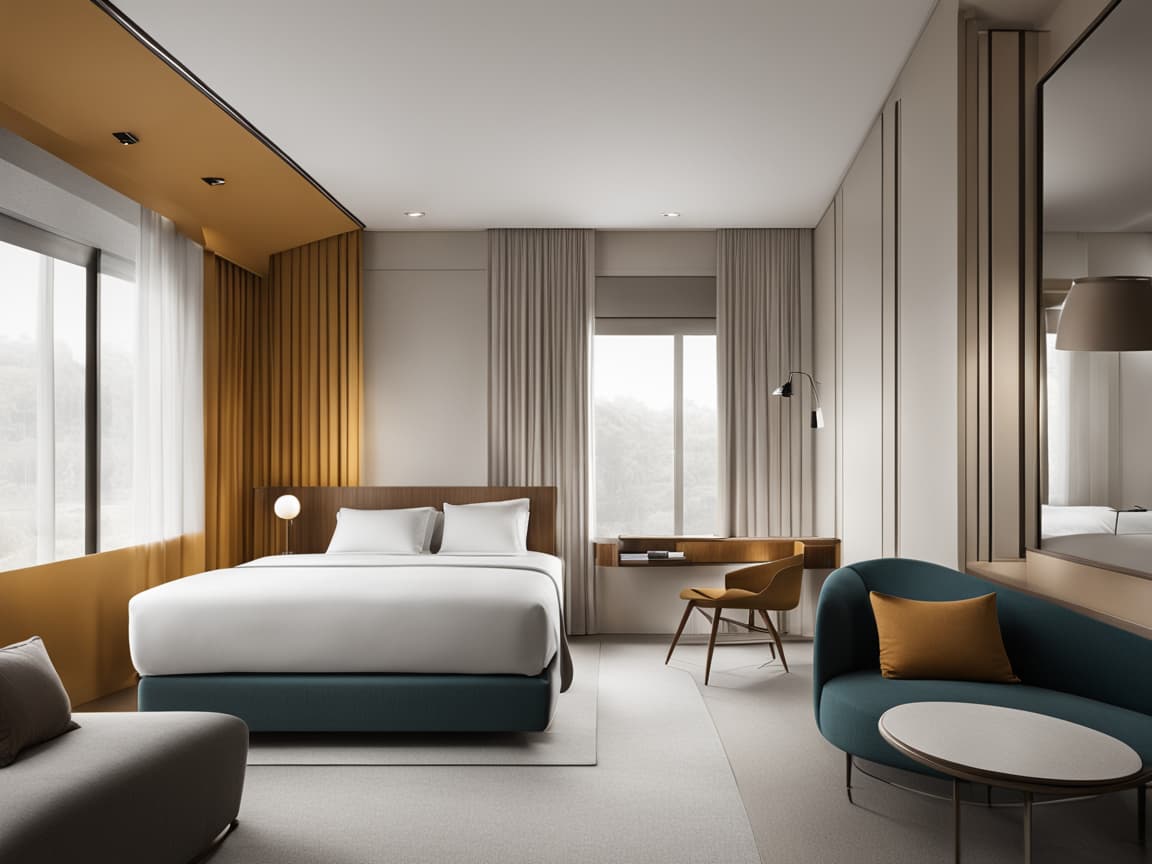
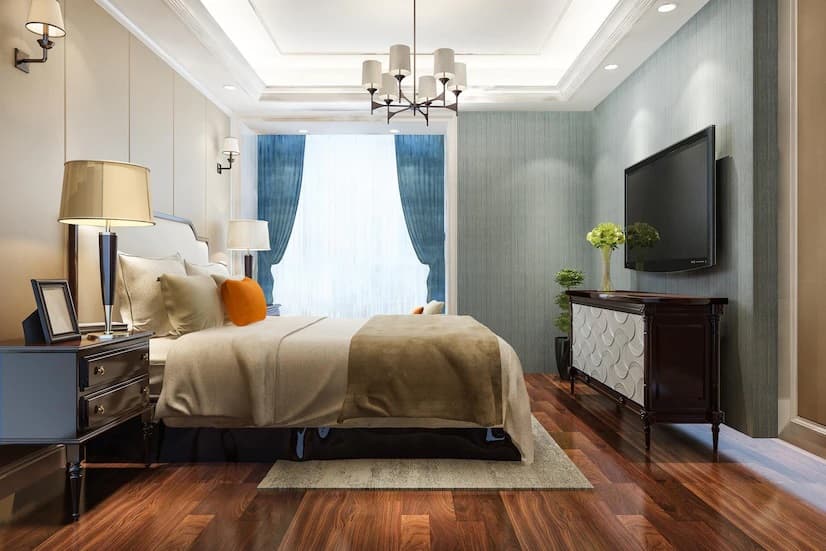
The guest room holds the pieces a buyer orders in the highest volume, so it carries the largest share of the furniture spend. The bed and headboard, the wardrobe and casegoods, the desk and the seating repeat in every room, which means a small price difference on any one piece multiplies across the whole floor. Volume helps here, since the repetition is exactly what earns the bulk rate, and it makes the guest room the place where specification discipline pays back the most.
Lobby and public area furniture cost
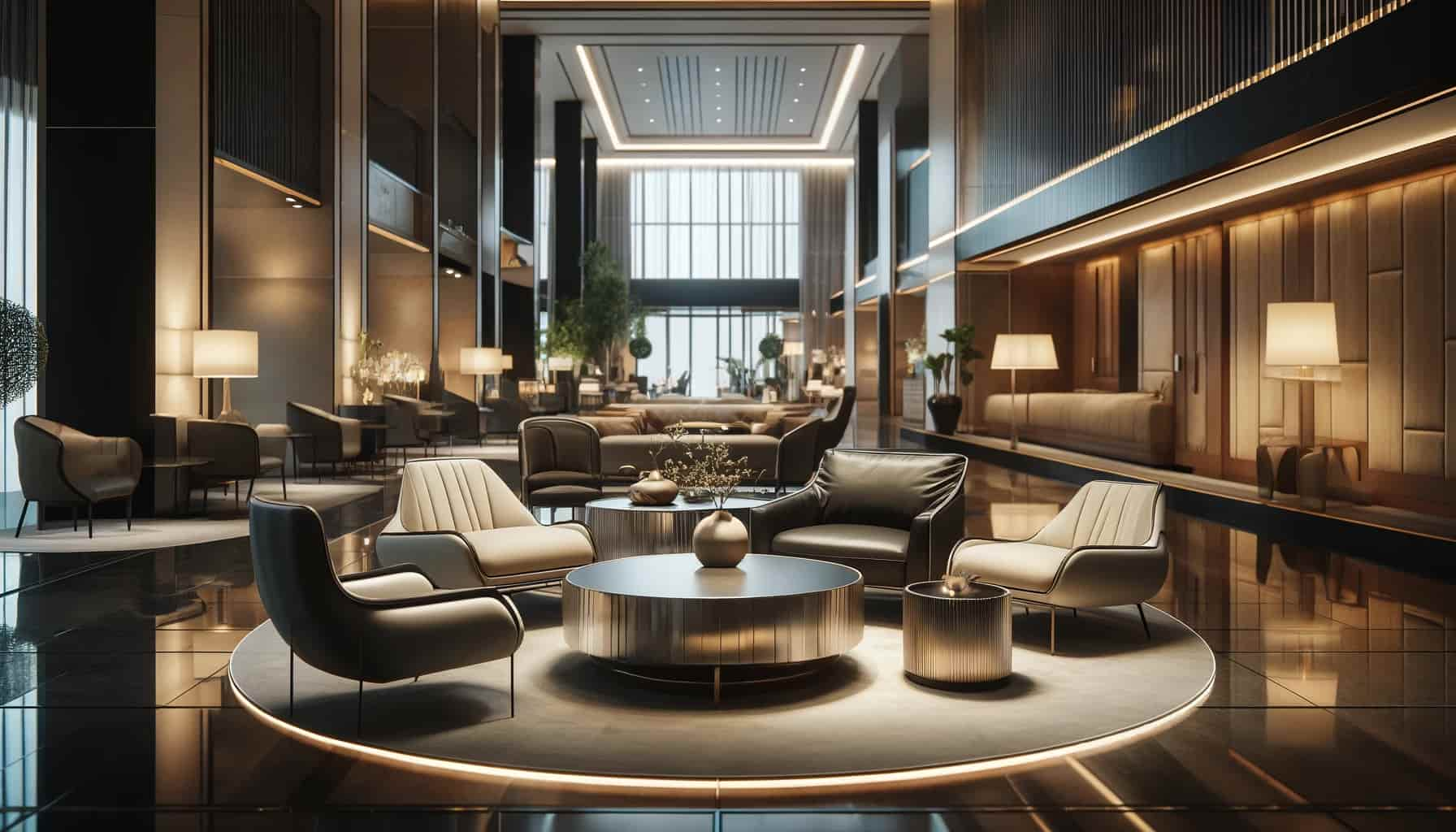
The lobby carries a higher cost per piece than the guest room, even though it holds fewer items. The seating, the reception counter and the lounge pieces face the heaviest traffic in the building and shape what a guest feels on walking in, so owners spend more per item on materials and design here. Public areas add a meaningful layer on top of the guest-room figure rather than a small one.
Restaurant and outdoor furniture cost
Restaurant furniture и outdoor furniture each carry their own cost logic. Dining pieces turn over fast and meet spills, so the spend goes into wipe-clean surfaces and frames that take constant movement. Outdoor furniture costs more per piece for the weatherproofing, the marine-grade coatings and the fade-resistant textiles that survive sun and rain. A buyer prices these zones separately, because a guest-room rate does not transfer to a poolside chair.
Standard Versus Custom Hotel Furniture Cost
Most programmes land between fully bespoke and standard catalogue pieces, and the split decides a large part of the final hotel furniture cost. Understanding the price difference lets a buyer spend custom where it counts and save standard where it does not.
Why custom costs more
Custom furniture carries costs a standard piece has already absorbed. The factory draws the design, builds a sample, tools for a one-off run, and produces without the efficiency of a long repeat. Bespoke shapes, special veneers and unusual joinery each add labour. The premium buys exact fit and a look a property cannot pull off a shelf, which is why custom suits the pieces that carry the brand, the headboards, the lobby seating, the statement casegoods.
Where standard pieces save
Standard pieces from an existing range cost less per unit because the factory already holds the tooling and the process. For supporting items where a property has no strong design requirement, a standard piece is the economical call, and it ships faster. The strongest budgets mix the two: custom for the pieces a guest remembers, standard for the supporting cast, both on one order. A manufacturer that runs both lines delivers the mix under one price and one shipment.
The mix of standard and custom sets a large part of the final figure. A property that customises every piece pays a premium across the whole order; one that takes everything standard saves on price but gives up the design that carries a brand. Most buyers land in the middle, and the exact point on that line moves the hotel furniture cost as much as the material grade does. Deciding the mix early, piece by piece, gives a buyer control over the number before a single quote arrives. Which pieces deserve custom and which can stay standard is a selection decision rather than a pricing one, worked through in our guide on how to choose hotel guest room furniture.
What Buyers Underestimate in Hotel Furniture Cost
A furniture quote is not the whole bill. Several real costs sit outside the unit price, and a buyer who leaves them out of the plan meets them as overruns rather than line items. Each one is part of the true hotel furniture cost, even though no chair carries it on its tag.
Installation and on-site assembly
Furniture that arrives flat or part-built needs labour to assemble and place, and that labour is a cost in its own right. On a large order, a property either pays an installation crew or absorbs the hours into its own team, and either way the work takes time the opening schedule has to allow. A buyer who prices the furniture but forgets the fitting underestimates what it takes to turn a container into furnished rooms.
Storage, warehousing and attic stock
Furniture often lands before the building is ready to receive it, so a project carries storage and warehousing until installation. On top of that, hotels hold attic stock, a reserve of spare pieces kept to replace damaged items fast and keep every room matching. Both the storage and the spare inventory add to the real hotel furniture cost, and both slip out of a first estimate easily.
FF&E versus OS&E
Buyers sometimes fold operating supplies into the furniture figure and distort it. OS&E, the operating supplies and equipment such as linens, smallwares and amenities, is a separate budget from FF&E, and mixing the two makes a furniture quote look high or a furnishing figure look low. Keeping FF&E and OS&E apart lets a buyer read each number for what it is and compare hotel furniture cost against a clean benchmark.
None of these costs is large on its own, but together they can add a tenth or more to an order, and they tend to land late, when the budget has the least room left to absorb them. A buyer who lists installation, storage, attic stock and any import duties at the start, alongside the furniture itself, carries a figure that holds through to the opening rather than one that creeps upward through the project. The point of naming these items is not to inflate the estimate but to make it honest, so the number signed off at the start is the number the project meets at the end.
Unit Price Versus the True Cost of Hotel Furniture
The cheapest quote and the lowest hotel furniture cost are rarely the same thing. Contract furniture runs on a service cycle of roughly seven to ten years, and a piece that fails early forces a property to buy it twice within that window, adding the replacement, the labour and the lost room nights to the original price. The number that matters is the cost across the service life, not the figure on the first purchase order.
This reframes a low quote. A chair that costs less but survives three years instead of ten is not cheaper; it is more expensive, spread over the time it lasts. A buyer who weighs a quote against the years it will serve makes a sounder call than one who reads the headline figure alone, and a serious manufacturer is happy to stand behind the longer-lasting build with a written warranty.
That warranty is part of the value, not a side note. A manufacturer that stands behind a build for two years carries some of the replacement risk that a no-warranty bargain leaves entirely with the buyer. Reading the warranty alongside the price shows the real hotel furniture cost a buyer takes on, because a cheaper piece with no cover can hold the larger liability.
Measure cost across the service life
Divide each quote by the years the piece will realistically serve, and the comparison changes. A higher-spec piece that holds for a decade often beats a budget piece replaced twice in the same period, once you count the labour and downtime of each replacement. Lowest price and lowest cost diverge most on the high-traffic pieces, the lobby seating and the guest-room chairs, where early failure is most expensive to put right.
Hotel furniture cost, read properly, is a question of specification, scope and service life rather than a single sticker figure. A buyer who fixes the specification, confirms the scope, and measures against the years a piece will last controls the number far better than one who chases the lowest quote. For a figure tailored to a real project, you can tell us about your property and receive direct factory pricing from Istanbul.
Часто задаваемые вопросы
How much does it cost to furnish a hotel?
The cost to furnish a hotel depends on the brand tier, the specification and the scope of the package. Furniture, the loose pieces and casegoods, is one part; the full FF&E with lighting, soft goods and electronics runs well above it. For a real figure, a buyer prices a written specification with a manufacturer.
How much does hotel furniture cost per room?
Hotels price furniture per key, meaning per room, so a quote scales across the property. The figure rises with the brand tier and the specification, and casegoods carry the largest share of it. An accurate number comes from a quote against the room’s defined specification rather than a generic benchmark.
Why does hotel furniture cost more than home furniture?
Hotel furniture is built to contract standards rather than domestic ones. Reinforced frames, high rub-count upholstery, scratch-resistant finishes and fire compliance all add to the price, because the piece has to survive daily commercial use and constant cleaning where a home piece would fail within months.
How does order volume affect hotel furniture cost?
Volume lowers the unit price. A factory that builds the same room many times spreads its setup and tooling across the whole run, so a large order costs less per room than a handful of pieces. Ordering a phased roll-out as one programme captures that bulk rate where the schedule allows.
What makes custom hotel furniture more expensive?
Custom furniture carries drawing, sampling and a dedicated production run that a standard piece has already absorbed. Bespoke shapes, special veneers and unusual joinery each add labour. The premium buys exact fit and a distinctive look, which is why custom suits the pieces that carry the brand rather than every item in the room.