En bref
Hotel furniture procurement is the full process of sourcing, ordering, manufacturing, shipping and installing the furniture for a hotel. It is wider than purchasing: it covers specification, supplier selection, contracts, lead times, logistics and on-site fitting, all coordinated against the project programme.
Hotel furniture procurement is how a property turns a set of empty rooms into a working hotel, and it decides far more than which chair ends up where. The sourcing route, the specification, the lead times and the logistics together shape the budget, the opening date and the quality a guest will live with for a decade. Done well, procurement lands the right pieces in the right rooms on schedule; done badly, it delays a reopening and fills a property with furniture that disappoints. Because the bedroom carries the largest share of any scope, the hotel guest room furniture a project specifies is usually where procurement starts, and where the most value is won or lost.
What Hotel Furniture Procurement Means
Réponse rapide
Hotel furniture procurement is the end-to-end process of sourcing, specifying, ordering, manufacturing, shipping and installing a hotel’s furniture. It goes beyond buying: procurement manages the specification, the supplier, the contract, the lead time, the logistics and the on-site fit as one coordinated project rather than a series of separate purchases.
People use procurement and purchasing as if they mean the same thing, but the gap between them explains why some hotels open smoothly and others stall. Purchasing is the transaction — placing the order and paying for it. Procurement is the whole discipline around that transaction: defining what the property needs, finding who can build it, agreeing the terms, managing the production and shipping, and getting the pieces installed. A hotel that only purchases reacts; a hotel that procures plans.
Procurement versus purchasing
To procure furniture is to obtain it through a managed process, not simply to buy it off a list. The difference matters most on a hotel project, where hundreds of pieces have to match, arrive together and meet a brand standard. A purchasing mindset asks what a chair costs; a procurement mindset asks what the chair costs to specify, build, ship, install and warranty across two hundred rooms, and whether the supplier can hold that across the whole order. The second question is the one that protects an opening date.
What FF&E procurement covers
In hospitality, procurement usually sits under the heading FF&E — furniture, fixtures and equipment. Furniture procurement is the largest and most visible part of that brief: the casegoods, seating, beds, headboards and tables a guest touches. FF&E procurement also reaches into lighting, soft furnishings and loose equipment, and a good procurement plan coordinates the furniture with those neighbouring packages so the room reads as one scheme rather than a collection of separate orders. Throughout this guide, hotel furniture procurement refers to that managed, end-to-end discipline rather than the single act of placing an order.
Procurement is a project, not a purchase
The single most expensive mistake in hotel furniture procurement is treating it as shopping. A hotel order has to match across rooms, clear a brand standard, arrive on a programme and carry a warranty. Managing that as a project — with a specification, a contract and a schedule — is the difference between an opening that holds and one that slips.
Where Hotels Get Their Furniture
The first real decision in hotel furniture procurement is the sourcing route, because it sets the price, the control and the lead time for everything that follows. Hotels get their furniture through four broad channels, and the right one depends on the size of the project, the need for custom work and how much control a buyer wants over the specification.
Direct from the manufacturer
Buying direct from a contract furniture manufacturer gives a project the most control and, on a large order, the best price, because nothing sits between the specification and the workshop. A manufacturer that designs and builds in-house can hold a single standard across a whole property, match finishes, and stand behind one warranty. For projects that need custom pieces or large matching quantities, the direct route is usually where procurement lands.
Through a distributor or wholesaler
Wholesale hotel furniture distributors carry ready-made ranges and suit projects that need stock quickly and can work within a catalogue. The trade-off is control: a buyer takes what the range offers rather than what the room needs, and the range limits custom work. Distributors work well for fast, standard fit-outs and less well where a brand standard or an unusual room layout drives the brief.
Through a reseller or procurement agency
Some hotels source through a reseller or a procurement agency that manages the buying on the owner’s behalf. An agency can be useful for a buyer with no in-house procurement team, but it adds a margin and a layer between the project and the maker. The closer a project keeps to the manufacturer, the more of the specification and the price it controls; deciding which supplier or agency to trust is its own exercise, covered in our guide to hotel furniture suppliers.
Choosing the right sourcing route
No single channel wins every project; the right route follows the brief. A large new-build with matching rooms and a brand standard usually procures direct from a manufacturer, where control and volume pricing matter most. A small, fast fit-out that can live within a catalogue may source from a distributor and accept the limits in exchange for speed. A buyer with no procurement team might lean on an agency for a single project, then build the direct relationship once the volume justifies it. The decision turns on three questions: how much the pieces have to match, how much custom work the rooms demand, and how much of the specification and price the buyer wants to control. Answer those honestly and the sourcing route picks itself, which is why this is the first call a procurement plan makes rather than the last.
How Hotel Procurement Differs From Residential Buying
Hotel furniture procurement looks nothing like furnishing a home, and a buyer who approaches it that way pays for the lesson. The differences run through volume, durability, compliance and the way the pieces have to work together, and each one changes how a project specifies and orders.
Contract-grade construction
The clearest difference is the build. Hotel furniture is contract-grade: frames, joints, foams and finishes engineered for constant use, frequent cleaning and a long service life — steel and other metal furniture frames are a common choice where a room needs that extra structural durability. A residential piece that looks identical in a photograph will loosen, sag and scuff within a year of hospitality traffic. Procurement specifies to a contract standard from the start, because the cheapest way to create an early replacement is to buy a domestic piece for a commercial room.
Volume and consistency
A home buys one of something; a hotel buys hundreds that have to match. Procurement has to guarantee that the two-hundredth headboard looks like the first, that finishes hold across production runs, and that a mid-order shortage does not leave two floors mismatched. That consistency is a procurement problem as much as a manufacturing one, and it rewards a single, capable supplier over a patchwork of sources.
Brand standards and compliance
Branded hotels procure against published specifications — approved finishes, dimensional tolerances and fire ratings — that a piece has to meet to pass inspection. Fire-rated foams, certified fabrics and tested constructions are not optional extras; they are the baseline a procurement brief has to write in, and the choice of materials for hotel furniture is what a brand standard is really specifying. A beautiful piece that fails a fire or compliance check is worthless to a hotel, however well it suits the mood board.
Service life ties these differences together. A hotel procures furniture expecting it to perform across a full refurbishment cycle — often eight to ten years for hard furniture, and the signs that cycle is ending are covered in our guide to hotel renovation — which is why the warranty and the build quality outweigh the headline price. A residential purchase optimises for the look today; a procurement decision optimises for the cost of ownership across years of public use. That longer horizon is the lens every contract-grade specification looks through.
The Hotel Furniture Procurement Process, Step by Step
A well-run hotel furniture procurement process moves through a clear sequence, and skipping a stage almost always shows up later as a delay or a defect. The seven steps below take a project from a blank specification to installed, signed-off furniture, with each stage protecting the ones that follow.
| Scène | Que se passe-t-il | Who owns it |
|---|---|---|
| 1. Specify | Define each piece: dimensions, materials, finishes, fire ratings, quantities per room type. | Designer / procurement lead |
| 2. Source & RFQ | Shortlist suppliers and issue a request for quotation against the specification. | Procurement lead |
| 3. Sample | Approve a physical sample or prototype for each key piece before committing the run. | Owner / operator / brand |
| 4. Contract & PO | Agree price, terms, Incoterms, lead time and warranty; issue the purchase order. | Procurement / legal |
| 5. Produce | Manufacture to the approved sample, with progress checks against the programme. | Manufacturer |
| 6. Inspect & ship | Pre-shipment inspection, then freight on the agreed Incoterms to site. | Manufacturer / freight |
| 7. Install & sign off | Deliver, assemble, place and snag each room against the specification. | Install crew / project manager |
Specification and sampling come first
The early stages carry the most weight. A precise specification turns a vague brief into something a maker can quote and build, and a signed sample fixes the standard the maker builds every piece to. Procurement that rushes these two steps to save time loses far more later, when a finish does not match or a chair proves uncomfortable across a hundred rooms. The sample room is the cheapest insurance a procurement project can buy.
Contracts protect the programme
The contract is where procurement locks the things that decide whether an opening holds: the price, the lead time, the Incoterms, the inspection rights and the warranty. A purchase order without those terms is an invitation to a dispute. Writing them in — and agreeing what happens if a date slips — is what keeps the furniture off the critical path.
The request for quotation
Between the specification and the contract sits the request for quotation, and the quality of the RFQ decides the quality of the quotes that come back. A vague enquiry returns vague prices a buyer cannot compare; a precise RFQ — with dimensions, materials, finishes, quantities per room type and the required lead time — returns like-for-like quotes that reveal the real cost and the real capability of each supplier. The RFQ also tests responsiveness: a maker who answers a detailed brief with detailed numbers and sensible questions shows how they will run the order itself. Procurement that issues a sloppy RFQ and then struggles to compare the replies has created its own confusion.
Specifying Hotel Furniture by Area
A hotel furniture procurement brief is not one list but several, because each area of a property asks different things of its furniture. Specifying by area keeps the scope complete and matches the right piece to the right traffic. The categories below show how a procurement plan usually breaks down; the full catalogue of pieces sits in our guide to the types de mobilier d'hôtel a property needs.
Chambres d'hôtes
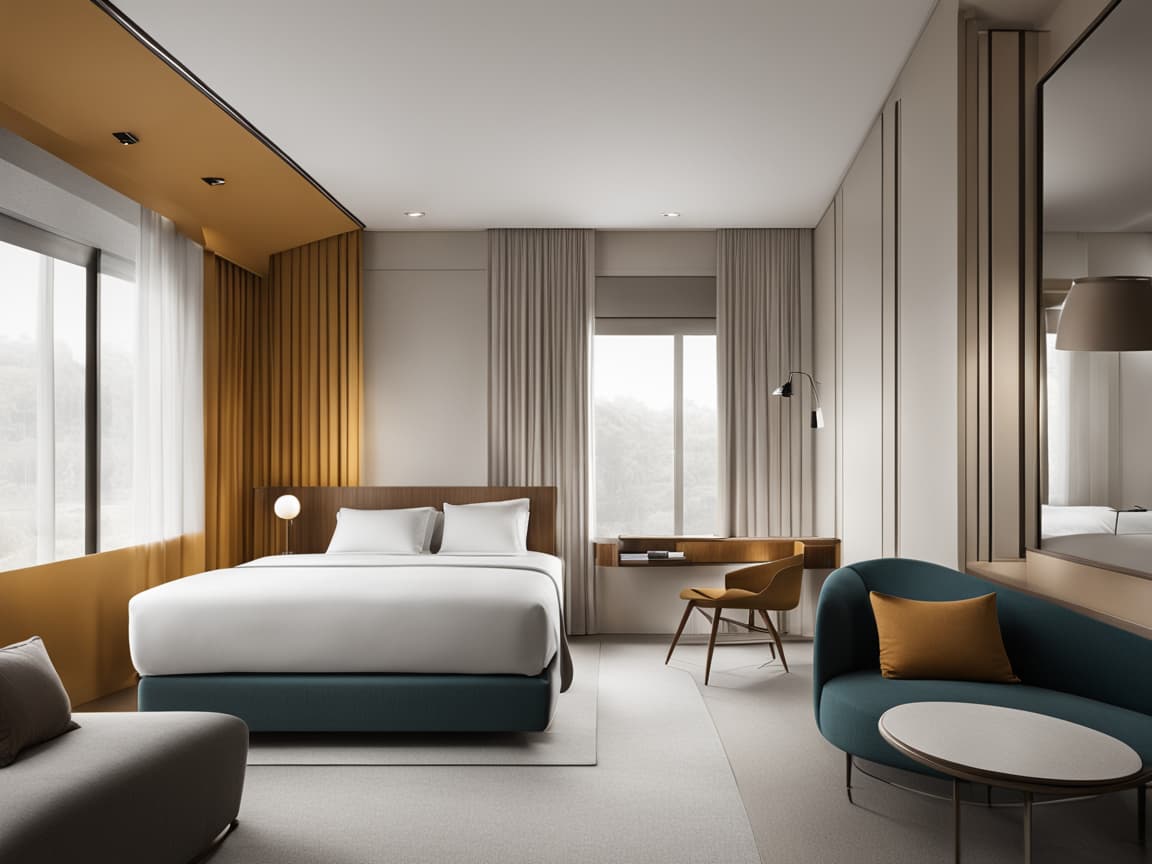
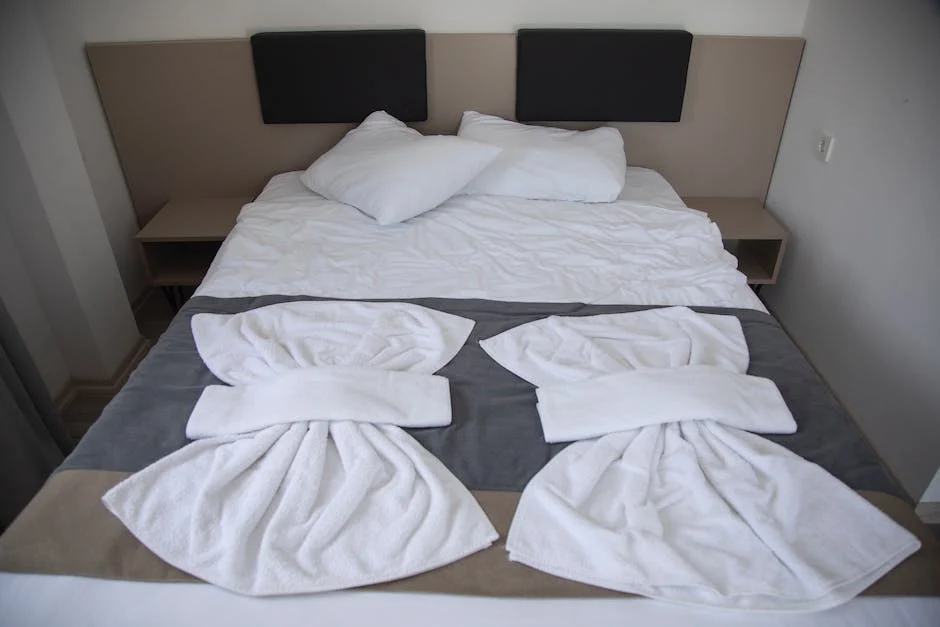
Guest rooms carry the largest and most repeated part of the order: beds, headboards, casegoods, desks, seating and storage, multiplied across every room type. Because these pieces repeat most, an error here multiplies most, which is why guestroom procurement rewards the tightest specification and the firmest sample sign-off of any area — the choices involved are covered in full in our guide to Meubles d'hôtel.
Lobby and lounge
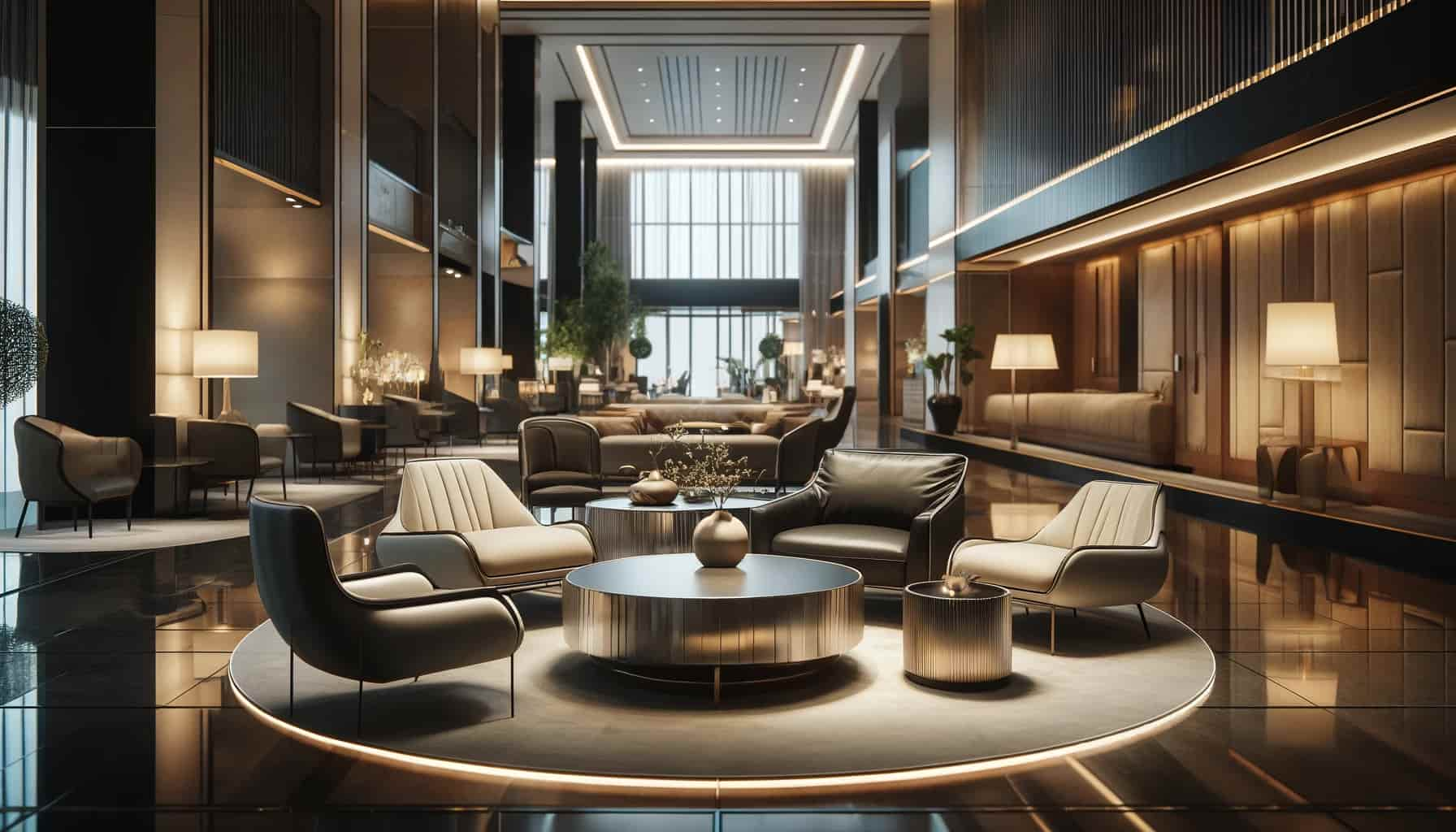
Lobby and lounge furniture works harder on appearance and on traffic at once. Reception desks — often fronted in natural stone — lounge seating, coffee and console tables set the first impression while taking constant public use, so the procurement brief here weighs both presence and durability — the full brief for this area sits in our guide to Meubles de lobby d'hôtel. Hotel lounge furniture procurement often needs a mix of statement pieces and workhorse seating in the same scheme.
Restaurant, bar and outdoor
Dining and outdoor areas demand the most robust specification of all. Specifying Meubles de restaurant means chairs, tables, bar stools and banquettes that face spills, stacking and turnover; function and banquet halls add a bulk order of their own, set out in our guide to Meubles de banquets; specifying outdoor furniture means pieces that face sun, rain and pool chemicals. Procurement specifies commercial-grade construction and weatherproof materials for these zones, because anything less simply schedules an early replacement.
Corridors and back-of-house
The areas a procurement brief forgets are the ones guests pass through rather than sit in: corridors, lift lobbies, the gym and the back-of-house spaces staff use all day, along with the fitted kitchen cabinetry in pantries, kitchenettes and staff areas. Corridor consoles, mirrors and benches take heavy passing traffic and trolley knocks, so they need the same contract-grade specification as the rooms they serve. Back-of-house furniture rarely photographs, yet staff work it harder than a guest works anything, and a piece that fails there costs the operation in replacements and downtime. A complete procurement plan specifies these transitional and operational areas alongside the headline spaces, because a property is only as finished as its least-considered corner.
One generic order for the whole property
Treating a hotel as a single furniture order — rather than a set of area-specific briefs — is a recurring procurement error. A chair sized for a quiet guest room fails in a busy restaurant; an indoor finish dies by the pool. Specify each area to its own use, then consolidate the orders, not the specifications.
Budgeting a Hotel Furniture Procurement Project
Budget shapes every procurement decision, and the projects that stay on plan are the ones that frame the number correctly from the start. The useful unit in hotel furniture procurement is the per-key budget — the furniture spend per guest room — because it scales cleanly across a property and lets a buyer compare options on the same basis.
Where the money goes
Within a furniture budget, the guest room takes the largest share, followed by the public areas and then the back-of-house and outdoor zones. Bulk procurement changes the maths: ordering matching pieces in volume from one maker usually beats assembling the same quantity from several sources, both on price and on consistency. The detail of what actually drives the figures — materials, finishes, quantities — sits in our guide to coût du mobilier d'hôtel, which goes deeper into pricing than a procurement overview needs to.
Protect the contingency
A procurement budget with no buffer turns every surprise into a delay. Quantities shift between survey and site, a finish gets upgraded, a shipping cost moves; a disciplined plan carries a contingency on both money and time. Treating furniture as a multi-year investment rather than a line to minimise on day one is what keeps a property from re-procuring early, and it is the mindset that separates a procurement project from a shopping trip.
Bulk procurement and consolidation
Volume is the lever a hotel project has that a home never does, and bulk procurement uses it well only when the orders consolidate cleanly. Ordering the matching pieces for a whole property from one maker, in one production run, beats splitting the same quantity across several suppliers on almost every measure: a sharper price, a single consistent finish, one delivery to coordinate and one warranty to call on. Consolidation also cuts the hidden costs that fragment a budget — multiple freight charges, mismatched finishes, the management time of chasing several suppliers at once. The discipline is to consolidate the orders without consolidating the specifications, keeping each area specified to its own use while buying the volume as one.
Payment terms belong in the procurement conversation as much as price does. Contract orders typically run on a deposit against production and a balance before or on shipment, and settling that structure up front protects both sides: the maker commits the materials with confidence, and the buyer keeps leverage until the goods prove right. Tying the payment schedule to clear milestones — sample approval, production sign-off, pre-shipment inspection — turns money into a control rather than a risk. A procurement plan that fixes the payment terms alongside the Incoterms and the lead time leaves no gap for a dispute to grow in later, which is one more reason the contract stage rewards the care a buyer puts into it.
Lead Times and Production
The question buyers underestimate most in hotel furniture procurement is time. Manufacturers build most contract furniture to order, so the lead time is not a delivery delay but a production reality, and planning around it is half the job of procurement.
What standard lead times look like
For made-to-order contract furniture, a production window of roughly four to eight weeks is typical, with shipping added on top depending on the route. Large or highly custom orders run longer; simple ranges run shorter. The figure that matters is the total — production plus freight plus installation — measured against the opening date, not the production window alone. Ordering late is the single most common reason a hotel opens before its furniture arrives.
Phasing protects the programme as much as ordering early does. On a property that opens in stages, splitting the production and delivery by floor or by room type lets the first rooms come online while later ones finish production, rather than waiting on one large consignment. Phased lead times also ease cash flow and reduce the storage a site has to find for finished pieces. The trade-off is coordination — more deliveries to schedule and inspect, each tied to its own handover date — but for most hotel projects that control is worth the extra scheduling, because it keeps the furniture moving in step with the build.
Made-to-order versus ready-made
Made-to-order procurement buys control and consistency at the cost of time; ready-made buys speed at the cost of fit. Most hotel projects accept the longer made-to-order window because a brand standard, a room layout or a matching requirement rules out a catalogue. Where custom pieces drive the brief, the depth of that decision sits in our guide to custom hotel furniture; for procurement, the point is to build the production window into the programme from the first survey.
Order against the programme, not the calendar
The delivery window in hotel furniture procurement has to track the construction programme, not a fixed date. A floor that slips on the building work should pull its furniture order with it, because finished casegoods stored on a live site collect damage. Lock production and freight against the room handover dates, and brief the maker early enough to flex them.
Logistics, Shipping and Incoterms
Once the maker has built the furniture, hotel furniture procurement becomes a logistics exercise, and the terms a buyer agrees here decide who carries the cost and the risk across the journey. International procurement in particular lives or dies on the Incoterms — the standard trade terms that split responsibility between supplier and buyer.
| Incoterm | What it covers | Risk transfers to buyer |
|---|---|---|
| EXW (Ex Works) | Buyer collects from the factory and arranges all transport. | At the factory gate |
| FOB (Free On Board) | Supplier delivers to the port and loads the vessel; buyer handles sea freight onward. | Once loaded on board |
| CIF (Cost, Insurance, Freight) | Supplier pays freight and insurance to the destination port. | At the destination port |
Choosing the right terms
FOB and CIF are the terms most hotel projects meet. FOB suits a buyer with their own freight arrangements and gives the most control over the shipping leg; CIF suits a buyer who wants the supplier to handle freight and insurance to the destination port. Neither is automatically cheaper — the difference is who manages the journey and carries the risk. A procurement contract should name the Incoterm explicitly, because an order shipped on the wrong assumption is where cost and blame collide.
Coordinating the delivery
Delivery coordination is where good procurement earns its keep. Phased deliveries that match the construction programme keep a site clear and protect finished pieces from damage; a single dumped consignment with nowhere to go invites loss. Tracking the shipment, agreeing a delivery schedule and naming a single point of contact for the freight turn the most fragile part of the journey into a managed one.
Customs, duties and documentation
Cross-border hotel furniture procurement carries a paperwork layer a domestic order never meets, and the projects that clear customs cleanly are the ones that prepared for it. Commercial invoices, packing lists, certificates of origin and any compliance or fire-rating documentation have to travel with the shipment, accurate and complete, or the furniture sits in a port while the opening date passes. Import duties and local taxes belong in the budget from the start, not as a surprise on arrival. A supplier experienced in export handles much of this documentation as routine, which is one practical reason cross-border buyers favour a manufacturer built for international work over one that ships abroad only occasionally.
Installation and FF&E Coordination
Furniture that reaches a site is not yet furniture in a room, and the final stage of hotel furniture procurement — installation — is where many projects lose the time they saved earlier. Getting the pieces unloaded, assembled, placed and signed off is a coordination task that rewards planning as much as the sourcing did.
How furniture gets into the rooms
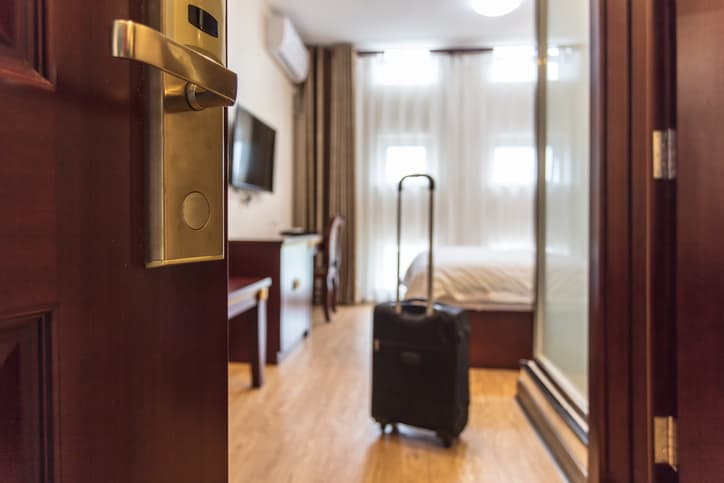
Installation runs late in the construction sequence, after the wet trades, flooring and decoration, so the furniture has to arrive when the rooms are ready to receive it. An install crew unloads, assembles and places each piece to the room layout, then a project manager snags every room against the specification — checking the finish, the fit and any damage in transit before sign-off. Securing heavy pieces and confirming accessible clearances belong in this stage, not as an afterthought.
Coordinating with the wider FF&E package
Furniture rarely installs alone. It lands alongside lighting, soft furnishings, artwork and loose equipment, and the project manager has to sequence those packages so they do not fight for the same room on the same day. Coordinating the furniture maker with the contractor, the interior designer and the other FF&E vendors is what keeps the final stage moving floor to floor instead of stalling between trades. A procurement plan that ignores this coordination simply moves the bottleneck to the doorway of every finished room.
Snagging and final sign-off
The last act of hotel furniture procurement is the snag, and it protects everything spent before it. A project manager walks each finished room against the specification, checking that every piece matches the approved sample, that the finish carries no marks, that drawers run and doors close, and that nothing arrived damaged. Faults caught at snagging get fixed under warranty before a guest ever sees them; faults missed at snagging become complaints and replacements at full cost. A clear sign-off — room by room, against the specification — closes the procurement loop and hands the operator a property ready to trade rather than a punch list to chase.
International and Bulk Procurement
Large and cross-border projects raise the stakes in hotel furniture procurement, and they reward a different level of planning. Branded groups, franchise hotels and hotel chains procure in volume and across borders, where consistency, logistics and a single accountable supplier matter more than on a single property.
Procuring for chains and franchises
Furniture procurement for hotel chains and franchise properties carries an extra demand: every site has to match the brand standard, often across countries. That pushes a group toward a manufacturer who can hold one specification across repeated orders, document compliance for each property, and ship to multiple destinations on consistent terms. Global procurement for hotel furniture is as much about repeatability as it is about price.
Sourcing from international manufacturers
Many hotel groups source their furniture from international contract manufacturers, where capacity and price favour volume work. We build to a project specification for properties across more than thirty countries, with West Africa and Ghana among our established export markets, shipping on FOB or CIF terms with a multi-year warranty. The wider case for sourcing from a particular country — Turkey’s contract manufacturing base in particular — sits in our guide to furniture made in Turkey; for procurement, the point is that cross-border orders reward early coordination and a supplier built for export.
Repeatability is what separates chain procurement from a one-off fit-out. A group that opens several properties a year needs a supplier who can reproduce the same specification months apart, document compliance for each site, and ship to whichever country the next opening lands in. That favours a manufacturer with the capacity to hold a standard order open across a roll-out, rather than one re-quoting and re-sampling every property from scratch. For a growing brand, the procurement relationship becomes part of the operating model, not a transaction repeated in isolation each time.
Plan the freight window before the rooms come online
On an international project, the freight window is the part owners forget. Agree the Incoterms, sign the sample, and build production plus shipping into the programme before the rooms are ready, so the furniture meets the schedule rather than chasing it. Cross-border procurement punishes late orders harder than any domestic one.
Procurement Mistakes and Choosing a Partner
Most hotel furniture procurement failures trace back to a handful of avoidable mistakes, and most procurement successes come down to choosing the right partner to begin with. Knowing both is the closest thing the discipline has to a shortcut.
The mistakes that recur
The common procurement errors repeat across projects: ordering too late and forcing the furniture onto the critical path; specifying residential furniture for a commercial room; skipping the sample and discovering a fault across a whole order; leaving the Incoterms vague; and chasing the lowest unit price while ignoring lead time, consistency and warranty. Each one is cheap to avoid at the specification stage and expensive to correct once the order is in production.
What to look for in a procurement partner
The test for a furniture partner is the same set of questions on every project. Look for a written specification, a signed sample, a pre-shipment inspection, a clear warranty and a delivery window that holds against the construction programme. A maker who designs, builds and ships under one roof gives a project a single point of accountability, which is worth more on a hotel order than a marginally lower price from a fragmented supply chain.
Building a long-term procurement relationship
The best hotel furniture procurement outcomes come from a relationship rather than a single deal. A maker who has built for a property once knows its standard, its layouts and its preferences, and the second order moves faster and cleaner than the first. Long-term partners offer priority on production slots, consistency across phases of a roll-out, and a warranty backed by someone who expects to work with the buyer again. Treating procurement as a repeatable partnership — rather than a fresh tender every time — compounds the gains: each project starts further along, while a one-off transaction throws that knowledge away.
Procurement as an operational advantage
Handled as a managed discipline, hotel furniture procurement does more than fill rooms. It protects the opening date, holds the brand standard, keeps the budget honest and lands furniture that survives the years a guest will judge it. The owners who treat procurement as a project — with a specification, a contract, a schedule and a partner they can hold to it — are the ones whose properties open on time and still look sharp long after, while the buyers who shopped for furniture are back in the market early, paying twice for the same rooms.
Foire aux questions
What is hotel furniture procurement?
Hotel furniture procurement is the managed, end-to-end process of sourcing, specifying, ordering, manufacturing, shipping and installing a hotel’s furniture. It covers supplier selection, contracts, lead times, logistics and on-site fitting, coordinated against the project programme rather than handled as a series of separate purchases.
What is the difference between buying and procuring furniture?
Buying is the transaction — placing the order and paying. Procuring is the whole discipline around it: defining the specification, selecting the supplier, agreeing the contract and Incoterms, managing production and shipping, and installing the pieces. A hotel that procures plans the project; a hotel that only buys reacts to it.
What are the steps in the hotel furniture procurement process?
A typical process runs through seven stages: specify each piece, source suppliers and issue an RFQ, approve a sample, contract and raise the purchase order, manufacture to the approved sample, inspect and ship on the agreed Incoterms, then install and sign off each room against the specification.
What are standard lead times for hotel furniture procurement?
Made-to-order contract furniture usually runs a production window of roughly four to eight weeks, with shipping added depending on the route. Large or highly custom orders take longer. The figure that matters is the total of production, freight and installation measured against the opening date.
What is FF&E procurement?
FF&E procurement covers furniture, fixtures and equipment — the furniture, lighting, soft furnishings and loose equipment a hotel needs to operate. Furniture is the largest and most visible part of that brief, and a good plan coordinates it with the neighbouring packages so a room reads as one scheme.
Where do hotels get their furniture?
Hotels source furniture through four main channels: direct from a contract manufacturer, through a wholesale distributor, through a reseller or procurement agency, or via a mix of these. Direct manufacturing gives the most control over specification, price and warranty, which is why large and custom projects favour it.
What is hotel furniture made of?
Contract hotel furniture uses materials chosen for durability under constant use: solid timber and engineered wood for casegoods, steel or hardwood frames for seating, fire-rated foams, and stain-resistant contract fabrics or leather. These materials meet the wear, cleaning and fire-rating demands a residential piece never faces.