En bref
Hotel furniture materials are the woods, panels, metals, fabrics and surfaces a maker turns into contract furniture. The right choice balances durability under heavy traffic, fire compliance, cleanability and cost — which is why a property specifies by performance first and looks second.
Every decision about hotel furniture starts with one question: what is it made of? The choice of hotel furniture materials sets how long a piece lasts under heavy use, whether it clears a fire inspection, what it costs to keep clean, and how the room reads to a guest. This guide works through the materials a property specifies — solid wood, engineered panels, metal, upholstery, glass and stone — with the technical points that separate contract-grade from domestic, so a buyer can match each material to the job. The furniture those materials become sits in our Meubles d'hôtel range, built to a contract standard from the frame out.
What Hotel Furniture Materials Are, and Why Contract Differs
Réponse rapide
Hotel furniture materials are the woods, engineered panels, metals, fabrics and hard surfaces a manufacturer turns into contract furniture. Six families cover almost everything a hotel buys: solid wood, engineered wood and laminate, metal, upholstery, glass and stone. Each is specified to a contract grade that resists heavier wear, cleaning and fire risk than a domestic version.
Most hotel furniture comes down to a short list of material families, combined in different ways for different pieces. A guest-room desk pairs an engineered-wood carcass with a real-wood veneer; a lobby chair sets a metal or hardwood frame under a performance fabric; a restaurant table drops a stone or laminate top onto a steel base. Knowing how each family behaves is what lets a property specify with intent rather than copy a mood board, and it is the difference between a room that still looks deliberate after two years and one that quietly dates.
The contract material palette
The families a hotel specifies are solid wood for frames and statement pieces, engineered wood and laminate for casegoods and surfaces, metal for structure and legs, upholstery for every soft touchpoint, glass for light and transparency, and stone for premium tops. The table below sets the six side by side before the sections that follow take each one in turn.
| Material | Durabilité | Upkeep | Best use in a hotel |
|---|---|---|---|
| Bois massif | Very high, repairable | Moderate, reacts to humidity | Frames, headboards, statement casegoods |
| Engineered wood & laminate | High when specified well | Low, wipe clean | Wardrobes, desks, cabinetry, surfaces |
| Métal | Very high, dent-prone | Very low | Chair and table frames, legs, hardware |
| Tapis de siège | Depends on the fabric | Higher, needs cleaning | Seating, headboards, banquettes |
| Glass | Moderate, tempered safer | Low, shows marks | Tabletops, shelving, accents |
| Stone | Very high, heavy | Low, needs sealing | Reception, vanities, dining and lobby tops |
Why contract materials differ from domestic
A sofa for a living room and the same shape for a lobby can look identical and behave nothing alike. Contract hotel furniture materials carry higher abrasion ratings, fire compliance, moisture resistance and serviceability than their domestic cousins, because the setting demands it. A property that furnishes a hotel with residential-grade pieces, however well made, buys furniture built for the wrong life — the difference shows within months, usually in a lobby. This gap between contract and domestic hotel furniture materials is the single most expensive thing a buyer can overlook.
How materials drive durability, safety and cost
Three forces decide a material choice. Durability sets how the piece survives traffic, cleaning and time. Safety sets whether it meets the fire and emissions rules of its market. Cost runs across the whole lifecycle, since a material that lasts ten years rarely costs more than one replaced twice in the same span. The full picture of what drives furniture cost sits in our note on hotel furniture prices; here the focus stays on the materials themselves.
How materials combine in a single piece
Few hotel pieces use one material alone, and reading the combination is half of specifying well. A guest-room desk stacks an engineered-wood carcass, a real-wood veneer face, a metal drawer runner and a powder-coated leg. A lounge chair joins a hardwood frame, high-resilience foam, a contract fabric and metal feet. The skill in choosing hotel furniture materials lies less in naming a single winner than in matching each layer — structure, surface, comfort and finish — to the job it does, so the weakest material in the stack never becomes the one that fails first.
Solid Wood and Hardwood
Solid wood is the oldest hotel furniture material and still the benchmark for frames and statement pieces. Among hotel furniture materials, solid wood is the one a buyer pictures first, and for frames it stays the benchmark. Its appeal is simple: it carries weight, a maker can repair and refinish it rather than replace it, and it brings a warmth no synthetic fully matches.
The hardwoods hotels specify
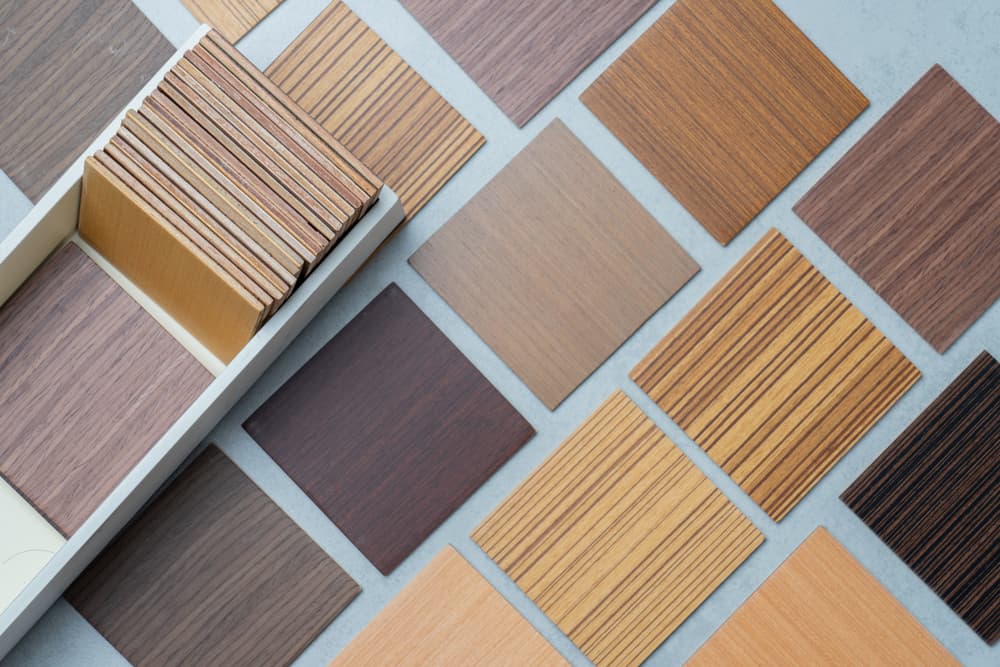
Hardwoods sit at the top of the wood palette. Oak balances strength and value and takes almost any finish; walnut brings a dark, refined grain for premium rooms; teak resists moisture well enough for indoor-outdoor use; beech and ash give pale, tough frames for upholstered seating. Hardness is measured on the Janka scale, and the species a property picks decides how the piece resists dents over years of guest contact. Softwoods such as pine cost less but mark easily, so they suit back-of-house more than guest-facing furniture.
The strength, and the humidity caveat
Solid wood rewards a property that respects its one weakness: it moves with moisture. Timber is hygroscopic, swelling and shrinking as humidity shifts, which can warp a door or open a joint in a hot, damp climate if the wood arrives poorly seasoned. For projects in coastal and tropical markets — the West African work HFC ships to among them — kiln-dried hardwood and engineered cores in the carcass keep furniture stable where raw solid wood would struggle.
Match the wood to the climate, not just the look
The same hardwood that performs beautifully in a temperate hotel can warp in a humid coastal resort. A property exporting to a hot, damp market specifies kiln-dried timber with controlled moisture content and leans on engineered cores for large flat panels, keeping solid wood for frames and accents. Matching the material to the climate is what stops a beautiful piece from twisting in its first wet season.
Certified and recycled-content wood
Sustainability has moved wood selection beyond species alone. Recycled-content panels and responsibly managed timber lower a piece’s footprint, while FSC or PEFC certification proves new timber comes from well-managed forests — documentation a growing number of hotel brands now require. Among hotel furniture materials, responsibly sourced wood carries a double advantage: it answers a brand’s environmental targets and, because quality hardwood lasts for decades, it cuts how often a property replaces the piece at all.
Wood finishes that shape look and wear
A finish decides how a wood reads and how it survives. A penetrating oil keeps a natural, matte feel and lets a maker spot-repair a scratch in place; a lacquer or polyurethane builds a harder, glossier shell that resists moisture and cleaning; and a stain shifts the colour without hiding the grain. Across hotel furniture materials, the wood finish is where a maker balances durability against warmth, so a property matches it to the room’s traffic and the housekeeping it can promise.
Where solid wood earns its place
Solid wood belongs where strength and repairability matter most: bed frames, chair and sofa frames, headboard rails and statement casegoods a property expects to keep for a decade or more. For the large flat surfaces of wardrobes, desks and cabinetry, most makers move to engineered wood and veneer, which stay flatter and cost less — the next section, and our guide to wood veneers and laminate casegoods, covers that route in full. Reading where solid wood ends and engineered panels begin is one of the most useful instincts a hotel buyer can build, because it decides both the look and the lifespan of half the room.
Engineered Wood, Veneer and Laminate
Engineered wood does most of the quiet work in a hotel. Wardrobes, desks, cabinetry — including the fitted kitchen cabinets in suites and aparthotels — and the carcasses behind a veneer almost all start as engineered panels, because they stay flat, cost less than solid timber and accept any surface a designer wants.
MDF, plywood and the panel cores
The common cores are MDF, plywood, particleboard and melamine-faced chipboard, each trading cost against strength and screw-holding. The detail that matters for a hotel is the panel grade. Low-emission boards certified to CARB Phase 2 release far less formaldehyde into guest-room air, and moisture-resistant MDF or phenolic-bonded plywood holds its shape in bathrooms, kitchenettes and humid climates where a standard board would swell. A buyer who specifies the core grade, not just the finish, receives furniture that lasts and keeps the room’s air clean.
Veneer against high-pressure laminate
Two surfaces dominate casegoods. Real-wood veneer bonds a thin slice of timber to the core for an authentic grain a maker can refinish, though it asks for more care around water. High-pressure laminate fuses resin-saturated layers into a hard, non-porous skin that shrugs off scratches, heat and cleaning chemicals; a contract laminate carries a wear layer thick enough to hold its look for ten years or more where veneer might need refinishing far sooner. The choice follows the room: veneer for the premium suite, laminate for the high-turnover desk and bathroom vanity.
Engineered does not mean cheap — specify the core
The biggest mistake with casegoods is judging them by the surface alone. Two desks can wear the same laminate over completely different cores, and only one survives a humid bathroom or holds a hinge for years. A property that names the board grade — CARB Phase 2, moisture-resistant where needed, with the wear layer stated — buys engineered furniture that outlasts solid wood at lower cost, rather than a pretty panel that delaminates.
Where casegoods materials fit
Engineered wood and laminate own the casegoods of a hotel: wardrobes, luggage benches, desks, drawer units, TV panels and bathroom vanities, plus the cabinetry behind reception. Because the laminate-versus-veneer decision carries so much detail, our dedicated guide to veneer and laminate casegoods works through the trade-offs piece by piece, while this pillar keeps the overview.
Finishes that protect casegoods
A casegood is only as durable as its finish. Lacquer gives a traditional, repairable topcoat; UV-cured finishes bake on a harder, faster-curing film suited to high-production lines; and melamine and laminate surfaces need no separate topcoat at all. Each balances hardness, repairability and cleaning tolerance differently, and a property matches the finish to housekeeping’s routine so a daily wipe-down never dulls the surface across a season.
Metal Frames and Finishes
Metal gives hotel furniture its backbone. Of all the hotel furniture materials, metal is the least seen and the most load-bearing. It rarely forms a whole piece, but it carries the loads: the legs under a dining table, the frame inside a lounge chair, the base of a bar stool, and the hardware on every drawer. Our specifier’s guide to metal furniture for hotels breaks down each alloy and finish in more depth.
Steel, aluminium and brass
Three metals cover most hotel work. Steel offers the highest strength for load-bearing frames and stretchers that take constant weight. Aluminium runs lighter and resists corrosion, which suits stackable and outdoor-leaning pieces. Brass earns its place as a finish and accent, bringing warmth and a sense of quality to legs, trims and handles. Each pairs naturally with wood or upholstery, letting a maker set a soft seat on a hard, slim frame.
The finishes that protect metal
A metal’s finish decides how it survives a hotel. Powder coating bakes a tough, even film over the frame that resists chips and cleaning far better than wet paint, with a thicker coat specified for high-wear and outdoor pieces. Chrome and electroplated finishes give a bright, hard surface for legs and trims, while a clear lacquer protects brass from tarnish. Specifying the finish, and its thickness for exposed pieces, is what keeps a metal frame looking new after years of trolleys and chair-scrapes.
Where metal works hardest
Metal earns its keep in the highest-traffic seating and tables: restaurant and banquet chair frames, bar stools, table bases and the structural parts of lobby seating. Our Meubles de restaurant et lobby furniture ranges lean on metal frames precisely because they take the heaviest, most repetitive use a property sees.
Softening metal’s drawbacks
Metal’s strength comes with two quirks a maker designs around. Bare metal can feel cold and read as hard, so designers pair it with timber arms, upholstered seats or warm brass tones to keep a space inviting. Metal chairs can also scrape and ring against hard floors, which felt or nylon glides on the feet quietly solve. Handled this way, metal gives a hotel its durability without the institutional edge.
Decorative and specialty metalwork
Beyond structure, metal earns a decorative role. Wrought and cast iron bring a heavier, traditional character to bases and balustrades; blackened and antique-brass finishes suit heritage and boutique interiors; and laser-cut metal screens divide a space while letting light through. These touches widen the part metal plays among hotel furniture materials, letting a property use it as a design element and not only a structural one.
Upholstery, Fabric and Leather
Upholstery is the material a guest actually touches, so it carries more of the comfort and more of the cleaning burden than any other. In a materials pillar it deserves an overview; the full detail of choosing it sits in our upholstery guide, which this section points to rather than repeats.
Fabric, leather and faux leather at a glance
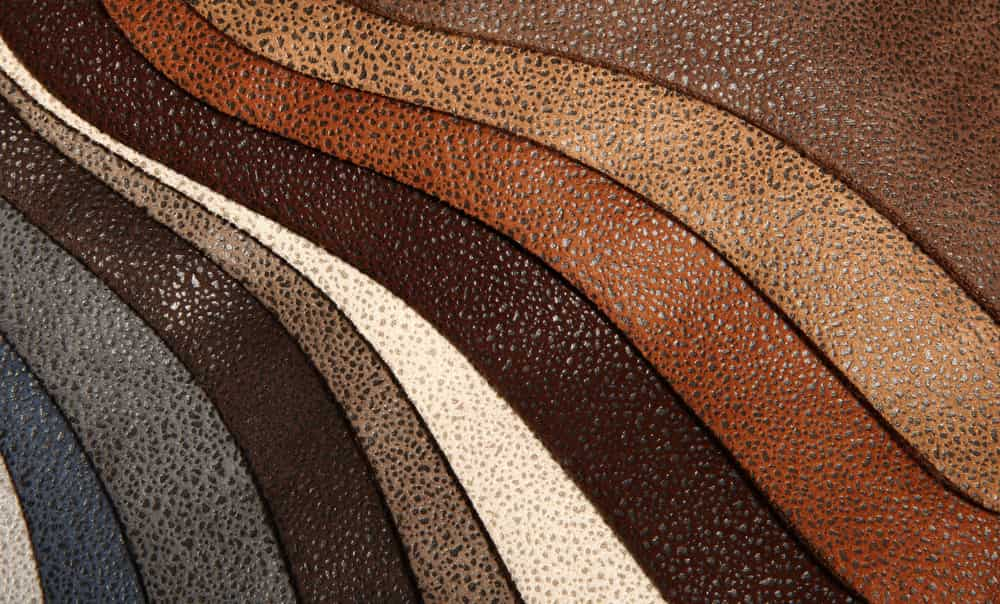
Three covering types dominate hotel seating. Contract fabric — performance polyester weaves, chenille and the like — carries the widest range of colour and texture and now matches leather for durability. Real leather wipes clean and ages richly, suiting high-traffic lobby and bar seating. Faux leather, in its PU and PVC forms, mimics the look at a gentler price and cleans easily, which is why it appears so often on headboards and heavy-use seats; what separates a good one from a cheap one — a breathable PU that mimics hide against a stiff PVC that cracks — sits in our note on what makes a good faux leather. Read across the seating in a property, the covering is the material a guest judges first by touch.
Performance and fire-rated textiles
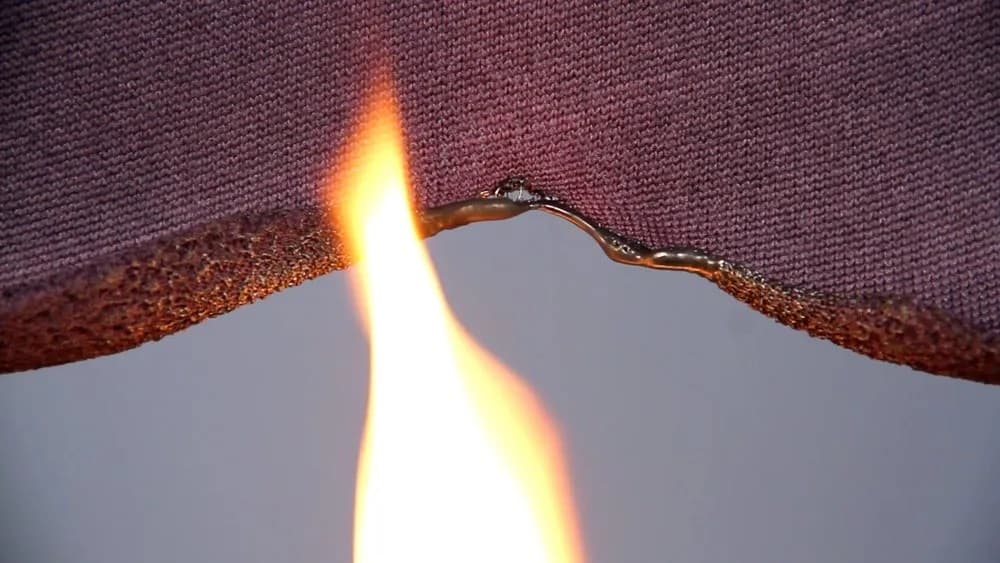
Two specifications decide whether a fabric belongs in a hotel: abrasion resistance, measured in Martindale cycles, and fire performance. Heavy contract use calls for fabrics tested well above domestic levels, and public rooms demand a fire rating matched to the market. Fire protection comes either from an inherent flame-retardant fibre, which never washes out, or from a topical finish that needs renewal over time. The complete method for choosing contract fabric — rub counts, cleaning codes, lightfastness and certification — sits in our guide to hotel upholstery, and the fire test behind the rating in our guide to the crib 5 fire rating.
Foam and the cushion beneath
Comfort and shape come from what sits under the cover. Contract seating uses high-resilience foam, often combustion-modified for fire performance, built to hold its shape through far more sittings than a domestic cushion. Because cushion construction, fillings and care carry real detail, our hotel upholstery guide covers the build beneath the fabric, while this pillar keeps to the material overview.
Glass, Marble and Stone Surfaces
Hard surfaces give a hotel its sense of quality. Glass adds light and transparency; stone brings weight and permanence; engineered stone offers much of the look with fewer of the drawbacks. Our dedicated guide to natural stone for hotels covers the slab types and finishes in full. Hard surfaces are the hotel furniture materials that signal quality fastest. Each carries the brand on the surfaces guests photograph.
Tempered glass
Glass earns its place on tabletops, shelving and decorative accents, where it lifts light around a room and cleans in a wipe. The contract rule is to specify tempered (toughened) glass, which is far stronger than ordinary glass and breaks into blunt granules rather than shards if it ever fails — a safety point no public room should skip. Its trade-off is that it shows fingerprints and dust, so it asks for regular attention in busy areas.
Marble and natural stone
Marble remains the signature of luxury hard surfaces, prized for reception desks, vanities, and dining and lobby tabletops where its unique veining and the way it reflects light set the tone. Natural stone is heavy and porous, so it needs sealing against stains and a base built to carry the load, which is why it counts among the more demanding hotel furniture materials to install well. Because the tabletop decision spans stone, laminate and more, our guide to choosing the right tabletop material compares the options for dining and lobby surfaces directly.
Engineered stone: quartz against granite
Where natural marble asks for care, engineered stone answers with consistency. Quartz surfaces blend stone with resin into a non-porous top that resists stains without sealing, holding up well on busy reception and vanity counters. Granite, a natural stone, brings exceptional hardness and heat resistance for the most demanding surfaces. A property weighs the maintenance-free consistency of quartz against the natural character and heat tolerance of granite, choosing by how hard the surface has to work.
Mirror and decorative glass
Glass does more than top a table. Mirror stretches a compact guest room and lifts light in a corridor, while back-painted and textured decorative glass brings colour and pattern to feature walls and wardrobe fronts. As with tabletops, the safety rule holds: specify toughened glass wherever a guest could knock or lean on it, so a rare failure stays harmless.
Fire-Resistant Materials, Sustainability and Compliance
Beyond looks and wear, two layers of paperwork now decide which hotel furniture materials a project can use: fire safety and sustainability. Both travel with the material as documentation, and a property that collects it at the order spares itself trouble at inspection — the kind of detail our overview of furniture sourcing for hotels walks through from brief to delivery.
Fire-resistant materials and the standards
Fire safety runs through every material in a public building. Upholstery answers to flammability standards — EN 1021 across the European Union, crib 5 in the United Kingdom, and CAL TB 117 or NFPA 260 under United States codes — while treated hardwood, fire-rated laminates and tempered glass carry the risk on the hard materials. The cleanest fire performance comes built into the material rather than sprayed on: an inherent flame-retardant fibre keeps its protection for life, where a topical treatment fades with cleaning. The full picture of how the contract fire test and certificate work sits in our guide to the crib 5 fire rating.
Sustainability certifications
Environmental documentation now sits in most tender packs. For wood, FSC or PEFC chain-of-custody certification confirms timber comes from responsibly managed forests. For indoor air, GREENGUARD Gold confirms low chemical emissions, and low-VOC water-based finishes cut the solvents released into a guest room. For textiles, OEKO-TEX® Standard 100 confirms no harmful substances, and a supplier’s ISO 14001 certification shows an environmental management system behind the factory. A hotel group with published targets asks for these up front. Increasingly, the certificates that accompany hotel furniture materials matter as much to a brand as the look, since an environmental claim a property cannot document is a claim it cannot use in its own marketing.
Fire and emissions compliance lives in the material, not the look
A fabric or panel that looks identical to a compliant one can fail a fire or emissions test, and the difference never shows on a showroom floor. The protection is a property of the material and its certificate — an inherent flame-retardant fibre, a CARB Phase 2 board, an FSC veneer — not the finish a buyer sees. Specifying to the standard and collecting the certificate at the order is what turns a claim into something a fire officer or auditor accepts.
Abrasion, moisture and structural ratings
Beyond fire and emissions, three performance ratings tell a buyer how a material wears. Martindale cycles grade fabric abrasion; a moisture rating covers board and panel performance in humid settings; and a structural test puts seating frames through repeated load. A property that asks for these figures, rather than a general durability claim, compares hotel furniture materials on evidence instead of marketing.
The documentation a project keeps
For each material in a property, a buyer keeps the fire test certificate, the board or finish emission grade, the chain-of-custody record for timber, and the abrasion and warranty paperwork. Kept on file at delivery, that folder answers an inspector or an insurer in seconds. Verifying it is part of a wider check that our hotel furniture suppliers guide sets out for vetting a contract maker.
Matching Hotel Furniture Materials to Each Area
The same hotel furniture materials perform differently from one room to the next, so the final discipline is matching material to setting — the same logic our breakdown of the types of hotel furniture you need applies room by room. Traffic, moisture, cleaning load and the impression a space has to make all shift the right answer, and how that impression lands is really a question of furniture design’s impact on the guest experience.
Chambres d'hôtes
Guest rooms balance warmth against upkeep. Engineered wood with a real-wood veneer covers wardrobes, desks and casegoods; a kiln-dried hardwood or upholstered headboard anchors the bed; and a contract fabric or faux leather dresses the tub chair. For the fuller picture of how to choose hotel guest room furniture, the pieces themselves sit in our guest room furniture et assises dans la salle d'hôtes ranges.
Lobby and high-traffic public spaces
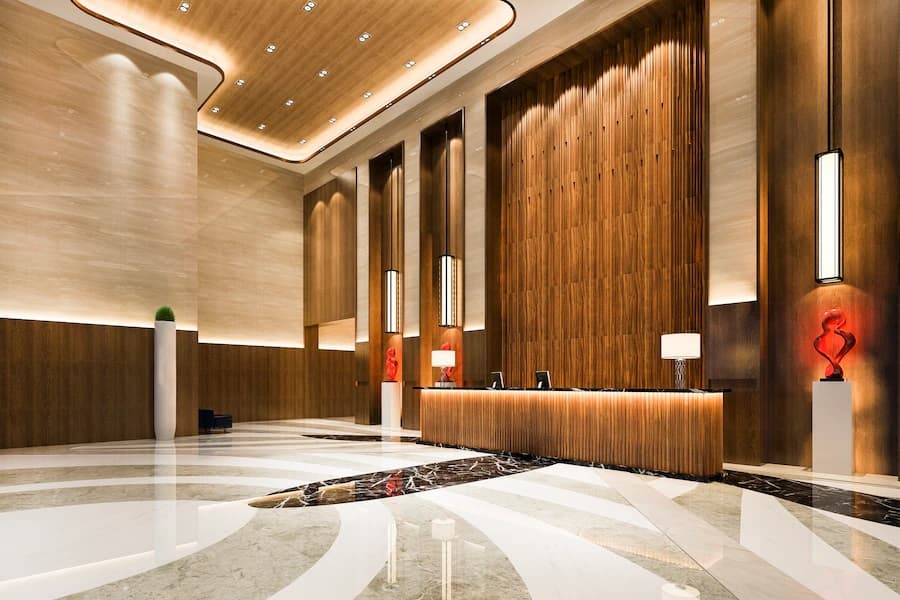
Lobbies take the heaviest, most visible wear, so materials lean toward the durable and the impressive at once: metal-framed seating under high-rub performance fabric or leather, stone or quartz reception tops, and statement hardwood or veneer feature pieces. Our guide to choosing hotel lobby furniture goes deeper on the layout and pieces that carry this brief. This is where a property spends on the materials guests photograph and lean on every day.
Restaurants, bars and outdoor
Food and drink areas punish materials with spills, heat and constant cleaning, which is why our guide on how to choose restaurant furniture treats material choice as the first decision. Metal frames, laminate or stone tops and easily cleaned faux leather or performance-fabric seats hold up best; the same high-rub, easy-clean upholstery decides Meubles de banquets for high-turnover events, while outdoor furniture for hotels and poolside settings call for aluminium, treated timber and solution-dyed fabrics that take sun and damp. The by-area table below summarises the pattern.
Spa, wellness and back-of-house
The quieter zones still set material rules. Spa and wellness areas combine standing humidity with frequent cleaning, so moisture-resistant board, sealed stone and easily wiped surfaces win there. Back-of-house and staff areas can take harder-wearing, plainer hotel furniture materials, where durability and cost matter more than a finish no guest sees. Matching the grade to how visible a room is keeps a budget honest without cutting where it shows.
Corridors and circulation
Corridors and circulation spaces wear constantly but quietly, so they reward hard-wearing, low-upkeep hotel furniture materials: laminate consoles, metal-framed benches and sealed-stone or engineered tops that take trolleys and luggage without marking. Because guests pass through rather than linger, durability and easy cleaning outrank softness here.
| Area | Recommended materials | Why |
|---|---|---|
| Chambre d'hôtes | Engineered wood and veneer, kiln-dried hardwood, contract fabric | Warmth with controlled upkeep and stable panels |
| Lobby | Metal frames, performance fabric or leather, stone or quartz tops | Heaviest traffic and the strongest first read of the brand |
| Restaurant & bar | Metal bases, laminate or stone tops, faux leather seating | Spills, heat and constant cleaning |
| Bathroom & vanity | Moisture-resistant board, laminate, quartz | Standing humidity and water contact |
| Outdoor & pool | Aluminium, treated timber, solution-dyed fabric | Sun, damp and corrosion resistance |
Specifying the right hotel furniture materials is half the work; sourcing them from a contract maker who builds and certifies to standard is the other half. HFC manufactures contract hotel furniture across all of these materials, works trade and project only with no retail sales, ships to more than thirty countries with a two-year warranty, and supplies the test and certification documents each order needs. Specified well and certified properly, the right hotel furniture materials quietly carry a property for a decade; chosen on looks alone, they become the refurbishment a brand pays for twice. To brief furniture in the right materials for your spaces, you can tell us about your project.
Foire aux questions
What is hotel furniture made of?
Hotel furniture is built from a short list of material families: solid wood and hardwood for frames, engineered wood and laminate for casegoods, metal for structure and legs, upholstery for seating and headboards, glass for accents, and stone for premium tops. Most pieces combine several, such as a veneered carcass on a metal base.
What is the most durable material for hotel furniture?
No single material wins everywhere. Metal frames resist wear best for seating structure, high-pressure laminate leads on hard surfaces, and contract upholstery measured at high Martindale levels survives heavy seating. The durable choice follows the area: durability comes from matching the material to the traffic, cleaning and moisture each room delivers.
What wood is best for luxury hotel furniture?
Hardwoods lead for luxury work: oak for value and strength, walnut for a refined dark grain, and teak for moisture resistance. For large flat surfaces, engineered wood with a real-wood veneer stays flatter and costs less. Our guide to veneer and laminate casegoods compares the wood routes in detail.
Are eco-friendly materials suitable for hotel furniture?
Yes, and they increasingly sit in the specification. FSC or PEFC certified timber, low-emission CARB Phase 2 boards, low-VOC finishes and recycled-content textiles meet sustainability targets without sacrificing durability. A long-lasting material is itself a form of sustainability, since it reduces how often a property replaces furniture.
What materials are best for high-traffic hotel areas?
High-traffic lobbies and restaurants reward the toughest combinations: metal frames, high-pressure laminate or stone tops, and high-rub performance fabric, leather or faux leather. These resist the constant use, spills and cleaning that wear domestic-grade materials out within months in a public space.
What makes a hotel furniture material fire-resistant?
Fire resistance comes from the material and its certificate, not its appearance. Inherent flame-retardant fibres, treated hardwood, fire-rated laminates and tempered glass carry the protection, documented against standards such as EN 1021, crib 5 or NFPA 260. Our guide to the crib 5 fire rating explains how the test works.
Where do hotels source furniture materials?
Hotels rarely buy raw materials; they brief a contract manufacturer who specifies and certifies the materials for the whole order. Choosing that maker well is the real sourcing decision, and our guide to hotel furniture suppliers sets out how to vet one on material quality and compliance.