En bref
Leather furniture care keeps a hotel’s leather supple, clean and crack-free: a light weekly clean with a pH-balanced product, conditioning every few months to replace lost moisture, protection from sun and heat, and prompt repair before small damage spreads. Done well, it turns a premium purchase into a decade of service.
Leather earns its place in a hotel because it reads as quality the moment a guest sits down, and it holds that impression for years — but only with the right routine behind it. Left alone, the same leather dries, stiffens, fades and cracks, and a premium sofa starts to look tired long before its frame is. This guide sets out leather furniture care for hotels in practical terms: how to clean it, how often to condition it, how to protect it from the things that age it, and when to restore a worn piece rather than replace it. For the leather seating itself, our assises dans la salle d'hôtes range is built and upholstered to a contract standard.
Why Leather Furniture Care Matters in Hotels
Réponse rapide
The best way to care for hotel leather is a light, regular routine: dust and wipe it weekly with a soft cloth and a pH-balanced leather cleaner, condition it every few months to replace lost moisture, keep it out of direct sun and heat, and treat spills and scuffs at once. Consistency protects leather far better than occasional deep cleaning.
Leather is a natural material, and like any natural material it lives or dies by its moisture. A new hide arrives supple because its fibres still hold oils; over months of dry hotel air, sunlight and body contact, those oils leave, the fibres harden, and the surface that once flexed begins to crack. Good leather furniture care is, at heart, the work of slowing that loss — cleaning away what pulls moisture out and replacing what time takes.
What goes wrong without care
Neglected hotel leather fails in a predictable order. It dries and loses its soft hand; it stiffens and creases along the seat and arm where guests sit; it fades on the side that faces the window; and finally it cracks and, on lesser grades, peels. None of it happens overnight, which is the danger: a property notices the damage only once it has set, by which point a recolour or a recover is the only fix. A weekly cloth and a seasonal conditioner would have prevented almost all of it.
For a hotel, leather furniture care is a cost decision as much as a housekeeping one. Leather is among the most expensive surfaces a property buys, and it is the one a guest reads first as a signal of quality. A cracked, faded sofa in a lobby quietly undercuts the rate a hotel is trying to justify, while a supple, well-kept one does the opposite for the price of a cloth and a conditioner. Treating leather furniture care as a scheduled discipline, rather than a reaction to visible damage, protects both the asset and the impression it creates.
Real leather, bonded leather and why care differs
Not everything called leather behaves the same way. Full-grain and top-grain leather is the real hide, breathable and repairable, and it rewards conditioning by lasting decades. Bonded and heavily corrected leather is a thin coating over a backing, and it is the surface that famously peels in flakes once the coating fails — conditioning cannot save it because there is little real hide underneath. Knowing which a piece is decides the whole care plan, and it is one more reason to specify genuine contract leather at the point of purchase.
Peeling is a material problem, not a cleaning one
When hotel leather peels in flakes, no amount of cleaning or conditioning brings it back, because the failing layer is a surface coating over a bonded backing rather than real hide. Genuine full-grain and top-grain leather creases and patinas but does not peel. The cure for peeling is buying the right leather in the first place.
A Leather Furniture Care Routine That Protects the Investment
The leather furniture care that actually works is unglamorous and regular. It is a short weekly habit, not a heroic annual rescue, and it lives inside the wider property routine our guide on hotel furniture maintenance covers for wood, metal and fabric. Here the focus stays on the leather itself.
The daily and weekly cleaning routine
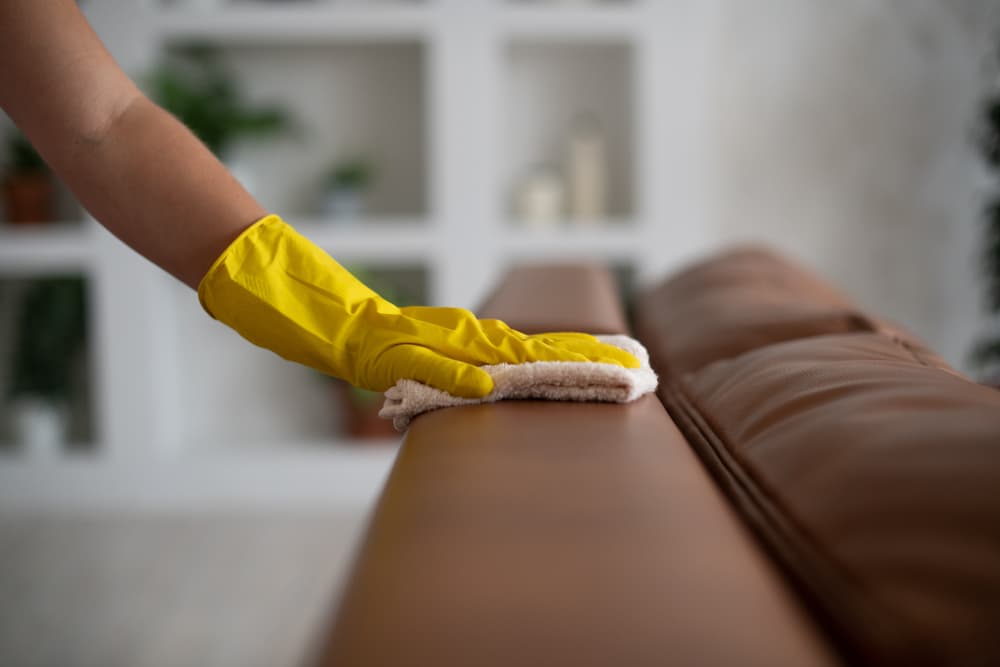
Dust leather weekly with a soft, dry microfiber cloth to lift the grit that scratches a finish over time. Wipe it down with a barely damp cloth to remove the oils and soil that hands leave behind, and follow with a pH-balanced leather cleaner on a regular cycle. Work along the leather, not in hard circles, and dry it straight after, since standing moisture is as bad for leather as none at all. That is the whole weekly job, and it is what keeps a finish even and a colour true.
Good leather furniture care depends on housekeeping knowing the routine rather than improvising it. A short induction — which cloth, which cleaner, blot rather than rub, test before you treat — turns leather care from a source of accidental damage into a reliable habit. The staff who clean the rooms are the ones who keep the leather alive between professional services, so the routine has to stay simple enough to follow on every shift.
Cleaning leather without damaging it
What a property keeps away from its leather matters as much as what it puts on. Harsh household soaps, all-purpose sprays, solvent cleaners and furniture polishes strip the finish, dry the hide and leave a haze that attracts more soil. The same goes for the well-meant home remedies guests and staff suggest — dish soap, oil soaps and aerosol polishes all do more harm than good on contract leather. A dedicated pH-balanced leather cleaner is the only product that belongs in the routine, tested first on a hidden patch. The table below sets out how to handle the marks a hotel actually sees.
| Mark | What to do | What to avoid |
|---|---|---|
| Water marks | Blot at once with a dry cloth and let it air-dry | Heat, hairdryers, rubbing |
| Ink | Lift gently with a leather-safe remover on a cloth | Household pen removers, scrubbing |
| Grease and oil | Absorb with a dry powder, leave, then wipe away | Flooding with water or soap |
| Food and drink | Wipe with a damp cloth, then a pH-balanced cleaner | Solvent sprays, coloured cloths |
| Scuffs | Buff lightly, then recondition the area | Abrasive pads, harsh polish |
Washing, Sanitising and Disinfecting Leather
Housekeeping teams ask three separate questions here, and each has a different answer.
Washing. Leather never gets washed the way fabric does. Water carries dirt into the grain and strips the finish. Wipe with a cloth wrung almost dry, work in small sections, and dry each section before moving on. Never soak a panel, never run a wet cloth over a seam, and never use a steam cleaner.
Sanitising. A neutral pH leather cleaner sanitises adequately for guest-facing furniture. Alcohol-based sprays and household disinfectants strip the topcoat within weeks and leave the hide dry and brittle. If a property policy requires a disinfectant, choose one approved by the leather supplier and follow it with a conditioner on the same pass.
Old and neglected leather. Leather that has been left uncleaned for years needs a slow approach: a dry brush for loose dirt, then a leather cleaner applied in thin coats with a drying interval between each. Aggressive cleaning removes the finish along with the grime and leaves a patchy surface that no conditioner will even out.
Field insight
Test on the back of the piece first
Every new cleaner meets the hide somewhere invisible before it meets a seat cushion — the underside of a skirt, the back of a chair leg. Two minutes there prevents a stripped patch on a sofa a guest will sit on that evening.
Conditioning Leather to Prevent Cracking
Cleaning keeps leather looking right; conditioning keeps it alive. Conditioning replaces the natural oils that hotel conditions pull out of the hide, and it is the single step that separates leather that lasts a decade from leather that cracks within a few years.
How often to condition leather furniture
Most hotel leather wants conditioning every three to six months, and the high-traffic pieces in a dry, air-conditioned lobby want it at the shorter end. The leather tells you when it is due: a surface that has lost its slight sheen, a hand that feels drier than it did, a seat that creases sharply rather than softly. Conditioning on a calendar, rather than waiting for those signs, keeps the moisture topped up before the fibres ever start to harden.
Applying conditioner well matters as much as applying it often. Work on clean, dry leather, put a small amount on a soft cloth rather than straight onto the hide, and spread it in thin, even passes across the whole panel so no patch ends up darker than the rest. Let it absorb, then buff off any residue. This is the part of leather furniture care most likely to go wrong through enthusiasm, and a measured hand gives an even, lasting finish.
Choosing a conditioner, and what to avoid
A good leather conditioner is matched to finished upholstery leather, free of silicone and heavy waxes, and applied thin and buffed in rather than left to sit. More is not better: over-oiling clogs the finish, leaves a tacky surface and can darken the hide unevenly, so a light, even coat every few months beats a heavy one once a year. As with cleaning, a hidden test patch first protects against an unwelcome colour shift across a whole suite of furniture.
Condition before the leather asks, not after
By the time leather looks dry, the fibres have already begun to harden, and conditioning then only slows damage rather than preventing it. A standing schedule — every three to six months, sooner in dry, sunny or high-traffic spaces — keeps the moisture in the hide ahead of the loss. Prevention costs a cloth and ten minutes of a housekeeper’s time; the cure costs a professional recolour, and in the worst cases a recover of the whole piece.
Protecting Leather From Sun, Heat and Spills
Cleaning and conditioning handle the surface; protection — the third pillar of leather furniture care — handles the conditions around it. Most leather damage in a hotel comes not from one event but from a setting that quietly works against the hide every day, and a few placement and habit choices change that.
Light, heat and humidity
Direct sun is leather’s steadiest enemy: it fades colour and bakes out moisture faster than anything a guest does. Position leather away from unshaded windows and radiators, or filter the light, and the same piece holds its colour and suppleness far longer. Very dry air dries the hide and very damp air invites mould, so a stable indoor climate protects leather as much as it protects the guests.
Everyday protection
A leather protector, refreshed on a regular cycle, helps the surface shrug off spills and resist soil between cleans, buying housekeeping time to react. Beyond product, the simple things carry weight: wiping spills the moment they land, keeping sharp objects and direct heat off the seats, and rotating the use of identical pieces so one signature chair does not age years ahead of the rest. Protection is mostly a set of small habits applied consistently.
Climate control does quiet, constant work for leather, and it belongs in any serious leather furniture care plan. A room held at a stable, moderate humidity keeps the hide from drying out in winter heating and from taking on damp in humid months, both of which shorten its life. Where a property cannot fully control the light or the air, it can at least place its most valuable leather pieces in the kindest spots — out of the sun’s path, away from vents and radiators — and rotate them so exposure and wear spread evenly.
Restoring and Repairing Worn Leather
Even cared-for leather eventually shows its years, and the good news is that real leather is repairable in ways most fabrics are not. Reading the line between what a hotel can restore and what it must replace keeps a property from discarding a sound piece — or pouring money into one past saving.
When to restore leather and when to replace it
Genuine leather over a solid frame can usually be brought back: a deep clean lifts years of soil, a recolour evens out fading and small cracks, and a filler-and-recolour repair handles scuffs and small splits. Replacing the covering altogether makes sense only when the hide has cracked through or a bonded surface has peeled past repair, and replacing the whole piece makes sense only when the frame itself has failed. For a recover in a different material, our guide on hotel upholstery covers the fabric options, and how the numbers compare sits in our coût du mobilier d'hôtel guide.
Professional leather care and repair
A property handles the daily and weekly work in-house, but the heavier jobs — a full deep clean, a recolour, a crack or tear repair — belong with a specialist who works leather for a living. Booking a professional leather service once a year, ahead of any visible decline, restores what a cloth cannot reach and resets the surface before wear becomes damage. The cost of that service is a fraction of recovering or replacing the piece it saves.
The economy of all this rests on catching wear early. A leather piece that has just begun to dry at the front edge of a seat, to lighten where the sun hits, or to scuff along an arm is still an easy fix; the same piece left another year becomes a recolour or a recover. Building a quick leather check into the regular maintenance round — a look and a hand across the high-contact areas — is the cheapest insurance leather furniture care offers against premature replacement.
Specifying Leather That Lasts
The easiest leather to care for is the leather chosen well in the first place. Much of what makes a hotel’s leather easy or hard to keep gets decided before delivery, in the grade and finish a property specifies.
What makes contract leather durable
Contract-grade leather earns its keep through three things: a genuine full-grain or top-grain hide rather than a bonded coating, a protective finish rated for heavy commercial use, and a thickness that takes daily contact without thinning. Leather built to that standard cleans easily, conditions well and repairs cleanly — the opposite of the bonded material that peels past saving. Specifying it at the order is the cheapest care decision a hotel ever makes.
The finish is where much of the durability lives. A pigmented or semi-aniline finish gives a protective, uniform surface that resists stains and fading and stands up to commercial cleaning, which is why it suits the hardest-working hotel spaces; a pure aniline leather looks and feels more natural but marks more easily and asks for gentler, more frequent leather furniture care. Choosing the finish with the room’s traffic in mind, not only its look, is what keeps the care routine realistic once the furniture is in service.
Matching leather to the space
Where a piece sits should shape the leather under it. A lobby that meets the street and the sun wants the toughest finished hide and a hard-wearing colour, which is part of what our lobby furniture is built around; a quieter guest-room armchair can carry a softer, more natural leather. Choosing the grade to the traffic, rather than one leather everywhere, gives a property both the look it wants and the lifespan it needs from its assises dans la salle d'hôtes.
Leather Care That Protects a Premium Investment
Leather is one of the most visible signals of quality a hotel can put in a room, and one of the most expensive to get wrong. The care behind it is not complicated: clean it lightly and often, condition it before it dries, protect it from sun and heat, and repair small damage before it spreads. That short, repeatable routine is the whole of leather furniture care. A property that holds to that routine keeps its leather supple and elegant for a decade or more, while one that waits for the cracks pays for a recolour or a recover instead. HFC builds and upholsters contract leather seating from Istanbul, works to a property’s chosen grade and finish, ships to more than thirty countries on a trade-only basis, and backs each order with a two-year warranty. To specify leather that is built to last and easy to keep, you can tell us about your project.
Foire aux questions
What is the best way to care for leather furniture in a hotel?
The best way is a light, regular routine: dust leather weekly with a soft cloth, wipe it with a barely damp cloth and a pH-balanced leather cleaner, condition it every few months to replace lost moisture, and keep it out of direct sun and heat. Consistency protects leather far better than occasional deep cleaning.
How often should you condition hotel leather furniture?
Most hotel leather wants conditioning every three to six months, and pieces in dry, sunny or high-traffic areas need it at the shorter end. Conditioning on a schedule, before the leather looks dry, keeps the natural oils topped up so the hide stays supple and never reaches the point where it cracks.
What should you not use to clean leather furniture?
Keep harsh household soaps, all-purpose sprays, solvent cleaners, oil soaps and aerosol furniture polishes away from hotel leather, since they strip the finish and dry the hide. A dedicated pH-balanced leather cleaner, tested first on a hidden patch, is the only product that belongs in the routine.
How do you protect hotel leather furniture from cracking?
Leather cracks when it loses moisture, so protection means conditioning it on a schedule, keeping it out of direct sun and away from radiators, and holding a stable indoor climate. A leather protector and prompt attention to spills add a further barrier, keeping the surface supple between conditioning treatments.
Can worn or peeling leather hotel furniture be restored?
Genuine full-grain and top-grain leather can usually be restored: a deep clean, a recolour and a filler repair handle fading, soil and small cracks. Bonded leather that peels in flakes cannot be saved, because the failing layer is a coating rather than real hide, and that piece needs recovering or replacing.
How long does leather hotel furniture last?
With regular cleaning and conditioning, genuine contract leather over a solid frame lasts well beyond a decade and develops a patina rather than wearing out. Lifespan drops sharply without care, and bonded leather rarely lasts long whatever the routine, which is why grade and upkeep matter more than age alone.
How do you wash leather furniture?
Leather is wiped, not washed. Use a cloth wrung almost dry with a neutral pH leather cleaner, work in small sections, and dry each section before moving on. Water left sitting on leather carries dirt into the grain and lifts the finish, and steam cleaners damage the topcoat permanently.
How do you sanitise or disinfect leather furniture?
A neutral pH leather cleaner sanitises guest-facing leather adequately. Alcohol sprays and household disinfectants strip the topcoat and dry the hide, so use them only when property policy requires it, only in a product the leather supplier approves, and always follow with a conditioner on the same pass.
How do you clean old leather furniture?
Start with a dry brush for loose dirt, then apply a leather cleaner in thin coats with a drying interval between each. Neglected leather needs several light passes rather than one heavy one, because aggressive cleaning takes the finish off with the grime and leaves a patchy surface.