Le types of restaurant chairs you choose decide how comfortable your guests feel, how quickly your dining room turns, and how the seating looks after a year of daily use. A chair in a busy restaurant takes more abuse in a season than a home chair sees in years, so the style, the frame and the build all matter at once. If you want to see how these chairs reach a finished room, browse our restaurant furniture collection; this guide explains every type and how to choose between them.
This guide walks through the main restaurant chair styles, the wooden-versus-metal decision that sits at the centre of most projects, and the durability, comfort and material calls that separate a chair that lasts a decade from one that loosens within the year. Every recommendation assumes a working restaurant, not a home dining room — seating that repeats cleanly across forty covers or four hundred and holds up under constant service.
Réponse rapide
What type of restaurant chair should you choose? Start with the frame, not the look: solid hardwood and metal frames lead because they survive the daily scrape and lean, while a chair’s style — side, arm, stacking or bentwood — follows your concept and your space. Choose wooden chairs for warmth and easy repair, metal for a contemporary look and stacking flexibility, and upholstered seats where comfort and longer dwell times matter. Match the chair to the traffic, the concept and the table height, then confirm the joints and the finish before you order.
Why the Types of Restaurant Chairs You Choose Matter
A restaurant chair works harder than almost any seat in daily life. Guests drag it across the floor, lean back on the rear legs, shift their weight through a long meal and push it back in a hurry on the way out. Staff stack it, move it and wipe it down between covers. The chair you pick sets how long that punishment takes to show, so the choice runs far deeper than the photograph on a supplier’s page.
The job a restaurant chair does
Every restaurant chair answers three demands at once: comfort for the guest, durability for the operator, and a look that fits the room. A chair that nails comfort but loosens in a season fails the operator; one that survives forever but feels hard fails the guest. The types of restaurant chairs that earn their place balance all three, and the balance shifts with your concept — a fine dining room weights comfort, a high-turnover café weights durability and quick cleaning.
Contract-grade versus residential chairs
A contract chair and a residential one can look identical in a render and behave nothing alike on a restaurant floor. Contract-grade seating uses reinforced joints, thicker frame timber or welded metal, and abrasion-rated upholstery built for constant use. Residential chairs, however attractive, give way under restaurant turnover — the joints loosen, the finish wears, and the back legs work loose where guests lean. Treat contract-grade build as the first filter and the style as the second; our pillar on how to choose restaurant furniture sets this standard across every piece in the room.
Restaurant chairs die at the back legs and the joints, not the seat
Guests lean back on the rear legs thousands of times a week, and that single habit destroys more restaurant chairs than spills ever do. A contract chair reinforces exactly that stress point; a residential one cracks there first. When you compare types of restaurant chairs, press on the back joint and the rear-leg connection — that is where the chair will fail or hold.
The Main Types of Restaurant Chairs
A handful of chair styles cover most of what a restaurant needs, and each suits a different mix of comfort, durability and look. The table below sets the main types of restaurant chairs against their character and the rooms they fit, so you match the style to the job rather than the trend.
| Chair type | Personnage | Le meilleur pour | Watch-point |
|---|---|---|---|
| Side chair | Armless, compact, the everyday workhorse | Most dining rooms; tight layouts | Frame strength at the back joint |
| Chaire | Wider, more comfort, signals a higher tier | Fine dining; lounge corners | Width must clear the table apron |
| Stacking chair | Stores vertically; fast to clear and reset | Events, flexible rooms, banquets | Stack height and floor protection |
| Bentwood / cross-back | Classic bistro look, light and strong | Bistros, cafés, casual rooms | Joinery quality on the curves |
| Upholstered chair | Padded seat or back for longer comfort | Fine dining; rooms with long dwell | Abrasion-rated, cleanable fabric |
Side chairs and armchairs
The side chair is the everyday workhorse of a dining room: armless, compact and quick to tuck under a table, which makes it the efficient default for most layouts. The armchair trades a little floor space for more comfort and a more generous look, so it suits fine dining and lounge corners where guests linger. Mix the two in one room and you signal a hierarchy — armchairs at the prime tables, side chairs everywhere else — but check that any armchair clears the table apron before you commit, because a chair that will not slide under wastes the very space it was meant to enhance.
Stacking chairs for flexible rooms
Stacking chairs solve the storage and reset problem that events and flexible rooms face every week. A stack of well-designed chairs clears a floor for a private function and resets it for the next service in minutes, and quality stacking designs protect the finish so the chairs do not scuff each other. For banquet-style rooms and venues that flip between layouts, stackability is the feature that decides the buy. Confirm the safe stack height and the floor glides before you order a large run.
Bentwood, cross-back and classic styles
Some chair styles carry a room on their look alone. Bentwood and cross-back chairs bring a classic bistro character, stay light enough for staff to move all day, and pair a timeless appearance with real strength when a workshop builds the curves and joints properly. These styles suit cafés, bistros and casual dining rooms that want warmth and character without weight. The whole appeal rests on the joinery, so the quality of the curve and the joint separates a chair that lasts from one that creaks within months.
Upholstered chairs for comfort
Upholstered seats and backs earn their place where guests stay longer and comfort drives the experience. A padded seat over a solid frame turns a forty-minute meal into a comfortable one, which fine dining rooms want and fast-casual rooms deliberately avoid. The trade is maintenance: restaurant upholstery must use abrasion-rated, stain-resistant and fire-rated fabric that staff clean easily between covers. Specify the fabric for the traffic, and an upholstered chair adds comfort without becoming a cleaning problem.
Wooden vs Metal Restaurant Chairs
The single biggest material decision among the types of restaurant chairs is wooden against metal. Both build excellent contract chairs, and neither wins outright — the right answer depends on your look, your traffic and your storage needs. We manufacture seating exclusively in solid wood and metal because those two frame families hold their structure across years of daily use and repair rather than fail. The comparison below frames the choice the way a project buyer should weigh it.
| Cadre | Strength | Regardez | Le meilleur pour |
|---|---|---|---|
| Bois massif | Strong, repairable by sanding and re-gluing | Warm, classic, brand-true tone | Bistros, fine dining, warm concepts |
| Métal | Resists racking; light; stacks well | Sleek, contemporary, industrial | Cafés, modern rooms, flexible layouts |
When wooden chairs win
When wooden chairs win
Wooden chairs win on warmth and repair. A solid hardwood frame — beech, oak or ash — carries the load, takes a brand tone exactly, and lets a workshop tighten a loose joint or sand out a scratch instead of scrapping the chair. That repairability stretches the lifespan and the budget across years of service. Wooden chairs suit bistros, fine dining and any room that trades on a crafted, welcoming feel. For the species behind these frames, our guide to wood types for restaurant furniture covers which timbers hold up, and our Chaises de restaurant en bois show the finished builds.
When metal chairs win
Metal chairs win on a contemporary look, light weight and flexibility. A welded or powder-coated metal frame resists the racking forces that loosen weaker builds, stacks cleanly for events, and suits industrial and modern rooms that want clean lines. Metal also shrugs off the knocks of a high-traffic café and pairs well with a timber or upholstered seat to soften the feel. See our Chaises de restaurant en métal for the range, and pair either frame with the right table from our restaurant chair collection.
The frame decides the chair; the seat decides the comfort
Buyers often debate wood against metal as if it settles everything, but the smartest specifications mix them: a metal frame for strength and stacking, a timber or upholstered seat for warmth and comfort. Treat the frame as the durability decision and the seat as the comfort decision, and you stop forcing one material to solve both problems.
Choosing Restaurant Chairs by Concept
The right chair traces back to the room it serves. A fine dining establishment, a casual bistro and a fast café each ask a different question of their seating, so resolve the concept before you choose a style. Knowing how the types of restaurant chairs map to each concept keeps the room coherent and the budget where it counts.
Fine dining chairs
Fine dining weights comfort and presence. Upholstered armchairs and generously proportioned side chairs in warm timber or refined metal signal that guests may stay a while, and the seating reinforces the tier the room promises. Comfort here earns its keep, because a fine dining guest who lingers orders another course. Specify padded seats, a supportive back angle and a finish that reads considered, and let the chairs carry the room’s sense of occasion.
Casual dining and bistro chairs
Casual dining wants durable, characterful chairs that turn quickly. Bentwood, cross-back and sturdy wooden side chairs suit the relaxed mood, hide wear gracefully and stand up to families and large parties. Casual rooms run higher covers than fine dining, so the chairs take more abuse and reward a hard-wearing frame and an easy-clean finish. Character matters, but durability decides the buy.
Cafés and modern interiors
Cafés and contemporary rooms favour light, stackable chairs with clean lines, which is where metal frames and slim wooden designs shine. A chair that staff reconfigure for a morning rush and an afternoon laptop crowd suits the flexible way a café runs, and a modern interior rewards the restraint of a simple frame. To match the seating to the rest of the look, our note on color in restaurant interior design covers how finishes set the mood, and our guide to restaurant furniture layout shows how chair choice feeds the floor plan.
Durability, Comfort and High-Traffic Use
Whatever style you choose, the build decides whether it survives. A beautiful chair that loosens in a season costs more than a plain one that lasts a decade, so weigh durability and comfort as hard as looks — especially in a high-traffic room.
Frame construction and joints
Chairs fail at the joints first, so the construction matters more than any other single factor. Look for reinforced joints, solid hardwood or welded metal frames, and a back-leg connection built to take the lean guests put on it. Ask how a chair goes together, not only what it is made of, because the joint gives way long before the timber or the tube does. A contract chair takes a knock and stays square; a residential one works loose.
Ergonomics and guest comfort
Comfort keeps guests at the table, and ergonomics drives it more than padding alone. A seat height near 45 centimetres suits a standard table and lets most adults rise without a struggle, while seat depth and back angle decide whether the chair supports the lower back or forces guests to perch. Match the comfort to the dwell time your concept targets — a fine dining armchair and a café side chair solve opposite problems — and remember staff comfort too, since servers who lift and reset chairs all shift benefit from a frame light enough to handle.
Easy-to-clean seating and health standards
High-traffic rooms reward seating that cleans fast and meets the rules. A sealed timber frame and a wipeable or stain-resistant seat let staff turn a table in seconds, and a fabric rated for abrasion survives the wear that ruins a domestic covering. Commercial seating should also meet the fire-safety standards your market requires, so confirm the fabric carries the right certification before production. The chairs that clean quickly and comply cleanly keep both the service and the inspector moving.
Comfort sets dwell time — so match the chair to the turnover you want
A softer, deeper chair invites guests to linger, which fine dining wants and a high-turnover café does not. The chair is a quiet lever on your covers: choose generous comfort to extend a meal, or a firmer, upright seat to keep a fast room turning. Decide the dwell time you want, then specify the chair that delivers it.
Materials and Upholstery
Material choice ties the durability and the look together. The frame carries the load and the seat carries the comfort, so specify each for the job it does rather than treating the chair as one decision.
Frame materials
Solid hardwood and metal lead for contract chair frames. Beech bends and turns cleanly for classic seating, ash brings shock resistance for chairs that take a daily beating, and oak gives a heavier, rustic look; welded or powder-coated metal resists racking and suits modern rooms. Each outlasts the lightweight residential builds that tempt buyers on price, and each repairs rather than fails — a loose wood joint re-glues, a metal frame re-coats. Our guide to wood types for restaurant furniture covers the species in depth.
Seat and upholstery options
The seat decides the comfort and much of the maintenance. A solid timber seat cleans fast and reads honest; a padded, upholstered seat adds comfort for longer dwell times but asks for a contract-grade fabric. Restaurant upholstery should carry an abrasion rating measured in Martindale rubs, resist staining, and meet fire-safety standards for commercial seating. Where a chair pairs with bench seating, our breakdown of restaurant booth seating covers the upholstery and foam that survive constant compression.
Indoor, Outdoor and Sourcing
Two final calls round out the chair decision: where the chair sits, and who builds it. Both protect the investment once the style and frame are settled.
Outdoor restaurant chairs
Terraces and patios follow a different durability logic, because UV exposure, rain and temperature swings demand weatherproofed frames and finishes that indoor chairs do not need. Rather than stretch an indoor chair outside, specify seating built for the conditions. We cover that topic separately, so when you plan a terrace, see our dedicated outdoor furniture guidance for the materials that survive the weather.
Stackable chairs for small spaces
Tight rooms and flexible venues reward stackable seating that clears the floor when a layout changes. A slim, stackable chair stores out of the way, resets fast and lets a small room flex between a quiet lunch and a private function. Pair stackable chairs with tables that combine, and a compact restaurant serves more configurations without buying more furniture.
Sourcing and ordering
The supplier decides whether the chair on paper reaches the room. A contract manufacturer that works trade-and-project only builds to a commercial standard by default, supports reorders that match your original finish, and stands behind the chairs with a warranty. Ask any prospective supplier how they build the joints, which frame they recommend for your traffic, and what the lead time and warranty cover. A maker who furnishes restaurants reads the spec faster and flags the chair that will not survive the floor.
Foire aux questions
What are the main types of restaurant chairs?
The main types are side chairs, armchairs, stacking chairs, bentwood and cross-back styles, and upholstered chairs. Side chairs serve most layouts, armchairs add comfort for fine dining, stacking chairs flex for events, bentwood suits bistros and cafés, and upholstered chairs reward rooms with longer dwell times. Frames come in solid wood or metal.
Are wooden or metal restaurant chairs better?
Neither wins outright. Wooden chairs bring warmth and repair by sanding and re-gluing, which suits bistros and fine dining. Metal chairs resist racking, stay light, stack well and suit modern cafés. Many rooms mix the two — a metal frame for strength and stacking, a timber or upholstered seat for comfort.
What is the most comfortable type of restaurant chair?
An upholstered armchair with a supportive back angle is usually the most comfortable, which is why fine dining rooms favour it. Comfort comes from seat height near 45 centimetres, a sensible seat depth and a back that supports the lower back — not from padding alone. Match the comfort to the dwell time your concept wants.
How do you choose chairs for a high-traffic restaurant?
Prioritise the frame and the joints. Choose a solid hardwood or welded metal frame with a reinforced back-leg connection, an easy-clean or wipeable seat, and a stain-resistant, fire-rated fabric if upholstered. Stackable designs help flexible rooms reset fast. Durability and quick cleaning matter more than comfort in a fast-turning room.
What is the best material for easy-to-clean restaurant chairs?
A sealed solid-wood or metal frame paired with a wipeable seat or a stain-resistant, abrasion-rated fabric cleans fastest. Sealed timber and powder-coated metal both wipe down cleanly between covers, and a contract-grade fabric resists the staining that ruins a domestic covering. Confirm the finish suits the cleaning products your team already uses.
What are the seats in a restaurant called?
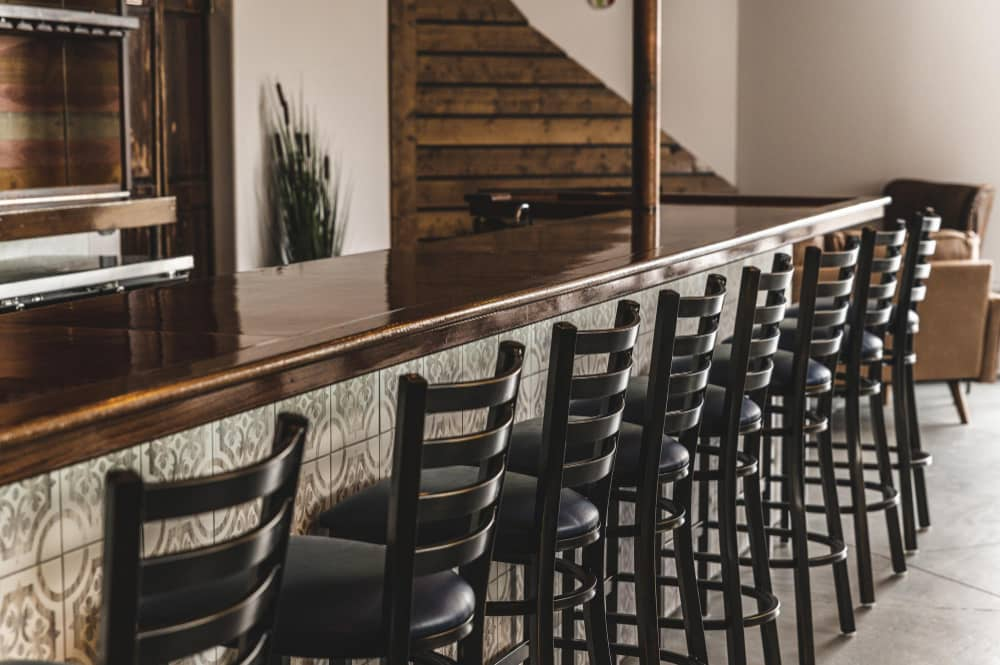
Restaurant seating goes by several names: dining chairs or side chairs for the standard seat, armchairs for wider versions, bar and counter stools at raised surfaces, and booth or banquette seating for fixed benches along a wall. Together they make up a room’s seating plan, and most dining rooms mix several types.
What is the trend in restaurant dining chairs?
Current trends favour warm timber tones, slim metal frames with clean lines, and a mix of frame and seat materials — a metal frame with a timber or upholstered seat — that balances a modern look with comfort. Bentwood and cross-back styles stay popular in casual rooms. Across the trends, durability and easy cleaning remain the constant.