Вкратце
The main типы гостиничного оборудования divide by area: guest-room furniture, lobby and lounge furniture, restaurant and bar furniture, conference and banquet furniture, and outdoor furniture. Each category covers casegoods, seating, tables and storage built to a contract standard for constant public use.
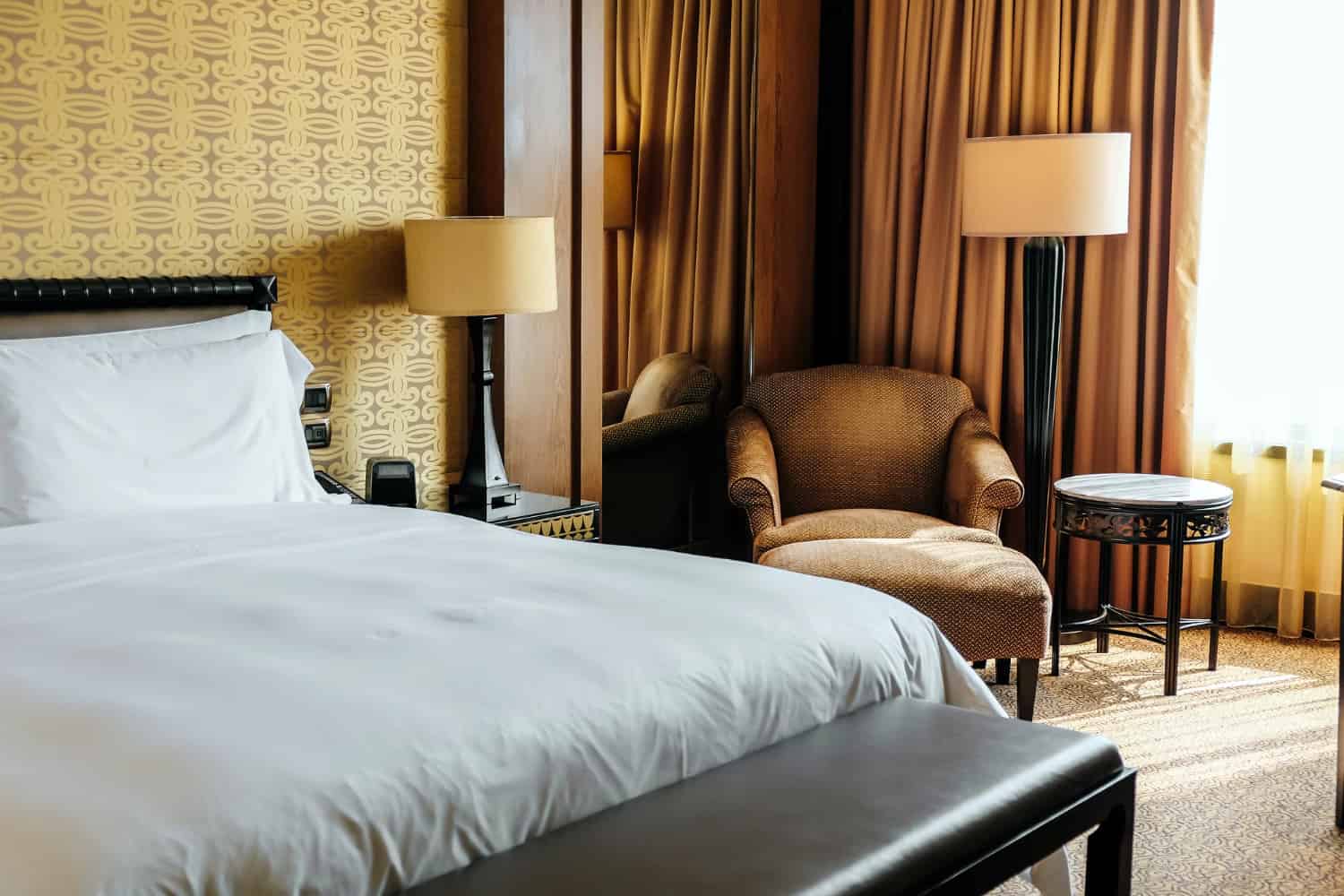
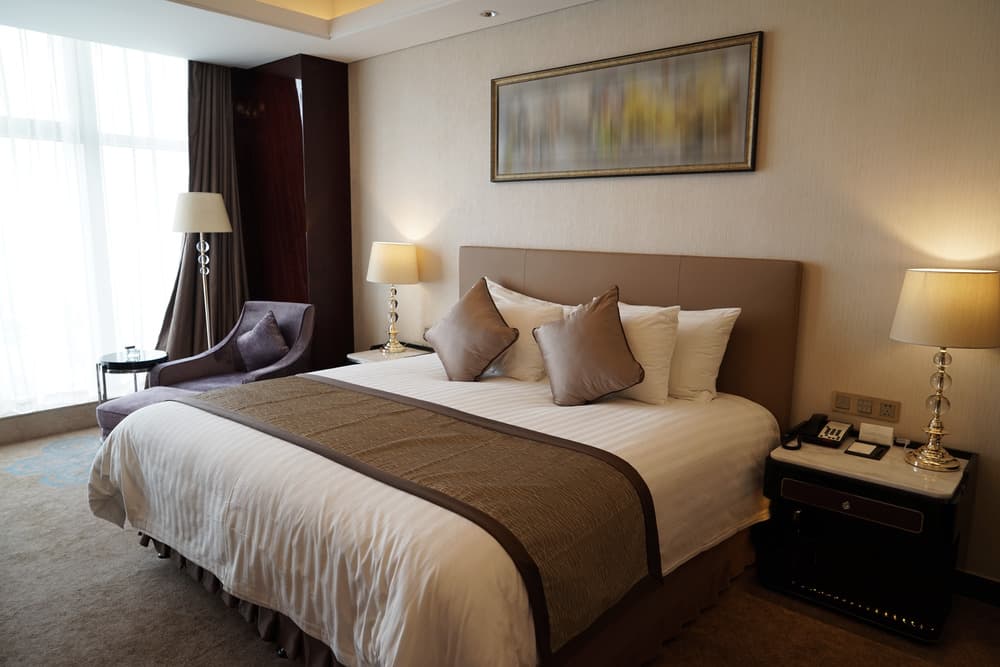
The types of hotel furniture a property needs follow directly from the spaces it has to fill, and scoping those spaces well is the difference between a fit-out that works and one that fights itself. A guest room asks for different pieces than a lobby; a restaurant punishes furniture a quiet lounge never would. This guide breaks the main types of hotel furniture down area by area — what each space needs, why the pieces differ, and how the contract standard runs through all of them. Because the bedroom carries the largest and most repeated part of any scope, the hotel guest room furniture is where most properties start.
What Counts as Hotel Furniture
Быстрый ответ
Hotel furniture is the contract-grade furniture a hospitality property uses across its guest rooms and public areas — beds, casegoods, seating, tables and storage built for constant use, frequent cleaning and a long service life. It is also called hospitality furniture, and it sits within FF&E: furniture, fixtures and equipment.
Before breaking the types down, it helps to settle what the term covers. Hotel furniture — also called hospitality furniture — is the furniture a property installs for guests and operations, engineered to a contract standard rather than a domestic one. What is classified as hotel furniture comes down to one test: can the piece take public traffic? The beds and casegoods in a room, the seating and tables in a lobby or restaurant, and the storage that keeps a space tidy all qualify. It excludes the loose decor and the fixtures, which sit in neighbouring parts of the FF&E brief.
Hotel furniture versus hospitality furniture
The two terms describe the same thing from different angles. Hotel furniture points at the property type; hospitality furniture points at the sector, covering hotels, restaurants, resorts and lounges alike. Either way, the defining trait is the contract build: frames, joints, foams and finishes made to survive the use a public space delivers. The furniture used in hotels looks similar to its residential cousin in a photograph and behaves nothing like it in service, which is why the types below all share that contract baseline.
Grouping the types of hotel furniture this way does more than tidy a list. It mirrors how a property actually buys: a procurement brief, a designer’s scheme and a manufacturer’s quote all break down by area and by piece, so naming the types correctly from the start keeps every party speaking the same language. It also exposes the gaps early — the forgotten luggage bench, the missing service counter — before they surface as a shortage on opening week. The areas that follow are the ones almost every property shares, and a resort or a conference hotel simply weights the brief toward the categories it leans on most.
How the types break down
The cleanest way to organise the types of hotel furniture is by area, because each space sets its own demands on the pieces it holds. The sections that follow walk through guest rooms, lobby and lounge, restaurant and bar, conference and banquet, and outdoor zones in turn. A property building a procurement scope can read these as the spine of its furniture brief; the structured checklist version sits in our Список мебели для гостиниц for new projects.
| Area | Key furniture types | Traffic / demand |
|---|---|---|
| Гостевая комната | Bed, headboard, casegoods, desk, seating, storage | Daily private use |
| Lobby & lounge | Reception desk, lounge seating, coffee & console tables | Constant public traffic |
| Restaurant & bar | Dining chairs, tables, bar stools, banquettes, buffet counters | High turnover, spills |
| Conference & banquet | Stacking chairs, folding & banquet tables, lecterns | Frequent reconfiguration |
| Outdoor & pool | Sun loungers, outdoor sofas, dining sets, shade | Sun, rain, pool chemicals |
Guest-Room Furniture
Guest-room furniture is the largest and most repeated category, multiplied across every room type in the property, and it carries the experience a guest judges most directly. The pieces divide into the things a guest sleeps on, works at, sits in and stores belongings in — each one specified for nightly use across years. Our guide to choosing hotel guest room furniture walks through that selection in more depth.
Beds and headboards
The bed is the centre of the room and the piece a guest remembers. A contract bed pairs a sturdy base or platform with a quality mattress, topped by a headboard that sets the visual tone of the scheme. Headboards do quiet structural work too, protecting the wall and anchoring the bedside arrangement; the depth of choosing them sits in our guide to столы для гостиной. A property specifies the bed first because everything else in the room arranges around it.
Casegoods and storage
Casegoods — the hard furniture of the room — cover the wardrobe, the dresser or drawer unit, the nightstands, the luggage rack and the mini-bar or TV cabinet. These pieces carry the room’s storage and most of its surfaces, and they take the heaviest knocks, so contract-grade construction matters most here. Storage that a guest can actually use, with enough hanging space and a clear place for a suitcase, is one of the quiet markers of a well-furnished room.
Desk, seating and occasional pieces
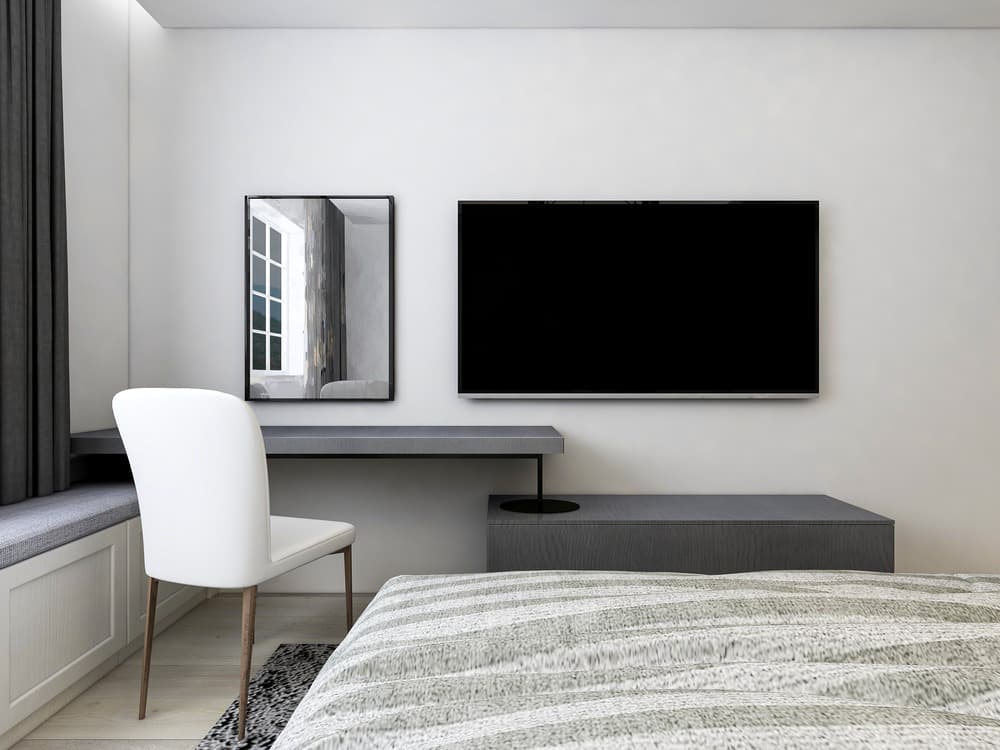
A guest room rounds out with a writing desk and chair for the working traveller, a lounge chair or small sofa for relaxing, and occasional pieces such as a coffee table, ottoman or bench in larger rooms. The seating earns its place on comfort as much as looks, because a chair a guest cannot settle into is a chair the room did not need. Premium and suite rooms expand this list; standard rooms keep it lean.
Suite and connecting-room pieces
Larger rooms add their own types of hotel furniture on top of the standard set. A suite brings a separate seating group — a sofa, armchairs and a low table — a dining or meeting table, and often a vanity or dressing area. Connecting and family rooms add sofa beds and extra storage to flex between guest counts. These pieces scale the room up rather than redefining it, and a property planning suites specifies them as an extension of the guest-room brief rather than a separate category, keeping the finishes and the design language consistent with the standard rooms next door.
Lobby and Lounge Furniture
Lobby and lounge furniture works on two jobs at once: it makes the first impression a guest forms of the property, and it takes constant public traffic from the moment the doors open. The types here balance presence with endurance more than any other category, a balance covered in depth in our guide to choosing hotel lobby furniture.
Reception and front-of-house
The reception desk anchors the lobby and sets the tone for the arrival, backed by a panel or console and supported by any front-office furniture the operation needs. These pieces face the property’s busiest moments and have to look composed through all of them, which puts a premium on finishes that hide wear and constructions that hold up to leaning, luggage and constant contact.
Lounge seating and tables
The seating in a lobby ranges from statement lounge chairs and sofas to the workhorse armchairs that fill out a waiting zone, tied together by coffee tables, side tables and console tables. Modular lounge seating helps a large space flex between quiet mornings and busy evenings, and work tables with integrated power increasingly earn a place for business travellers. Lobby seating is where a property can express its character, provided every piece still survives the traffic.
Functional and business pieces
A modern lobby holds more than soft seating. Work tables with integrated power, charging-equipped side tables, and modular benches that organise circulation all earn a place as guests increasingly work and wait in the public areas. Concierge desks, luggage benches and display consoles round out the front-of-house types. These functional pieces rarely set the visual tone, yet they decide how usable the space feels, and a lobby brief that covers only the statement seating leaves the working half of the room unfurnished.
Lobby pieces face the hardest use in the building
Lobby and lounge furniture takes more bodies, more hours and more luggage than anything in a guest room. Specify it to the heaviest contract standard the budget allows, and favour finishes that forgive scuffs. A lobby chair that looks tired within a year undoes the first impression the whole space exists to create.
Restaurant, Bar and Dining Furniture
Restaurant and bar furniture takes the most punishing use of any indoor category — constant turnover, spills, stacking and cleaning — so durability defines the types here as much as style does. A dining scheme that ignores that reality wears out fast and looks tired faster; our guide to choosing restaurant furniture covers the selection in detail.
Dining chairs and tables
Dining chairs and tables are the core of the category, and they earn their keep on robustness. Staff drag, stack and wipe chairs down many times a day; tables need surfaces that survive heat, moisture and constant cleaning. The right pieces read as elegant to a diner and behave as workhorses to the operation, a balance contract dining furniture strikes.
Bar stools, booths and banquettes
Bar and lounge areas add stools at counter height, while booths and banquette seating define the layout of many restaurants and bars. Fixed banquettes use space efficiently and absorb sound that hard rooms throw back, which is why they recur in busy dining rooms. Each of these pieces takes heavy daily use and rewards the same contract construction the chairs and tables demand.
Buffet counters and service pieces
Service furniture rounds out the category: buffet counters, serving stations and the back-of-house pieces a kitchen and service team rely on, including the kitchen cabinets that organise a hotel kitchen’s storage and prep space. These rarely feature in the brochure, yet they take hard, daily, functional use and need finishes that wipe clean and frames that hold up to constant movement. A dining scope that forgets them leaves a gap the operation feels every service.
The dining category also flexes with the venue. A casual all-day café leans on light, stackable seating and easy-clean tables; a fine-dining room weights the brief toward upholstered chairs and larger tables with a generous setting; a bar adds counter stools and high tables. Each format draws from the same family of restaurant furniture types but in a different mix, so a property running several food-and-beverage outlets specifies each one to its own service rather than buying a single dining set for them all.
Conference and Banquet Furniture
Hotels that host events, conferences and banquets need a category built for flexibility, because the same room changes shape several times a week. Conference and banquet furniture stands or falls on how easily it reconfigures and how well it survives constant handling and storage, as covered in our guide to choosing banquet furniture.
Stacking chairs and folding tables
The workhorses of an event space are stacking chairs and folding or banquet tables, chosen because staff move and store them constantly. They have to be light enough to handle, sturdy enough to take repeated setup and breakdown, and consistent enough that a hundred of them line up cleanly for a banquet. Durability under handling, not just under sitting, is the test here.
Storage, trolleys and mobility
Event furniture only works if a property can move and store it cleanly, so the category extends to the equipment that supports it: chair and table trolleys, storage dollies and the racks that keep a banquet store organised. Furniture chosen without a thought for how staff transport and stack it turns every event setup into a struggle and shortens the life of the pieces through rough handling. A good brief specifies the best conference and banquet types alongside their storage and mobility kit, not as an afterthought once the chairs arrive.
Banquet tables and presentation pieces
Larger banquet tables, lecterns and presentation stations complete the category for business and celebration events alike. Round banquet tables seat celebration layouts; long tables suit conferences; a lectern serves the speaker. Custom configurations often earn their place where a venue runs a particular event format regularly, tailoring the furniture to the room rather than forcing the room to fit the furniture.
Outdoor and Poolside Furniture
Outdoor furniture faces a test no indoor piece meets: sun, rain, humidity and pool chemicals working on it day and night. Materials and weather resistance define the types here as much as form does, and a property that specifies indoor-grade pieces for an outdoor space simply moves the replacement bill outside; our guide to choosing outdoor furniture for hotels covers the options in more depth.
Loungers, sofas and dining sets
Poolside and terrace areas call for sun loungers, outdoor sofas, poolside chairs and patio dining sets, along with the side tables that serve them. Comfort still matters — a lounger a guest avoids wastes the space — but it pairs with a build that shrugs off the weather. Outdoor seating is where a resort earns much of its character, so the pieces have to look as considered as they are durable.
Materials and shade
Outdoor furniture lives or dies on its materials. Manufacturers favour treated hardwoods, powder-coated aluminium and synthetic rattan because they hold up to sun and moisture where other materials fade, rust or crack. Shade structures, umbrellas and the lighting that brings a terrace to life after dark round out the category, turning bare ground into one of a property’s most enjoyed spaces. The choice of frame material is the single decision that most determines how long an outdoor piece lasts.
Cabanas, daybeds and poolside service
Resorts extend the outdoor brief well beyond loungers. Cabanas and daybeds turn a poolside into a premium amenity; bar and service furniture built for outdoor use lets a property trade food and drink at the water; and weatherproof side tables and ottomans fill out the lounging zones. These pieces carry a resort’s leisure offer and face the harshest conditions on the property, so they reward the most weather-resistant materials and the most generous specification the outdoor budget allows.
Essential Versus Premium Pieces
Not every property needs every type of hotel furniture, and one of the first decisions in a fit-out is separating the essentials from the pieces that lift a room above the baseline. Knowing the basic furniture required to set up a hotel keeps a budget honest; knowing what to add keeps a property competitive.
The essentials a room cannot open without
Every guest room needs a core set: a bed and headboard, a wardrobe or closet, bedside tables, a desk and chair, a luggage rack and basic storage. These are the pieces a room cannot open without, the baseline that defines a functional hotel room across every segment. A property setting up from scratch specifies these first, in the right quantities for each room type, before it considers anything else.
The premium pieces that lift a room
Above the essentials sit the pieces that signal a higher segment: a lounge chair or small sofa, a coffee table, an ottoman or bench, a vanity. These expand comfort and mark a room as more than functional, and they scale with the property’s ambition rather than its survival. The art of a good scope is matching the level of furnishing to the segment, neither stripping a luxury room to the bones nor overloading a budget one.
Balancing the scope against the budget
Where the line falls between essential and premium is a budget decision as much as a design one. The detail of what each type costs and how those figures move with materials and finishes sits in our guide to Стоимость мебели в гостиницах; the principle here is simpler. Specify the essentials to a standard that lasts, then add the premium pieces the segment justifies, rather than spreading a thin budget evenly and ending with a room that is neither robust nor distinctive.
The same essential-versus-premium logic runs through the public areas. A lobby cannot open without reception and basic seating, but the statement pieces that give it character are a segment decision; a restaurant needs its chairs and tables before it needs banquettes and a feature bar. Reading each space for its non-negotiable types first, then layering the pieces that lift it, keeps a whole-property scope honest rather than letting a few showpiece areas swallow the budget the working spaces needed.
Treating every type as equally important
Spreading a budget evenly across every furniture type leaves a property with mediocre essentials and unremarkable extras. The pieces a guest uses most — the bed, the seating, the casegoods — deserve the firmest specification. Protect those, then let the segment decide how far the premium pieces go.
How the Types of Hotel Furniture Break Down
Beyond area, the types of hotel furniture group by what the pieces actually are, and understanding that classification helps a buyer specify and a manufacturer build. Four families cover almost everything a property installs.
Casegoods, seating, tables and soft furnishings
Casegoods are the hard storage and surface pieces — wardrobes, dressers, nightstands, desks and cabinets. Seating covers everything a guest sits on, from dining chairs to lounge sofas. Tables span dining, coffee, console and banquet. Soft furnishings — upholstered and fabric-led pieces such as headboards and banquettes — bridge seating and decor. Most hotel furniture falls cleanly into one of these families, and a procurement brief that names the family for each piece communicates clearly with the maker.
The contract standard runs through all of them
Whatever the family or the area, the contract standard is the constant. Contract-grade construction — durable frames, reinforced joints, fire-rated foams and finishes engineered for public use — is what separates hotel furniture from the residential pieces it resembles. The deeper detail of the materials behind that standard sits in our guide to hotel furniture materials; the point across every type is that the build, not the look, is what makes furniture fit for a hotel.
Choosing the Right Types of Hotel Furniture for Your Property
The right mix of hotel furniture types is the mix that matches the property — its segment, its layout and the way it trades. A formula that suits a city budget hotel fails a resort, and reading those differences is what turns a list of types into a coherent scheme.
Matching the types to the segment
Segment sets the depth of the brief. A limited-service property keeps to the essentials, specified well and bought in volume. A luxury hotel expands into premium seating, occasional pieces and statement lobby furniture. A resort weights the brief toward outdoor and leisure furniture a city hotel barely needs. Naming the segment first tells a property which types of hotel furniture to prioritise and which to keep lean.
Budget and midscale properties win by buying the essential types well and in volume; luxury and resort properties win by extending the range and lifting the specification on the pieces guests notice most. Neither approach copies the other’s list, and a property that borrows a luxury type sheet for a budget build — or the reverse — ends with furniture that fits neither its rooms nor its rates.
Designing the types into a coherent scheme
The types only work as a set when they read as one scheme rather than a collection of separate orders. Proportion, finish and style have to carry across the bed, the casegoods, the seating and the public-area pieces, which is a design discipline as much as a furniture one; the depth of that sits in our guide to hotel furniture design. A property that specifies its types against one design language ends with rooms that feel deliberate, not assembled.
Layout and space planning
The types of hotel furniture a room can take also depend on how much room there is. A compact city guest room rewards pieces that earn their footprint — storage built into the bed base, a desk that doubles as a dressing table — while a generous suite can carry standalone occasional pieces. Specifying furniture to the layout, rather than forcing a standard set into every room size, is what stops a small room feeling crowded and a large one feeling bare. Multifunctional and space-saving types matter most where the floor plan is tight, and they belong in the brief from the first room survey.
Specifying and sourcing the pieces
Once a property knows the types it needs, the work shifts to specifying and sourcing them — the brief, the supplier, the lead times and the install. That managed process sits in our guide to закупка мебели для гостиниц. Knowing the types is where it starts: a property that names the right furniture for each space, specifies it to a contract standard, and matches the level to its segment has already done the hardest thinking a fit-out demands.
One more habit separates a strong scope from a weak one: revisiting the types of hotel furniture against the operation, not just the design. A piece that looks right on a plan can still fail the people who use it daily — a chair too heavy for an event team to move, a counter too low for a service line. Walking each type through how staff and guests will handle it, before the order goes in, catches the practical faults a drawing hides. The properties that furnish well treat the type list as a working document, refined against real use, rather than a static catalogue ticked off once and forgotten.
The types of hotel furniture are, in the end, a map of the property itself — each space and the pieces it needs to do its job. Get that map right, specify each type to the use it faces, and a hotel opens with furniture that works on day one and still earns its place when the next refurbishment comes around.
Часто задаваемые вопросы
What are the main types of hotel furniture?
The main types of hotel furniture divide by area: guest-room furniture, lobby and lounge furniture, restaurant and bar furniture, conference and banquet furniture, and outdoor furniture. Each area covers casegoods, seating, tables and storage, all built to a contract standard for constant public use rather than a residential one.
What is hotel furniture called?
Hotel furniture is also called hospitality furniture, since the same contract-grade pieces serve hotels, restaurants, resorts and lounges. It sits within FF&E — furniture, fixtures and equipment — the broader category that also covers lighting, soft furnishings and the loose equipment a property needs to operate.
What is classified as hotel furniture?
Hotel furniture is any contract-grade piece a property installs for guests or operations: beds, headboards, casegoods, seating, tables and storage built for public traffic and frequent cleaning. It excludes loose decor and fixed fittings, which belong to neighbouring parts of the FF&E brief rather than the furniture scope.
What furniture is essential for a hotel room?
Every hotel room needs a core set: a bed and headboard, a wardrobe or closet, bedside tables, a desk and chair, a luggage rack and basic storage. These essentials define a functional room across every segment, with premium pieces such as a lounge chair or coffee table added as the segment justifies.
What are the three types of furniture by construction?
By construction, hotel furniture groups into casegoods (hard storage and surface pieces like wardrobes and desks), seating (dining chairs through lounge sofas), and tables (dining, coffee, console and banquet). Soft, upholstered pieces such as headboards and banquettes bridge seating and decor across these families.
What materials are hotel furniture types made from?
Contract hotel furniture uses materials chosen for durability: solid timber and engineered wood for casegoods, steel or hardwood frames and fire-rated foams for seating, and stain-resistant fabrics or leather for upholstery. Outdoor types favour treated hardwood, powder-coated aluminium and synthetic rattan that resist sun and moisture.