Quick answer
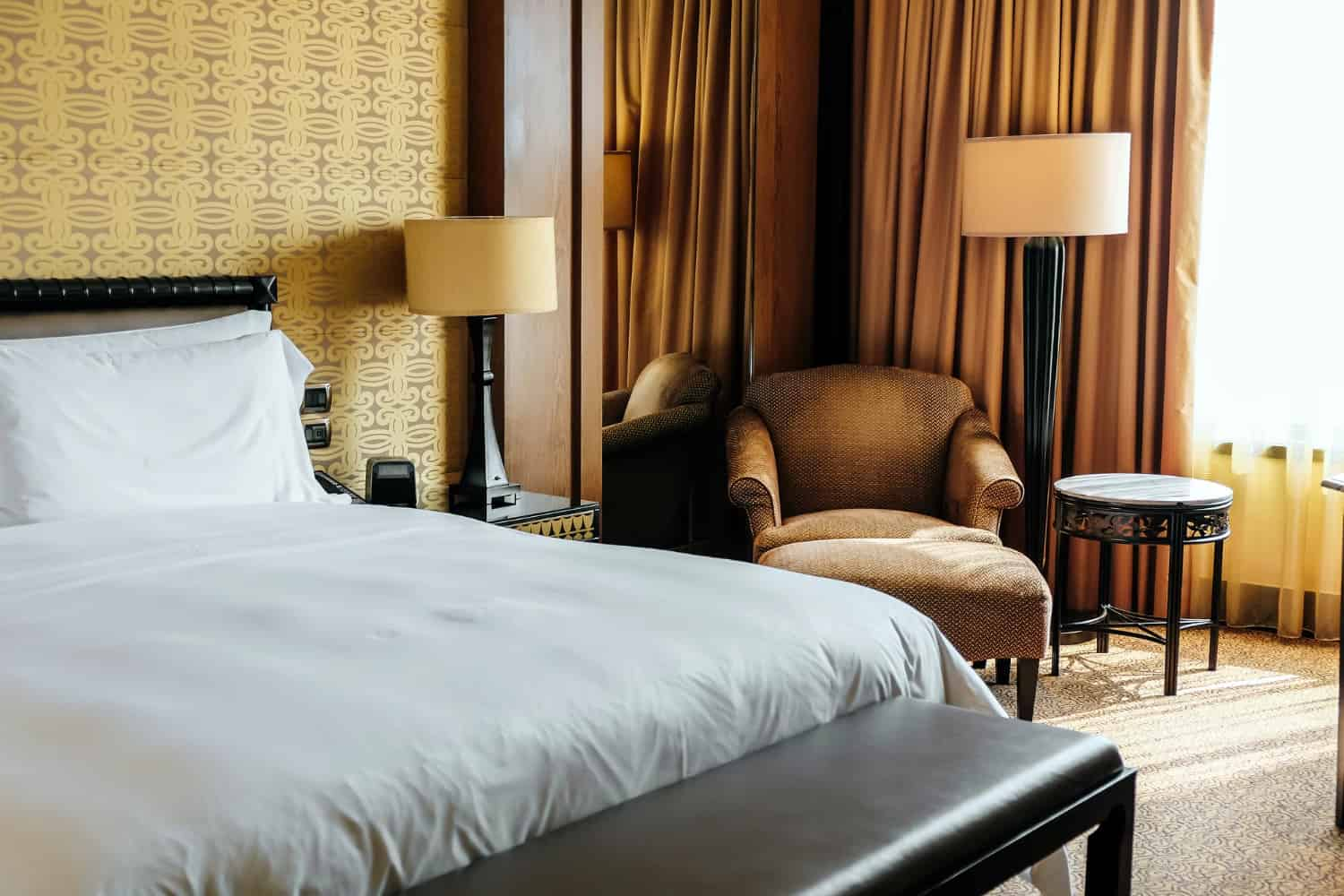
Hotel casegoods are the hard, non-upholstered furniture in a guest room or public space that stores or supports rather than seats: wardrobes, dressers, desks, nightstands, TV units and headboards. Each is built from a wood-based carcass faced in veneer, laminate or melamine, distinct from upholstered seating and from soft goods such as linens and drapery.
Ask three people on a hotel project what “casegoods” means and there is a decent chance you get three slightly different answers. Ask an FF&E consultant, a purchasing agent and a general contractor, and the word gets used loosely enough that a project brief can genuinely lose money over the confusion. It sits inside the wider question of types of hotel furniture, but casegoods is the one category every guest room budget has to get right, because it is the furniture that survives the longest and gets replaced the least.
What Hotel Casegoods Are
Casegoods is a trade term, not a marketing one. It describes hard, non-upholstered furniture built around a case or carcass, furniture that stores something, supports something, or provides a work surface, as opposed to furniture built to be sat on. The word comes from “case,” in the cabinetmaking sense of a box structure, and “goods,” meaning manufactured product. Put together, casegoods means boxed, rigid furniture: drawers, doors, shelves, tops.
The Trade Definition, Not the Retail One
In a hotel FF&E schedule, casegoods sits as its own line item, separate from seating, separate from soft goods, separate from lighting. A purchasing agent reading a schedule that lists “casegoods: 240 units” knows immediately that the line covers wardrobes, dressers, desks and nightstands, not sofas or curtains. That precision matters at quoting stage, because casegoods manufacturers, upholstery workshops and soft goods suppliers are frequently different companies entirely, each pricing, producing and shipping on a separate timeline.
Why the Category Exists as Its Own Budget Line
Casegoods gets its own budget line because it behaves differently from every other furniture category across a hotel’s life. It does not wear the way upholstery wears, it does not need reupholstering every renovation cycle, and it carries the guest room’s storage capacity, work surface and technology integration all at once. A wardrobe or desk specified well can outlast two or three soft-goods refresh cycles, which is exactly why casegoods construction quality deserves more scrutiny than its line-item size in the budget often gets.
Casegoods Outside the Guest Room
The term is not limited to bedrooms. A lobby credenza, a back-of-house storage cabinet, a hotel reception desk and a restaurant host stand are all casegoods by construction, even though they sit in public areas rather than guest rooms. Any hard, boxed, non-upholstered piece built around a carcass qualifies, regardless of which room it ends up in.
In FF&E, casegoods and soft goods are two different budgets and two different suppliers
Owners new to hospitality procurement sometimes assume one furniture supplier handles “the furniture” for a hotel. In practice, FF&E schedules split casegoods, upholstered seating and soft goods (OS&E: linens, drapery, decorative accessories) into separate budget lines, priced by separate specialists, on separate lead times.
A casegoods manufacturer builds wardrobes, desks and nightstands. A soft goods supplier sources bedding and drapery. Treating them as one undifferentiated “furniture” line at the budgeting stage is a common source of quoting confusion and change orders later in the project.
The Pieces Hotel Casegoods Cover
Casegoods is a category, not a single product, and a guest room’s casegoods line covers a specific, recognisable list of pieces that repeats across nearly every hotel brand and star level.
Wardrobe or Armoire
The wardrobe, sometimes specified as an armoire in higher-end briefs, is the largest casegood in most guest rooms and the piece with the most engineering behind it: hanging rail, shelving, a safe compartment, sometimes an integrated minibar or luggage shelf. It is also the piece most likely to be built as a fixed, built-in unit rather than freestanding furniture in newer hotel projects, which changes how it gets specified and installed.
Dresser and Chest of Drawers
The dresser or chest of drawers provides folded-clothing storage and, in many rooms, doubles as the base for a wall-mounted television or a vanity mirror. Drawer count, runner quality and box construction matter more here than almost anywhere else in the room, because drawers are the single most-used moving part in a guest room’s casegoods.
Desk or Writing Table
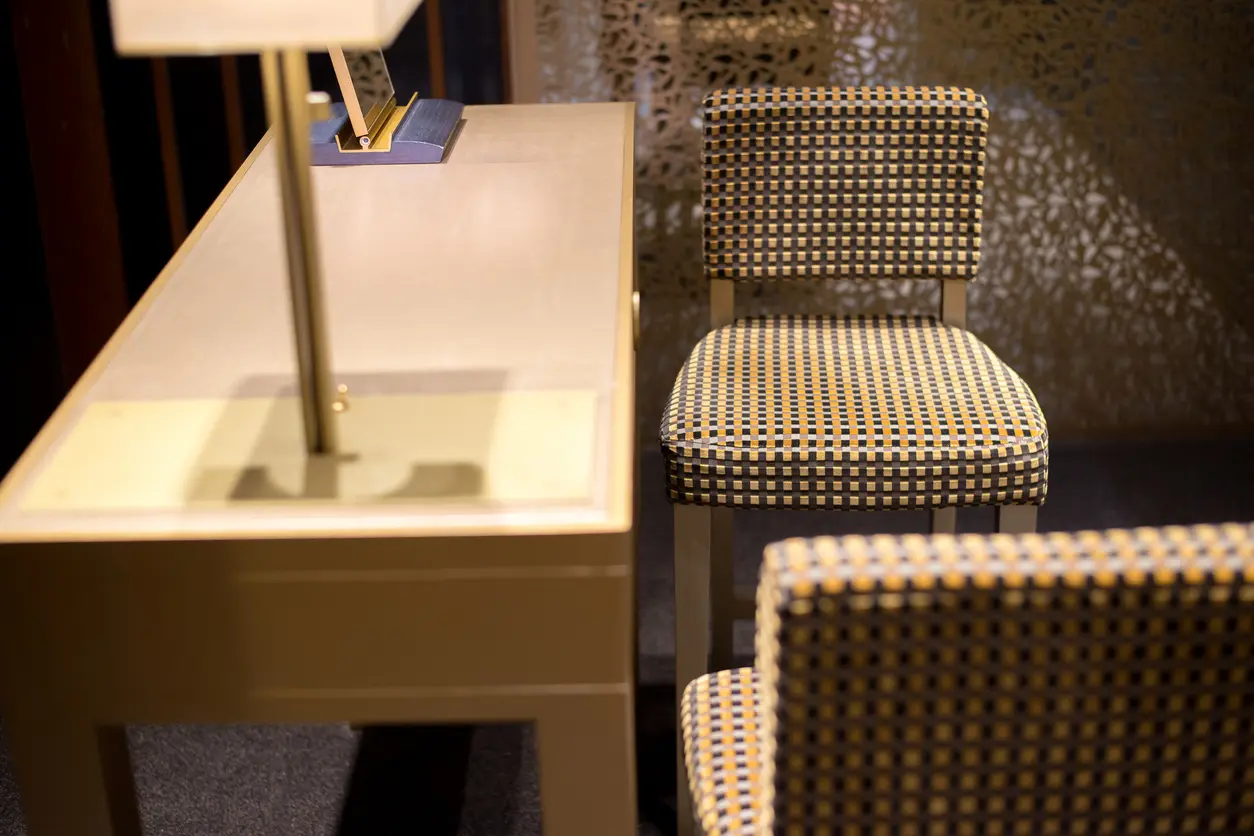
The desk remains a near-universal casegood across business and leisure hotels alike, even as its role shifts from a full workstation to a laptop-and-coffee surface with integrated power. Desk casegoods increasingly build in cable management, USB and power outlets, and sometimes a pull-out keyboard tray, all of which need to be planned into the carcass at the shop-drawing stage, not retrofitted.
Nightstand or Bedside Table
The nightstand is small but heavily used: lamp, phone charger, alarm clock, water glass, room service tray. It typically pairs with the bed as a matched set and increasingly integrates wireless charging and USB power directly into the top or drawer face, which again needs to be specified at the design stage rather than added later.
TV or Media Unit
Television units have shrunk over the past decade as screens moved to wall mounts, but the media casegood has not disappeared, it has shifted role toward a low console for set-top boxes, a luggage shelf, or additional folded storage beneath a wall-mounted screen. Ventilation and cable routing remain specification details a casegoods manufacturer needs from the AV consultant early.
Headboard, Luggage Bench and Minibar Cabinet
A hard-faced headboard, built from the same carcass materials as the rest of the room’s casegoods, counts as a casegood; an upholstered headboard panel does not. Luggage benches and racks, whether freestanding or wall-mounted, and minibar cabinets, whether standalone or integrated into the wardrobe, round out the typical guest room casegoods list. Public-area equivalents include credenzas, consoles and back-of-house cabinetry built to the same standard.
| Room or space | Typical casegoods |
|---|---|
| Standard guest room | Wardrobe, dresser, desk, nightstand(s), TV/media unit, headboard, luggage bench |
| Suite / upper-tier room | Above, plus dining or coffee table casegood, credenza, minibar cabinet, larger wardrobe with safe |
| Lobby / public area | Reception desk, concierge desk, storage credenzas, display cabinetry |
| Restaurant / bar | Host stand, back bar cabinetry, sideboards, service stations |
| Back of house | Storage cabinets, housekeeping carts’ fixed docking units, linen cabinetry |

How Hotel Casegoods Are Built
Casegoods construction is where a contract-grade piece and a residential-looking lookalike actually diverge, and it is worth a purchasing agent’s attention well before the finish sample stage.
The Carcass: MDF, Plywood and Particleboard
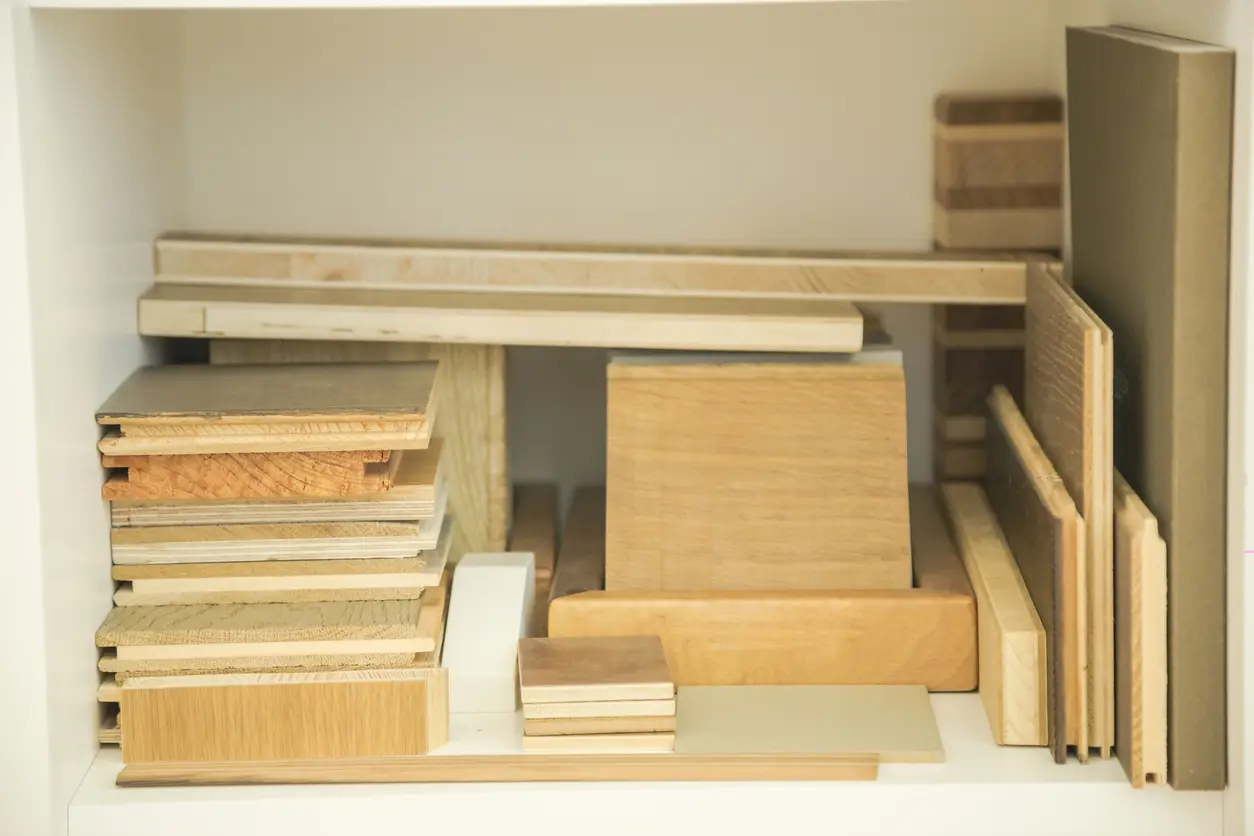
Every casegood starts with a carcass, the structural box beneath the visible surface, typically built from medium-density fibreboard (MDF), plywood or particleboard. MDF machines cleanly and takes a smooth veneer or laminate face; plywood offers better screw-holding and moisture resistance at a higher cost; particleboard is the most economical option but needs careful moisture-resistant specification for a hotel environment, especially in bathroom-adjacent casegoods.
Facing Materials: Veneer, Laminate and Melamine
The carcass gets faced in one of three main materials: real wood veneer for a natural grain appearance, high-pressure laminate (HPL) or low-pressure laminate (LPL) for a durable printed or solid-colour surface, or melamine for the most economical option, common on back-of-house and budget-tier casegoods. Choosing between them is a substantial decision on its own, covered in detail in the guide to wood veneer vs laminate, and it interacts with the property’s wider material palette described in the guide to hotel furniture materials.
Edge Banding, Runners and Hardware
Edge banding, typically 2mm PVC or ABS tape applied to every exposed panel edge, is the detail that separates furniture built to last from furniture that delaminates within a year of housekeeping abuse. Drawer runners rated for commercial cycle counts, concealed soft-close hinges, and reinforced corner and joint hardware round out the construction specification that a contract casegood needs and a residential-grade import typically skips.
Casegoods live or die at the edge and the carcass
Two dressers can look identical in a rendering and behave completely differently after eighteen months of housekeeping carts, wet cloths and daily drawer use. The difference almost never shows up in the finish photo. It shows up at the edge banding and inside the carcass.
Cheap edge tape lifts at the corners first, letting moisture into the substrate underneath. A particleboard core specified without moisture resistance swells at any point water sits against it. Contract-grade casegoods use 2mm banding properly glued and trimmed, and a substrate rated for the room it sits in. That is the line item worth checking on a spec sheet, not the veneer photo.
Contract-Grade vs Residential-Grade Casegoods
Contract-grade casegoods differ from residential furniture in ways that are not always visible at handover: moisture-resistant board cores, reinforced tops rated for repeated impact and weight, commercial hardware cycle-tested well beyond a residential warranty period, and flame-retardant compliance appropriate to hospitality fire codes. A residential-looking dresser bought at residential specification will not survive a three-year hotel duty cycle, regardless of how convincing the finish looks in a showroom.
Finish and Lacquer Considerations
The topcoat, whether a catalysed lacquer over veneer or a factory laminate surface, needs to survive daily cleaning chemicals, UV exposure near windows, and the abrasion of luggage and housekeeping carts without dulling or chipping within the furniture’s expected service life. Specifying finish standards by name, rather than assuming a manufacturer’s default finish meets contract requirements, is a basic but frequently skipped step.
Casegoods vs Upholstered Furniture vs Soft Goods
Understanding what casegoods is not helps clarify what it is. The three furniture families in a hotel FF&E schedule are built differently, priced differently and sourced from different specialists.
Upholstered and Seating Furniture
Upholstered furniture, armchairs, sofas, banquette seating, dining chairs, is built around a frame, usually wood or metal, wrapped in fabric or leather over foam or webbing. It is engineered for comfort and load-bearing under a seated body, which is a completely different structural problem than a casegood’s engineering, which is about storage capacity, drawer mechanics and surface durability.
Soft Goods and OS&E
Soft goods, sometimes grouped under the wider OS&E (Operating Supplies & Equipment) umbrella, covers linens, drapery, decorative cushions, artwork and other non-structural, textile-led items. These typically sit on their own FF&E budget line with the shortest lead times and the most frequent replacement cycle of the three categories, since drapery and bedding wear and date faster than either casegoods or upholstery.
| Category | What it is | Typical pieces | Who supplies it |
|---|---|---|---|
| Casegoods | Rigid, non-upholstered furniture built on a wood-based carcass | Wardrobe, dresser, desk, nightstand, TV unit, headboard | Casegoods manufacturer / joinery workshop |
| Upholstered / seating | Frame furniture wrapped in fabric or leather over foam | Armchairs, sofas, dining chairs, banquette seating | Upholstery workshop |
| Soft goods (OS&E) | Textile-led and decorative, non-structural items | Bedding, drapery, cushions, artwork, accessories | Soft goods / OS&E supplier |
Why the Distinction Matters for Procurement
Treating casegoods, upholstery and soft goods as three distinct procurement tracks, each with its own lead time, quality-control checklist and supplier relationship, keeps a project schedule realistic. Casegoods generally carry the longest lead time of the three because of carcass production and finishing time, so a project that sequences casegoods procurement last, after seating and soft goods are already ordered, is setting itself up for a delayed opening.
Where the Categories Overlap
A handful of pieces sit at the boundary: an upholstered headboard panel mounted on a wood-carcass frame draws from both casegoods and upholstery construction; a banquette seat with a hard-cased storage base beneath the cushion is part casegood, part upholstered piece. These hybrid items are worth flagging explicitly in a specification schedule so neither supplier assumes the other is covering it.
Loose Casegoods vs Fixed Casegoods and Millwork
Casegoods construction spans both freestanding and built-in furniture, and the distinction changes how a piece gets specified, installed and eventually replaced.
Freestanding Casegoods
A freestanding dresser, nightstand or desk arrives fully built, gets placed in the room during installation, and can be removed, replaced or relocated without construction work. Most FF&E casegoods packages are specified this way, since freestanding pieces are easier to warehouse, ship and swap out during a partial renovation.
Fixed Casegoods and Millwork
A built-in wardrobe wall, a fitted desk unit that runs the width of a window, or reception desk casegoods built into the architecture instead qualify as fixed furniture or millwork. These are typically installed by a joinery or millwork contractor on site rather than shipped as finished FF&E units, and they follow the building’s construction schedule rather than the furniture delivery schedule. The fuller comparison of how these two approaches differ across a hotel project is covered in the guide to loose furniture vs fixed furniture, and the construction and specification detail specific to built-in work is covered in the guide to fixed furniture.
Choosing Between Them at the Design Stage
The choice between loose and fixed casegoods is usually made at the interior design and architecture stage, driven by room geometry, brand standard and renovation strategy, rather than left to the furniture supplier to decide. A brand with a strict renovation cycle every seven to ten years often prefers freestanding casegoods precisely because they are easier to replace without disturbing finished walls and floors; a boutique or luxury project chasing a fully bespoke, built-to-the-wall look leans toward fixed casegoods and millwork instead.
A wardrobe does not stop being a casegood because it is screwed to the wall instead of standing free on the floor. The construction logic is the same. The installation and replacement logic are not.

Specifying and Sourcing Hotel Casegoods
Specifying casegoods correctly at the RFQ stage saves a project from the two most common casegoods failures: furniture that looks right in the sample and fails within a year, and a delivery schedule that quietly slips because carcass production started too late.
Building a Casegoods Specification Schedule
A complete casegoods specification schedule lists every piece by room type and quantity, names the substrate and facing material for each, states edge banding thickness and hardware standard, and confirms finish and emission requirements. Cross-referencing this against a property-wide hotel furniture list at the planning stage catches gaps before they become change orders during production.
Sampling and Quality Control
Requesting a physical sample of every casegood, not just a finish swatch, before committing to full production is standard practice on any serious contract order. A sample reveals drawer action, edge banding quality, hardware feel and overall fit and finish in a way a rendering or a finish chip cannot. This applies as much to a value-tier casegoods package as to a luxury one, since construction shortcuts are easiest to hide in a photograph and hardest to hide in the hand.
Matching Casegoods to the Wider Guest Room Brief
Casegoods do not get specified in isolation from the rest of the guest room. Wardrobe height needs to clear the ceiling and door swing, desk depth needs to suit the chair and outlet layout, and nightstand width needs to match the bed frame and headboard dimensions. The fuller framework for pulling all of a guest room’s furniture decisions together, casegoods included, is covered in the guide to hotel guest room furniture.
Lead Times and Procurement Sequencing
Casegoods typically carry the longest production lead time of any FF&E category, since carcass construction, facing, edge work and finishing all happen in sequence rather than in parallel. Building that lead time into the wider furniture procurement schedule from day one, rather than discovering it after seating and soft goods are already confirmed, is one of the more reliable ways to protect an opening date.
Working With One Manufacturer Across the Casegoods Package
Splitting a casegoods package between multiple manufacturers to chase small unit-cost savings usually costs more in coordination time than it saves, since colour-matching veneer batches, hardware standards and edge-banding consistency across suppliers is genuinely difficult to police from a distance. A single manufacturer producing the full casegoods package under one roof, wardrobe through nightstand through TV unit, keeps grain, colour and hardware consistent across every guest room and simplifies replacement sourcing for years after opening.
Choosing a Casegoods Manufacturer
The right casegoods manufacturer for a hotel project documents its board and finish standards on request, can produce a physical sample before committing to a production run, and has genuine experience building to contract durability standards rather than adapting residential furniture lines for a hospitality order. Combined with realistic lead-time planning and design collaboration from the earliest stage, that combination is what turns a casegoods line item into furniture a property is not replacing again in three years.
Frequently Asked Questions
What are casegoods in a hotel?
Hotel casegoods are the hard, non-upholstered storage and surface furniture in a guest room or public space: wardrobes, dressers, desks, nightstands, TV units and headboards. They form a carcass faced in wood veneer, laminate or melamine, as distinct from upholstered seating or soft goods.
What are examples of hotel casegoods?
Common hotel casegoods include the wardrobe or armoire, dresser or chest of drawers, writing desk, nightstand, TV or media console, luggage bench, headboard and minibar cabinet. Public-area equivalents include reception desks, credenzas and back-of-house cabinetry built the same way.
What is the difference between casegoods and upholstered furniture?
Casegoods are rigid, non-upholstered pieces built from a wood-based carcass, used for storage or work surfaces. Upholstered furniture has a frame wrapped in fabric or leather over foam, built for seating or comfort. They sit on separate FF&E budget lines and usually come from separate suppliers.
Is a bed a casegood?
The bed frame and headboard, when built from a wood-based carcass and hard-faced materials, count as casegoods. The mattress, box spring and any upholstered headboard panel do not; those fall under soft goods or upholstered furniture on a separate specification and budget line.
What are hotel casegoods made from?
Contract-grade hotel casegoods use an MDF, plywood or particleboard carcass faced with real wood veneer, high-pressure laminate or melamine, finished with 2mm edge banding. Commercial-grade drawer runners, concealed hinges and moisture-resistant board separate contract casegoods from residential furniture.
Are casegoods loose or fixed furniture?
Casegoods can be either. A freestanding dresser or nightstand is loose furniture; a built-in wardrobe wall or fitted desk unit is fixed furniture or millwork. The construction techniques overlap, but the specification, installation and replacement process differ significantly between the two.