In short
A hotel furniture list is a structured inventory of every piece a property needs, organised by area and room type. Developers prepare it early to estimate budgets, plan procurement and coordinate the interior design before a single order goes out.
A hotel furniture list is the first practical document a new hotel project produces, and the quality of it shapes everything that follows. Before a developer can budget, procure or coordinate a fit-out, the team needs a clear inventory of every piece the property requires — area by area, room type by room type. A complete list keeps the scope honest, reveals the cost early, and stops the forgotten luggage bench or missing service counter from surfacing as a shortage on opening week. Because the bedroom carries the largest and most repeated part of any inventory, the hotel guest room furniture is where most lists begin and where the quantities multiply fastest.
What a Hotel Furniture List Is
Quick answer
A hotel furniture list is a structured inventory of every furniture item a property needs, broken down by area and room type with quantities and specifications. Developers, architects and procurement teams build it early in a project to estimate the budget, plan the procurement and keep the interior design coordinated.
A furniture list is not a catalogue of what exists; it is a working inventory of what this property needs. Where a guide to the types of hotel furniture explains the categories a hotel can choose from, the furniture list narrows that universe to the specific pieces, in the specific quantities, that a particular project requires. It is the bridge between the design concept and the purchase order, and the document every later stage of the fit-out refers back to.
Why developers build the list early
The teams that build the list first are the ones that open on time. A complete hotel furniture list lets a developer estimate the furniture budget before committing to a scheme, plan the procurement around realistic lead times, and coordinate the furniture with the wider interior design rather than retrofitting it later. Leaving the list until the building is up is the surest way to discover a missing item when it is most expensive to add.
How the list breaks down
A workable list breaks down by area first — guest rooms, lobby and public spaces, food and beverage, outdoor and leisure — then by room type within each area, since a suite carries a different inventory than a standard king. The sections below set out the items each area needs as a ready-made starting point. A project adapts the quantities to its own room mix, but the structure stays constant across almost every hotel.
The list is the project’s single source of truth
Every party on a fit-out works from the furniture list: the designer schemes against it, the procurement team quotes against it, the manufacturer builds against it, and the installer snags against it. A vague or incomplete list multiplies confusion across all of them. The discipline of getting the list right once pays back at every later stage.
Guest Room Furniture List
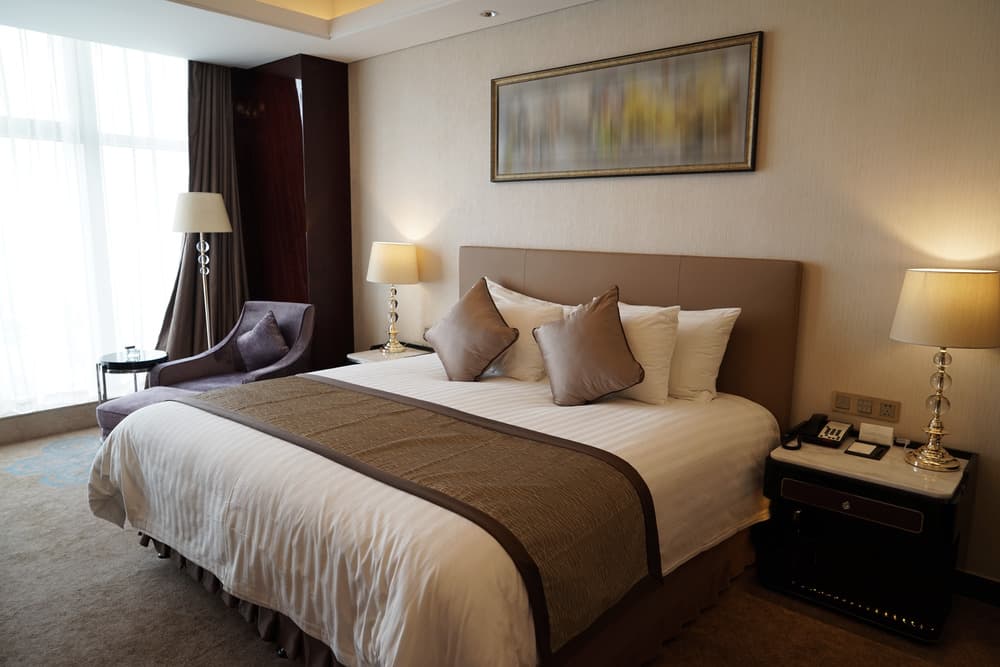
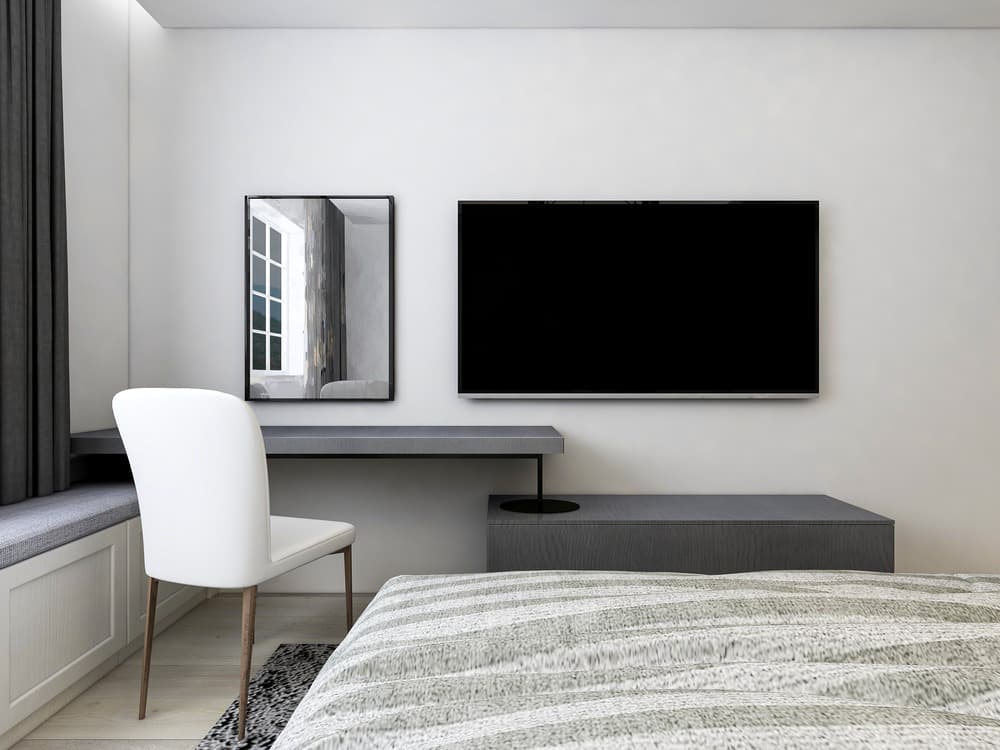
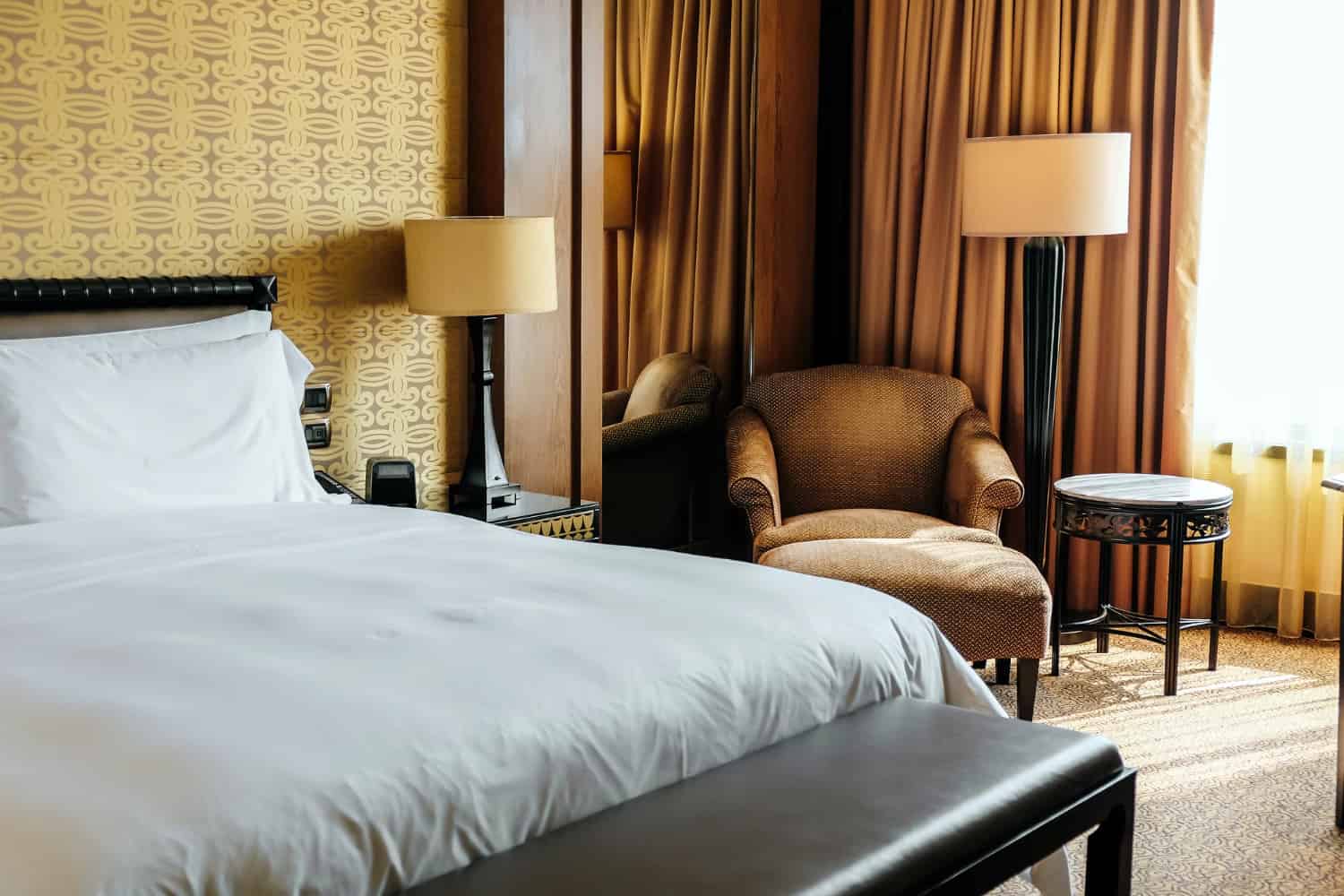
The guest room carries the largest part of any hotel furniture list, because every item repeats across every room in the property. A standard room shares a core inventory across segments; premium rooms and suites extend it. The essential guest room list below is the baseline a room cannot open without.
| Essential item | Purpose on the list |
|---|---|
| Bed base or platform | The structural foundation of the room; paired with a mattress. |
| Headboard | Sets the visual tone and protects the wall behind the bed. |
| Mattress | The piece a guest judges the stay on; specified for durability. |
| Bedside tables | One or two per bed, with surface and storage for the guest. |
| Wardrobe or closet | Primary storage; built-in or freestanding by room design. |
| Writing desk and chair | Workspace for the business traveller; power and lighting nearby. |
| Luggage rack | Keeps suitcases off the bed and the floor. |
| TV panel or cabinet | Houses the screen and conceals cabling. |
| Mini-bar cabinet | Holds the in-room refreshment offer. |
| Full-length mirror | A small piece guests notice by its absence. |
Additions for premium rooms and suites
Above the essentials, premium rooms and suites expand the list with comfort and presence. A lounge chair or small sofa, a coffee table, an ottoman or bench, and a vanity table are the pieces that lift a room beyond functional, and a suite adds a separate seating group and often a dining or meeting table. These items scale the list up with the segment rather than redefining it; the depth of how a manufacturer builds and finishes each piece sits in the design guide rather than the list itself.
Lobby and Public Area Furniture List
The lobby shapes the first impression of the property, so its part of the list balances presence with the endurance to take constant public traffic. The list covers reception, waiting and lounge zones, plus the functional pieces a modern public area needs.
| Lobby item | Purpose on the list |
|---|---|
| Reception desk | Anchors the arrival and the front-of-house operation. |
| Reception back panel | Carries the brand and frames the desk. |
| Lobby sofas and lounge chairs | Seating zones for guests to wait and relax. |
| Coffee, side and console tables | Surface and structure for the seating groups. |
| Waiting benches | Efficient seating for transitional moments. |
| Work tables with power | For business travellers working in the public area. |
| Modular lounge seating | Flexes the space between quiet and busy periods. |
Listing only the showpiece seating
A common gap in a lobby list is the functional half of the room — the work tables, charging points, luggage benches and consoles that decide how usable the space feels. A list that captures only the statement sofas leaves the working pieces for a late scramble, often at a premium. Capture the whole room, not just the brochure shot.
Restaurant and Bar Furniture List
Most hotels operate at least one food and beverage outlet, so the furniture list has to cover dining and bar areas that take the heaviest indoor use of any space. These pieces need commercial-grade construction to survive turnover, spills and constant cleaning, and the list should note that requirement against each line.
| Restaurant & bar item | Purpose on the list |
|---|---|
| Dining tables | Sized to the cover plan and the service style. |
| Dining chairs | The highest-turnover seating in the property. |
| Bar stools | Counter-height seating for the bar and lounge. |
| Booth and banquette seating | Defines the layout and absorbs noise. |
| Buffet counters | Serving and display for breakfast and events. |
| Service stations | Back-of-house support pieces for the service team. |
Properties running several outlets — an all-day cafe, a fine-dining room, a bar — should list each one separately, because the same categories appear in a different mix and specification in each. Conference and banquet venues add their own lines: stacking chairs, folding and banquet tables, and the trolleys that move and store them. A list that lumps every dining space into one entry hides the quantities the procurement team actually needs.
Outdoor and Leisure Furniture List
Resorts and leisure hotels extend the list outdoors, where the pieces face sun, rain and pool chemicals that indoor furniture never meets. The list should flag weatherproof construction against every outdoor line, because an indoor-grade piece specified here simply moves the replacement bill outside.
| Outdoor item | Purpose on the list |
|---|---|
| Sun loungers | The core poolside and terrace piece. |
| Outdoor sofas and chairs | Lounging and social seating outdoors. |
| Patio dining tables and sets | For terrace and poolside dining. |
| Outdoor side tables | Surface for loungers and seating groups. |
| Umbrellas and shade structures | Make the space usable through the day. |
Premium resorts extend the outdoor list further into cabanas, daybeds and outdoor bar or service furniture, each of which carries the leisure offer and faces the harshest conditions on the property. The materials matter as much as the items here: treated hardwood, powder-coated aluminium and synthetic rattan recur on outdoor lists because they hold up where other materials fade or rust.
How to Build a Hotel Furniture List
A hotel furniture list is only as useful as it is complete and quantified, and building one well follows a clear method. The goal is a document precise enough for a manufacturer to quote against and a procurement team to order from, with nothing left to assumption.
Define quantities by room type
The list starts with the room mix. Count the standard kings, the twins, the suites and the accessible rooms, then multiply the per-room inventory by each count to reach the real quantities. A property with two hundred rooms across four types needs four sub-lists, not one, because the inventory and the finishes shift between them. Getting the quantities right here is what turns a generic list into a procurement-ready one.
Specify materials and finishes
Each line on the list needs more than a name. A workable furniture list records the dimensions, the materials, the finishes and any compliance requirement — fire ratings, contract-grade construction — against every item, so the piece a manufacturer builds matches the piece the designer intended. The deeper detail of which materials suit which piece sits in the materials guide; the list captures the decision, not the debate.
Sequence the list to the programme
A complete list also notes when each area needs its furniture, because a phased opening rarely needs everything at once. Tying the list to the construction programme — which floors and which outlets come online when — lets the procurement team order in the right sequence and stops finished pieces sitting on a live site collecting damage. A list with quantities, specifications and a schedule is a list a project can actually execute.
Turning the List Into a Procurement Plan
A finished hotel furniture list is the start of procurement, not the end of planning. Once the inventory is complete, quantified and specified, the work shifts to sourcing the pieces, agreeing the terms and managing the delivery — the full discipline covered in our guide to hotel furniture procurement. The list is what makes that process possible: a precise inventory lets a buyer issue a clean request for quotation and compare suppliers on a like-for-like basis.
From list to budget
The list also drives the budget. Once the list fixes the quantities and specifications, a project can attach realistic figures and watch the furniture cost take shape per room type and per area. What actually moves those figures — materials, finishes, quantities — sits in our guide to hotel furniture cost; the list is simply the structure the budget hangs on. A budget built on a complete list holds; a budget built on a half-list slips the moment the missing items appear.
One list, one supplier where possible
The cleaner the list, the stronger the case for sourcing it through as few suppliers as possible. A single manufacturer working from one complete list can hold the specification across every area, match finishes, consolidate the delivery and stand behind one warranty — advantages that fragment the moment a project splits the list across several sources. A well-built hotel furniture list does more than catalogue what a property needs; it sets up the procurement that delivers it on time, on budget and to one consistent standard.
Frequently Asked Questions
What is a hotel furniture list?
A hotel furniture list is a structured inventory of every furniture item a property needs, broken down by area and room type with quantities and specifications. Project teams build it early to estimate the budget, plan procurement and keep the furniture coordinated with the wider interior design.
What should a hotel furniture list include?
A complete list covers guest-room furniture, lobby and public-area pieces, restaurant and bar furniture, and outdoor items, each with quantities by room type, dimensions, materials, finishes and any compliance requirement. It should also note when each area needs its furniture against the construction programme.
Why do developers need a furniture list before a project starts?
Building the list early lets a developer estimate the furniture budget, plan procurement around realistic lead times, and coordinate the design before ordering. Leaving it late is the surest way to discover a missing item when adding it costs the most and risks delaying the opening.
How do you create a hotel furniture list?
Start from the room mix and multiply the per-room inventory by each room-type count to reach real quantities. Specify dimensions, materials, finishes and compliance against every line, then sequence the list to the construction programme so the team orders each area’s furniture in the right order.
What is an FF&E list?
An FF&E list covers furniture, fixtures and equipment — furniture plus lighting, soft furnishings and loose equipment. The furniture list is the largest part of it; a good plan coordinates the furniture inventory with these neighbouring packages so a finished room reads as one scheme.
How many furniture items does a standard hotel room need?
A standard room needs around ten essential pieces: a bed base, headboard, mattress, bedside tables, wardrobe, desk and chair, luggage rack, TV cabinet, mini-bar cabinet and a full-length mirror. Premium rooms and suites add lounge seating, coffee tables and a vanity on top of that baseline.