In short
Furniture made in Turkey means contract-grade pieces built by Turkish factories for hotels and commercial projects, not retail home furniture. The country sets a competitive cost base and a strong talent pool; the individual factory and the written specification decide the grade, which is why a buyer verifies both before placing an order.
Furniture made in Turkey now sits near the top of the sourcing shortlist for hotel developers, procurement teams and project managers, and the reason is plain. Turkish factories build contract-grade pieces to a European standard on a cost base that Western European workshops rarely match, and most build to order rather than to a catalogue. This guide is for the commercial buyer furnishing a property, not the shopper furnishing a home: there are no retail sales here, only project work. It sets out what furniture made in Turkey means for a hospitality project, how commercial pieces differ from residential ones, whether Turkish quality holds up under scrutiny, and how a buyer verifies a factory before an order is placed. Much of what arrives under the labels Turkish hotel furniture and hotel furniture in Turkey is exactly this contract work. For the pieces themselves, our guest room furniture range shows what a Turkish contract manufacturer builds to a project specification.
What Furniture Made in Turkey Means for a Contract Buyer
For a hospitality project, furniture made in Turkey describes contract furniture manufactured by Turkish factories for hotels, restaurants, offices and public spaces — not the home furnishings a traveller might carry back from a bazaar. Turkey runs one of the largest furniture industries in the region, concentrated around Istanbul and a handful of production hubs, and a large share of its output is built for export. That export orientation matters to a buyer, because a factory that ships abroad as routine already handles the documentation, packing and Incoterms a long-distance order needs.
A manufacturing base, not a retail market
The phrase trips up buyers who read it as a consumer category. A hotel does not buy furniture made in Turkey the way a household buys a sofa; it commissions a production run against a written specification. The country of origin tells a buyer where the workshop sits and roughly what cost base it works from, but on its own it does not describe the grade. Two factories in the same city can build to very different standards, so the origin is a starting point for a sourcing decision rather than the decision itself.
The scale behind the label is part of what makes it credible. Turkey ranks among the largest furniture exporters in the world, and its contract sector has grown on the back of hotel and project work across Europe, the Gulf and Africa. For a buyer, that depth means a wider choice of factories, established export logistics and a supplier base that competes on grade rather than novelty. It also means the usual caution applies: a large industry holds excellent factories and weak ones alike, so the search narrows to the manufacturer, not the map.
Specify the grade, not just the country
An origin is not a specification. A buyer protects a project by writing the grade into the order — contract-grade frames, the upholstery rub count, the fire rating and the finish — so the quote answers a defined brief. The country narrows the search; the specification wins the result, whether the workshop sits in Istanbul or anywhere else.
Commercial vs Residential Furniture: The Distinction That Matters
The most expensive mistake in any fit-out is putting residential furniture into a commercial space. The two look similar in a showroom and behave nothing alike in a hotel. Commercial, or contract, furniture is engineered for constant public use; residential furniture is built for the lighter rhythm of a home. A buyer sourcing furniture made in Turkey, or anywhere else, holds the project to the commercial grade.
How commercial furniture is built differently
Contract pieces start with structure. Commercial frames use solid hardwood or high-grade engineered timber with reinforced joints, corner blocks and metal fixings rated for daily load. Surfaces resist scratches, heat and cleaning chemicals, and upholstery carries a high rub count and a fire rating that a public room demands. Every choice answers a question a home piece never faces: will it survive thousands of guests a year and the cleaning that comes with them.
Why residential furniture fails in a hotel
Residential furniture fails in a hotel on three fronts. It wears out early, because softer timber and domestic fabrics were never built for the traffic. It falls short on compliance, because home pieces rarely meet the fire and safety standards a public space requires. And it costs more over time, because a hotelier replaces it long before a contract piece would reach the end of its service life. The table below sets the two side by side.
The cost-over-time gap is the part buyers underestimate. A residential piece that looks like a saving on the quote often carries a hidden replacement schedule: it tires within a few seasons of heavy use, and the labour to swap it out, the downtime of the room and the disruption to guests all land on top of the second purchase. A contract piece costs more to build once and earns its place by lasting, which is why a hospitality project measures furniture against its service life rather than its opening price.
| Feature | Commercial (contract) furniture | Residential furniture |
|---|---|---|
| Durability | Built for high-traffic, round-the-clock use | Built for occasional household use |
| Materials | Reinforced frames, contract-grade surfaces, performance fabrics | Softer timber, delicate finishes, domestic textiles |
| Compliance | Meets fire and safety standards for public spaces | No hospitality compliance built in |
| Service life | Engineered to last the years between renovations | Shorter, and faster to fail under heavy use |
| Customisation | Made to brand standard and exact room dimensions | Chosen from fixed retail ranges |
Is Turkish Furniture Good Quality? The Case for Turkey
Quick answer
Turkish contract furniture meets the durability, material and compliance standards a hospitality project demands, and the established factories hold decades of cabinetry and joinery experience. Quality tracks the individual factory rather than the country, so a buyer judges the specific manufacturer, its materials and its export record before placing an order.
The question buyers ask most often about furniture made in Turkey is the blunt one: is it any good. The same doubt trails the phrase Turkish hotel furniture, and the honest answer separates the country from the factory, because the two carry different weight.
The craftsmanship behind Turkish furniture
Turkey carries a long furniture-making heritage, and its established workshops pair that tradition with modern production lines. The result, at the right factory, is cabinetry and joinery that holds against European makers, worked in solid timber, engineered board, metal and contract upholstery. Skilled labour sits behind the price advantage rather than a thinner specification, so a buyer keeps the grade without paying the European premium.
Materials, standards and compliance
Quality shows in the materials and the compliance, not the marketing. A contract piece from a serious Turkish factory carries reinforced construction, performance fabrics rated for heavy use, and finishes that survive daily cleaning. Fire and safety standards can be specified to the destination market, which matters for any public room. Confirming that a finished order actually meets the specification is a separate discipline; our hotel furniture quality control checklist sets out the inspection routine stage by stage.
How to read quality in a Turkish piece
A buyer can read quality in a sample before any certificate arrives. Check the joinery for tight, reinforced joints rather than staples; press the upholstery for dense, resilient foam rather than a soft top layer over a hollow seat; run a hand over the finish for an even, hard-wearing surface; and open a drawer to feel whether the runners are built for daily use. These are the same tells a buyer would look for anywhere, and they cut past the question of country to the only thing that matters: how the piece itself is made.
Quality is a factory question, not a country one
“Is Turkish furniture good quality” is the wrong question by a degree. The country sets the cost base and the talent pool; the factory sets the grade. A buyer who vets the specific manufacturer — its references, its samples, its export track record — gets a reliable answer, where a buyer who trusts the flag alone is gambling.
What Turkish Manufacturers Make for Hospitality Projects
The hotel furniture manufacturers in Turkey supply the full hospitality range, which is part of why furniture made in Turkey suits a whole-property order rather than a single category. A buyer can place the guest rooms, the restaurant, the lobby and the outdoor areas with one Turkish factory and consolidate the programme on a single shipment, under one warranty.
Guest room furniture
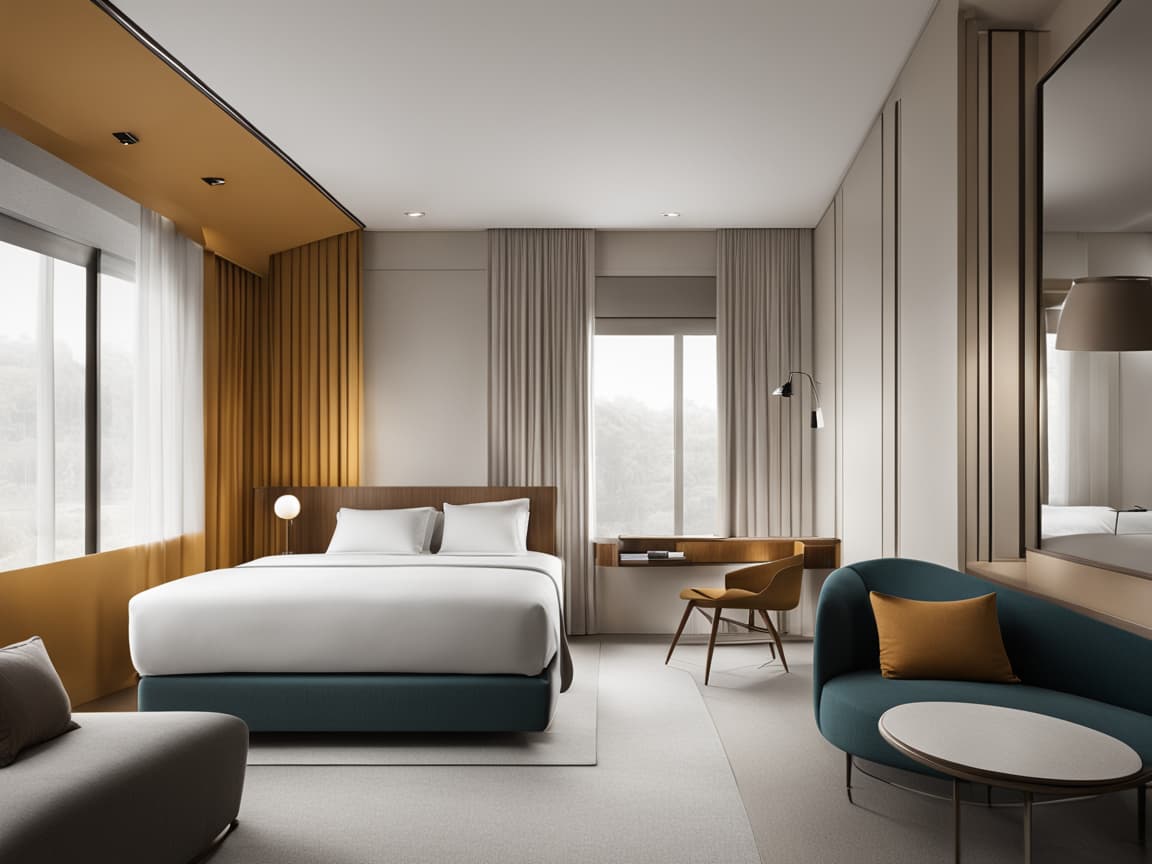
The guest room carries the largest count of pieces — casegoods, beds, headboards, desks and seating — and it is where most projects start. Bedroom furniture made in Turkey covers the wardrobe, the dresser, the nightstands and the luggage bench, each built to the dimensions a brand standard sets.
Restaurant and dining furniture
Restaurant furniture turns over fast and meets spills and constant movement, so Turkish makers build dining tables and chairs on frames that take daily use and surfaces that wipe clean. The factory that builds the guest rooms can match the dining room to the same brand standard.
Lobby and public-area furniture
The lobby shapes the first thing a guest meets, and its seating faces the heaviest traffic in the building. Turkish manufacturers build reception counters, lounge seating and occasional pieces to the higher specification a public area earns.
Outdoor and banquet furniture
Outdoor furniture made in Turkey carries the weatherproofing, the coatings and the fade-resistant textiles that survive sun and rain, while banquet furniture — stacking chairs, folding tables and trolleys — answers the flexibility a function space needs. A buyer prices these zones on their own logic, because a guest-room piece does not transfer to a poolside chair.
Consolidating a property with one Turkish factory does more than simplify the paperwork. It holds the finish, the timber tone and the detailing consistent from the guest room to the restaurant to the lobby, so the property reads as one designed whole rather than a set of separate orders. It also gives a buyer a single point of accountability for the warranty and the shipment, which matters most when a problem needs solving after delivery.
Why Hotels Source Furniture Made in Turkey
Three reasons explain why hotels source furniture made in Turkey — and why so many buyers search for Turkish hotel furniture and hotel furniture in Turkey by name: the quality, the cost base and the reach.
Contract-grade quality that holds
The first reason is the grade. A serious Turkish factory builds to the contract standard a hospitality project demands, so a buyer trades nothing on durability or compliance to gain on price. The quality that survives heavy use is the whole point of sourcing contract rather than retail.
A competitive cost base, without dropping the grade
The cost advantage follows from a lower production cost, not a lower specification. Turkish labour and materials sit below Western European levels, so the same grade costs less to build. For how that advantage translates into a project budget, our hotel furniture cost guide sets out the drivers; this guide keeps to why the base is competitive rather than what a project pays.
The point is not that cheaper is better, but that the saving arrives without a trade on grade. A buyer who would otherwise pay a European premium for the same contract standard keeps the difference and puts it back into the project, which is the real reason sourcing furniture made in Turkey is worth the cross-border step for so many developers.
Geography and shipping reach
Geography closes the case. Turkey sits within easy reach of Europe, the Middle East, North and West Africa and beyond, which shortens transit and trims freight against a Far East order. A container leaving Istanbul reaches many of these markets faster, and that speed feeds straight into the project timeline.
A reach that spans markets worldwide
Turkish factories ship worldwide, and the same advantages travel with the container wherever it lands. A project in Europe, the Gulf, Africa, Asia or the Americas can source furniture made in Turkey on the same terms — contract-grade quality, a competitive base, and a route chosen for the destination. West Africa is one clear example of the pattern: developers furnishing hotels in markets such as Ghana increasingly source from Turkey rather than from Europe or the Far East, drawn by the mix of quality, price and a shipping route that lands goods without the longer transit a Far East order carries. The same calculation plays out across many other markets.
What ties these projects together is not a single region but the export model. A Turkish factory that ships routinely to several continents brings the documentation, the packing standards and the freight relationships a single-market supplier lacks, so a buyer anywhere gains the same handled, predictable order. A buyer who plans the route early, rather than treating it as an afterthought, gains the most from it.
Shipping reach is a timeline advantage, not only a freight one
Turkey’s position does more than trim freight. A shorter, more predictable route to Europe, the Middle East and West Africa lets a hotel align manufacturing with its opening date instead of building a long Far East transit into the schedule. On a project running to a fixed launch, that predictability is worth as much as the saving.
The Export Strength and Scale Behind Furniture Made in Turkey
Two things turn a national furniture industry into a real sourcing option for hotels abroad: the capacity to build at the scale a property needs, and the infrastructure to deliver it across a border. Furniture made in Turkey carries both, which is why international hotel groups treat the country as a primary source rather than a curiosity. The export side of the industry is large enough to have its own reputation, and it rewards a closer look.
High-volume manufacturing and the Turkish furniture clusters
Turkey concentrates its furniture trade in a handful of established clusters — Istanbul, Ankara, Kayseri and Bursa — where decades of woodworking sit beside modern plant. Those clusters give the hotel furniture manufacturers in Turkey the depth to run high-volume hotel furniture manufacturing without losing the bench skill that finishing demands. CNC cutting, automated upholstery lines and digital design hold consistency across a two-hundred-room order, while skilled hands keep each piece looking made rather than stamped. For a hotel that matters more than any single brochure, because it means the country can build a whole property to one standard and repeat it room after room. A buyer comparing furniture manufacturers in Turkey is really comparing this depth: how much volume a factory holds before quality slips, and how well it keeps the hundredth headboard identical to the first. Capacity on that scale is also what lets a Turkish factory quote a firm lead time on a large order rather than hedging, since the plant has run programmes of that size before.
How the Turkish hospitality furniture industry scaled
The growth was not an accident. Over two decades, rising tourism and a wave of hotel construction across the region pulled the Turkish hospitality furniture industry from a domestic trade into an export one, and manufacturers reinvested in plant, design teams and export desks to keep pace. That history matters to a buyer today because it means the sector has already learned the disciplines a foreign hotel project demands — contract durability, fire standards, Incoterms and firm lead times — rather than discovering them on your order. A maturing industry, not a single clever factory, is what stands behind furniture made in Turkey now.
Export reach and international logistics
Scale only helps a foreign buyer if the furniture reaches the site, and here Turkey’s position pays. The Turkish hotel furniture exporters ship as routine to Europe, the Gulf, North Africa, Sub-Saharan Africa and North America, handling Incoterms, container loading and export documentation as part of the order rather than an afterthought. Istanbul sits within a few days’ freight of three continents, so international hotel furniture logistics from Turkey run shorter and simpler than the long sea routes out of the Far East — a difference a project manager feels most when a delivery date slips and the factory is a fortnight closer. HFC ships to more than thirty countries on FOB and CIF terms, with established lanes into West Africa, the Gulf and Europe. For a buyer in Accra, Lagos or Dubai, that reach is the practical difference between a supplier on paper and one that has cleared customs into the same port before, with the documentation to prove it.
Where hotels buy furniture in Turkey
Buyers asking where hotels actually source their furniture in Turkey usually find two routes. The first runs through a trading company that forwards the order to a factory it does not own; the second goes direct to a contract manufacturer that builds the pieces itself. Going direct removes a margin and keeps the brief closer to the bench, which is why most brand-led properties prefer it. Finding and vetting that manufacturer is its own discipline, and our guide to hotel furniture suppliers walks through how to judge one before an order is placed.
Sourcing at project scale
A hotel rarely buys one chair; it furnishes a building. The Turkish industry handles exactly that, taking large project orders that consolidate guest rooms, public areas and outdoor spaces into a single programme on one shipment, under one warranty. Placing a whole property with one Turkish manufacturer removes the seams that show when a buyer splits the order across several smaller suppliers, and it holds the brand look steady from the room to the restaurant. It also simplifies the years after opening, since reorders and replacement parts trace back to one factory and one specification rather than a scatter of suppliers a maintenance team has to chase. How to run that procurement well — briefs, quotes and checks — sits in our guide to buying hotel furniture.
How to Source Furniture Made in Turkey
Country of origin never replaces diligence. A buyer sourcing furniture made in Turkey runs the same discipline as anywhere else, with a little of it specific to a cross-border order.
Verify the factory and its export record
Start with the factory, not the flag. Ask for hospitality project references, request a physical sample before the bulk run, and take up any offer to visit the workshop. A manufacturer that exports as routine keeps references and samples ready, and talks about Incoterms and documentation without prompting.
Confirm the specification, lead time and paperwork
Put the specification in writing — materials, finishes, dimensions and fire standards — so the quote answers a defined brief. Agree the production lead time in writing, and settle the export documentation and Incoterms, whether FOB or CIF, up front. These details decide whether a long-distance order arrives clean or stalls at a port.
Where to take the decision deeper
A Turkey-specific sourcing call sits inside a wider procurement process. For the full buying workflow, our guide to buying hotel furniture walks through the channels and the checklist. For the pre-shipment inspection, the quality control checklist covers what to check. And for the choice between bespoke and standard pieces, our guide on custom hotel furniture works through it piece by piece.
The mistakes that catch first-time buyers
Two mistakes catch buyers new to the route. The first is treating the lowest quote as the best one, without checking whether the two factories quoted the same grade; a thin specification hides under a tempting number and surfaces later as early failure. The second is leaving the documentation to the end, which turns a finished order into a stalled one at the port. A buyer who fixes the grade in writing and settles the paperwork up front clears both before they start.
Furniture Made in Turkey as a Project Decision
Furniture made in Turkey gives a hospitality project a strong starting point: European-level contract quality, a competitive cost base and a shipping route that reaches the markets where new hotels open. The decision is won, though, on the specification and on a manufacturer that exports as a matter of routine, not on the country alone. HFC works from Istanbul on exactly that footing, building to project specification and shipping to more than thirty countries, on a trade-only basis with no retail sales. That single footing — one factory, one written specification, one shipment under one warranty — is what turns a cross-border order into a project a buyer can run with confidence. To price a real project, you can tell us about your property and receive direct factory pricing from Istanbul.
Frequently Asked Questions
Is Turkish furniture good quality?
Turkish contract furniture meets the durability, material and compliance standards a hospitality project requires, and the established factories hold decades of joinery experience. Quality varies by factory rather than by country, so a buyer verifies the specific manufacturer, its materials and its export record before placing an order.
What is the difference between commercial and residential furniture?
Commercial, or contract, furniture is engineered for constant public use, with reinforced frames, performance fabrics and fire-rated materials that meet hospitality standards. Residential furniture is built for lighter home use and softer finishes. A hotel that installs residential pieces meets early wear, compliance gaps and frequent replacement.
Why do hotels source furniture made in Turkey?
Hotels source furniture made in Turkey because Turkish factories combine contract-grade quality with a competitive cost base and a shipping route that reaches Europe, the Middle East and West Africa quickly. Most build to order, so a property receives furniture matched to its brand standard rather than a catalogue approximation.
What furniture is Turkey known for in hospitality projects?
Turkish manufacturers supply the full hospitality range: guest-room casegoods, beds and headboards, restaurant tables and seating, lobby and lounge furniture, and outdoor and banquet pieces. Most work to order for contract projects, building each item to the room dimensions, finishes and fire standards a hotel brand specifies.
How do you verify a furniture manufacturer in Turkey?
Verifying a Turkish manufacturer means checking its hospitality project references, reviewing a physical sample before the bulk run, and confirming the production lead time and export documentation in writing. The strongest hotel furniture manufacturers in Turkey handle Incoterms, packing and paperwork as routine, part of the order rather than an afterthought.