Quick answer
Solid wood, hardwoods such as oak, beech, ash or walnut, suits frames, legs and statement pieces that need strength, repairability and a premium hand-feel. Engineered wood, MDF, plywood and particleboard, suits flat casegood panels, doors and carcasses that need to stay dimensionally stable at scale. Most contract-grade hotel furniture specifies both inside a single hybrid piece rather than choosing one material for an entire item.
Ask two suppliers to quote the same wardrobe and one number can vary by 30 percent before a single finish option is even discussed, and the substrate underneath is usually why. This guide sits inside the wider question of hotel furniture materials, but it narrows down to one structural decision: solid wood vs engineered wood, what each one actually is, where each performs and fails, and how a contract specification should split the two across a single piece rather than picking a winner.
Solid Wood vs Engineered Wood: The Basics
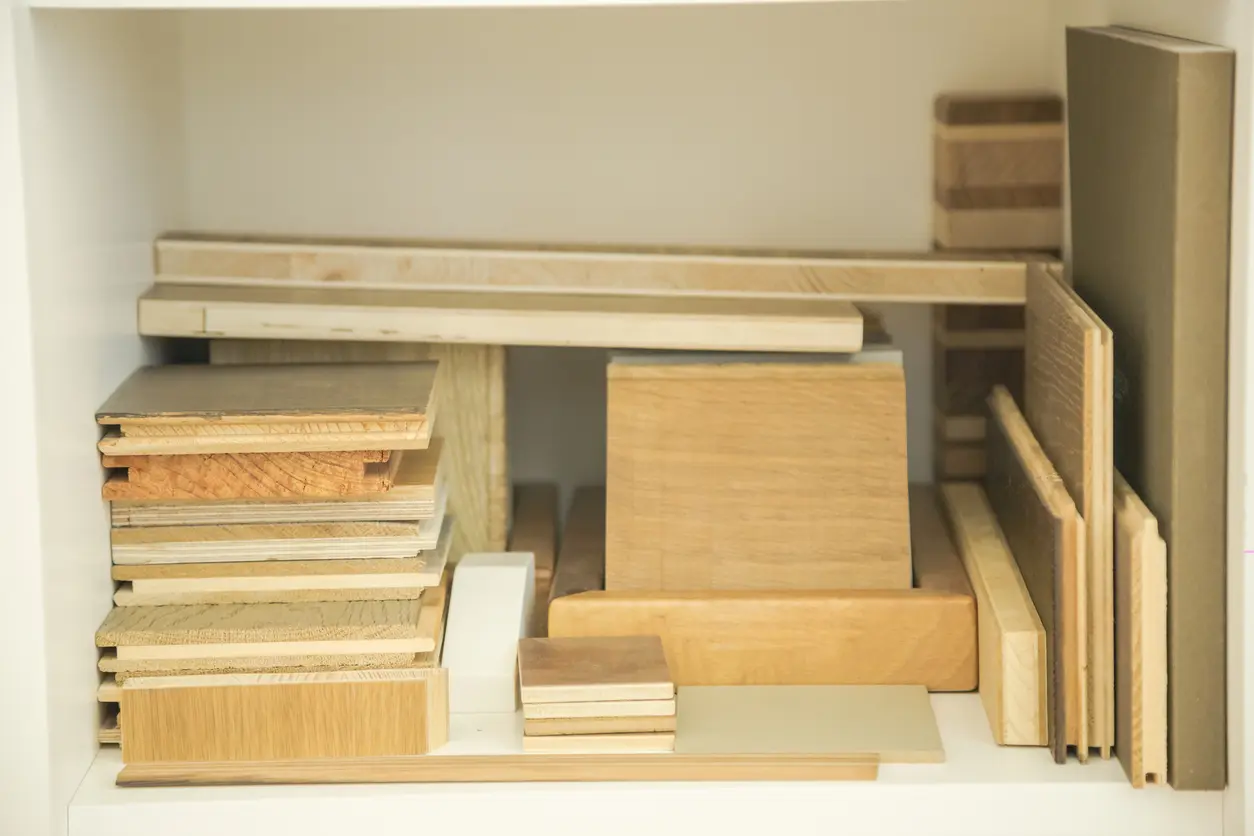
Solid wood is timber milled straight from a tree trunk, one continuous piece of material with a natural grain running through it. Engineered wood is manufactured: wood fibres, veneers or particles bonded together under heat and pressure into flat, uniform panels. Both are wood in the literal sense. They behave like entirely different materials once they are cut, joined and put into daily contract use.
This Is a Structure Question, Not a Surface Question
It matters to separate this decision from a related but different one. Solid wood vs engineered wood is about what a piece of furniture is built from underneath, its substrate and structure. Whether that surface is then covered in a natural veneer, a laminate or left as solid timber and finished directly is a separate decision, covered in full in the guide to wood veneer vs laminate. An engineered MDF panel can carry a real wood veneer face and look, from across a guest room, indistinguishable from solid timber. The substrate question and the facing question get specified separately, and confusing them is a common source of mismatched RFQs.
Why the Distinction Drives Cost and Programme
A specifier who understands the substrate question can read a quote line by line instead of taking a supplier’s word for what “solid wood furniture” means. Solid wood costs more per cubic metre than engineered board, needs longer kiln-drying and seasoning before it is stable enough to machine, and moves more in service. Engineered board is flatter out of the factory, cheaper per square metre of usable panel, and behaves predictably at volume, the three things a large casegood order actually needs.
Softwood, Hardwood and Where Each Sits
Within solid wood, contract hotel furniture almost always specifies hardwood, oak, beech, ash, walnut or iroko, for anything visible or load-bearing. Softwood, pine and similar species, shows up mainly as hidden internal framing, corner blocks and structural bracing inside upholstered pieces, where its lower cost and workability matter more than its softer surface and lower strength. A softwood frame under a fabric-wrapped sofa is standard; a softwood chair leg exposed to daily contact is not.
The best hotel casegood is usually both
Ask a workshop to build a wardrobe entirely from solid oak and the price, weight and lead time all jump, for a stability and flatness that the timber cannot deliver as well as an engineered panel can anyway. Ask for the same wardrobe in engineered board only, and it will lack the frame strength and hand-feel a guest expects at the door pull, the leg and the edge they touch first.
Almost every well-specified contract casegood is a hybrid: a solid hardwood frame carrying the structural load, joints and visible edges, wrapped around engineered panels doing the flat, wide, dimensionally stable work of doors, backs and shelves. Treating the choice as binary, solid or engineered for the whole piece, is where most over- or under-specification starts.
Solid Hardwood in Contract Hotel Furniture
Solid hardwood earns its place in a specification through strength, repairability and the sensory cues guests use to judge quality without knowing they are doing it.
Where Solid Hardwood Belongs
Chair and bed frames, table legs, arm rests and any point that carries repeated structural load or direct hand contact are the classic solid-wood applications in a hotel project. These are also the components most likely to need field repair over a furniture’s service life, a cracked joint reglued, a scuffed leg resanded and refinished, work that is straightforward on solid timber and close to impossible on an engineered panel once its surface layer is compromised.
Strength and Load-Bearing Performance
Hardwood’s continuous grain structure gives it genuine mechanical strength: it holds a mortise-and-tenon joint, resists splitting under load and takes screws and dowels with real grip. This is precisely why chair frames, the part of a hotel’s furniture inventory that absorbs the most repeated stress from sitting, standing and shifting weight, are specified in solid hardwood rather than engineered board almost without exception in a properly built contract piece.
Weight, Cost and Lead Time
None of this comes free. Solid hardwood is heavier than an equivalent engineered panel, which affects shipping cost and, at scale, installation labour. It costs more per unit volume, particularly for species like walnut or iroko, and it needs proper kiln-drying to a stable moisture content before a workshop can safely machine and join it, adding weeks to a production schedule that a pre-manufactured engineered board skips entirely.
Movement, Humidity and Kiln-Drying
Timber is hygroscopic: it absorbs and releases moisture from the surrounding air, expanding and contracting across its grain as humidity shifts with the seasons or the climate a piece ships to. Properly kiln-dried timber, brought down to a moisture content matched to its end-use environment before machining, moves far less than green or poorly dried stock, but it never stops moving entirely. A solid wood tabletop specified without an allowance for seasonal width change will eventually crack at a fixed joint, no matter how good the finish looks on delivery day.
Solid wood moves, and a spec that ignores humidity pays for it
A hotel group ordering the same solid-oak headboard for a property in a dry inland climate and a coastal humid one is, in effect, asking one design to perform in two different physical environments. Timber that was kiln-dried and joined correctly for one climate can still swell, cup or crack when it lands somewhere with a different average humidity, if the joinery detail did not allow any room for that movement.
Good contract joinery builds in float, slots, flexible fixings, breathing room at panel edges, specifically so a solid wood component can expand and contract without tearing itself apart. A specification that treats solid timber as dimensionally fixed, the way an engineered panel behaves, is the single most common cause of solid-wood furniture failures reported after delivery.
Repairability and Long-Term Value
A solid hardwood piece can be sanded back and refinished multiple times across its service life, recovering from the scuffs, water rings and dents that years of guest contact leave behind. That repairability is a genuine total-cost-of-ownership argument for specifying solid wood on high-wear, high-visibility points, even where the upfront cost is higher than an engineered alternative, because it defers replacement rather than requiring it.

Engineered Wood: MDF, Plywood, Particleboard
Engineered wood is not one material, it is a family of manufactured boards, each built differently and suited to different jobs inside a casegood.
MDF: Medium-Density Fibreboard
MDF is made from wood fibres bonded with resin under heat and pressure into a dense, uniform panel with no grain direction and no internal voids. That uniformity is its main advantage: MDF machines cleanly, takes paint and lacquer finishes without grain telegraphing through, and accepts CNC profiling and routed detail that solid timber or plywood cannot match as consistently. It is the standard substrate for painted or veneered wardrobe doors, headboard panels and detailed moulding profiles across contract hotel furniture.
Plywood: Layered Strength
Plywood is built from thin veneer layers, or plies, glued together with the grain direction alternating between layers, which gives it strength and screw-holding performance that MDF cannot match. That cross-grain construction resists splitting and holds fasteners securely, which is why plywood, rather than MDF, is the usual choice for drawer boxes, structural carcass backs and any panel that needs to hold a hinge, a runner or a screw under repeated load. Moisture-resistant and WBP, weather-and-boil-proof, grades extend plywood into bathroom-adjacent and higher-humidity locations where standard board would not hold up.
Particleboard and Chipboard: Economical Carcass Material
Particleboard, sometimes called chipboard, is manufactured from wood particles and resin, coarser and less dense than MDF, and it is the most cost-effective board for flat carcass panels that carry moderate load and stay hidden or laminate-faced rather than exposed. It performs well as internal shelving, cabinet sides and back panels in budget-conscious contract programmes, though it holds screws less securely than plywood and needs pre-drilling and the right fastener type to avoid splitting at the edge.
Blockboard and Other Engineered Options
Blockboard, a core of solid wood strips sandwiched between veneer or thin plywood faces, sits between solid timber and standard engineered board on cost and weight, offering good screw-holding and reasonable stability for larger flat panels like tabletops or long shelving spans where full plywood would add unnecessary weight and cost.
Moisture Resistance and Low-Emission Grades
Contract specifications should call out moisture-resistant, MR, grade board for any panel near a bathroom, minibar or window condensation zone, and E1 or E0 low-formaldehyde-emission board as a baseline for guest room air quality, particularly on projects targeting international sustainability or wellness certifications. These grade callouts belong in the material specification line, not left to a supplier’s default stock.
Screw-Holding and Edge Banding
Every engineered board shares one structural weak point solid wood does not have: a raw, unfinished edge is porous, vulnerable to moisture and unattractive compared with a continuous timber surface. Edge banding, a strip of matching veneer, laminate or PVC applied and trimmed flush along every visible or exposed cut edge, is not optional finishing on engineered panels, it is the detail that determines whether a wardrobe door still looks new after two years of guests catching a fingernail on the corner.
| Property | Solid hardwood | Engineered wood |
|---|---|---|
| Strength | High along the grain; strong at mortise and tenon joints | Plywood strong and screw-holding; MDF and particleboard weaker under point load |
| Dimensional stability | Moves with humidity across seasons and climates | Flat and stable once manufactured; minimal seasonal movement |
| Moisture behaviour | Absorbs and releases moisture; can cup, swell or crack | MR and WBP grades resist moisture well; standard grades swell if soaked |
| Weight | Heavier per unit volume, raising shipping and install cost | Lighter, especially particleboard and standard MDF |
| Repairability | Sandable and refinishable multiple times over its service life | Limited; damaged veneer or laminate faces are usually replaced, not repaired |
| Relative cost | Higher per cubic metre, especially walnut and iroko | Lower per usable square metre of flat panel |
| Best hotel use | Chair and bed frames, table legs, statement pieces, high-wear contact points | Wardrobe carcasses, doors, drawer boxes, headboard panels, tabletops |
Solid Wood vs Engineered Wood, Side by Side
Laid out property by property, the trade-offs stop being abstract and start reading like a specification checklist.
Strength and Structural Load
Solid hardwood wins decisively for anything carrying repeated structural stress, chair frames above all, because its continuous grain resists splitting at a joint in a way no manufactured board matches. Among engineered options, plywood is the closest competitor on strength and screw-holding; MDF and particleboard are not structural materials in the same sense and should not be specified where they will bear direct load.
Dimensional Stability and Flatness
Engineered wood wins here, categorically. A sheet of MDF or plywood comes off the production line dead flat and stays that way, which is exactly what a wide wardrobe door or a long tabletop needs to avoid warping, cupping or twisting in service. Solid wood can be dried, jointed and finished to minimise movement, but it will never match engineered board’s flatness at scale, especially across wide panels.
Moisture Behaviour
This category splits by grade rather than by material family. Untreated solid wood and standard particleboard both suffer in sustained damp conditions. Moisture-resistant MDF and marine or WBP plywood are engineered specifically to resist swelling and delamination, often outperforming solid timber in bathroom-adjacent or high-humidity locations, which is why the moisture question is really a grade-specification question, not a simple solid-versus-engineered one.
Cost and Weight at Project Scale
Engineered wood is cheaper per usable square metre and lighter to ship and install, an advantage that compounds across a hundred-room casegood order into a meaningfully different freight and labour bill. Solid wood costs more and adds weight, a cost that is easier to justify on frames and legs, where its strength and repairability earn the premium, than on flat hidden panels, where it earns nothing extra.
Repairability Over a Furniture Life Cycle
Solid wood’s ability to be sanded, reglued and refinished gives it a genuine long-term maintenance advantage on components that see direct wear. Engineered panels with a damaged veneer or laminate face are typically replaced rather than repaired, which is an acceptable trade-off on a hidden carcass panel and a poor one on a visible, high-touch surface.
Solid wood and engineered wood are not competitors inside one well-built casegood. They are two different jobs, assigned to the material that actually does each one best.
Why Hybrid Construction Is the Contract Norm
Once the strengths and weaknesses are laid out side by side, hybrid construction stops looking like a compromise and starts looking like the obvious answer.
Frame in Solid Wood, Panel in Engineered Board
The dominant pattern across contract hotel furniture is a solid hardwood frame, the legs, rails and structural skeleton, built around engineered panels that fill the flat spans: doors, backs, shelves and drawer fronts. The frame carries load and takes the visible wear at contact points; the panels stay flat, light and dimensionally predictable across a production run of dozens or hundreds of identical units.
Where Casegoods Fit This Pattern
Wardrobes, credenzas, luggage racks and desks built to contract standard almost all follow this hybrid logic, and the piece-by-piece breakdown of what counts as a casegood, and how each type is typically built, sits in the dedicated guide to hotel casegoods. Understanding that breakdown makes it easier to ask a supplier the right substrate question for each individual piece rather than asking generically whether a room’s furniture is “solid wood.”
Seating and Bed Frames: Solid Wood’s Strongest Case
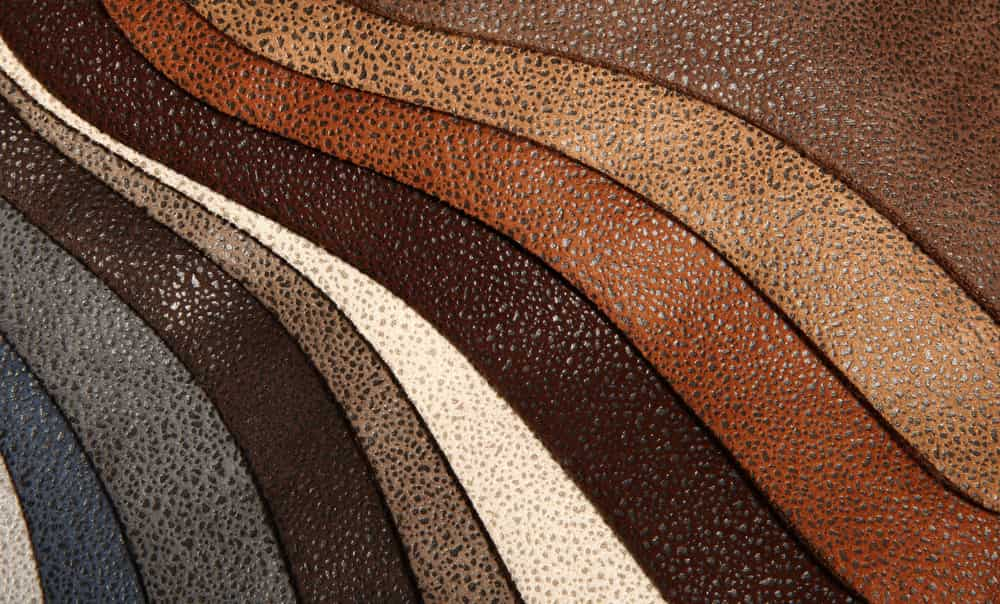
Upholstered seating and bed frames lean furthest toward solid hardwood, or at minimum a solid wood-and-plywood combination, because the frame takes direct structural load from sitting and lying weight cycle after cycle, and because the fabric or leather covering means the substrate question sits underneath, invisible to the guest but critical to whether the piece survives its contract life. The upholstery and covering choice itself, a separate but related specification, is covered in the guide to hotel upholstery, and separately in the guide to faux leather for pieces covered in performance vinyl rather than fabric or hide.
Where This Cluster Does Not Cover Kitchen Cabinetry
Back-of-house and guest-room kitchenette cabinetry carries its own substrate rules, moisture exposure, food-safety finish requirements and a different balance of solid wood to engineered board than a wardrobe or headboard needs. That guidance sits separately in the guide to kitchen cabinet materials, and is worth reading on its own rather than assumed from this guide’s general casegood logic.
Fire Performance Sits Alongside, Not Inside, the Substrate Choice
Whichever substrate a specification lands on, upholstered pieces built on either solid or engineered frames still need to clear the flammability testing a hotel project requires before installation. That requirement, what it tests and how it is documented, is covered in the guide to Crib 5, and applies independently of whether the frame underneath the cushion is solid hardwood or engineered board.
| Frame material | Solid hardwood | Oak, beech, ash, walnut or iroko for chair, bed and table frames |
|---|---|---|
| Panel material | MDF / plywood | Flat carcass, door and drawer panels for dimensional stability |
| Board grade | MR & E1/E0 | Moisture-resistant, low-emission board as a contract baseline |

Specifying the Right Substrate, Piece by Piece
Getting solid wood vs engineered wood right on paper takes more than naming a species and moving on. It takes a piece-by-piece specification that assigns the right material to the right job.
Ask What Each Component Actually Does
Before specifying a material, ask what job each component performs: does it carry structural load, does it need to stay flat across a wide span, is it visible and touched daily, or is it hidden and only needs to hold its shape and a few screws. The answer to that question, component by component, should decide solid wood or engineered board far more than a blanket preference for “real wood” that a brief sometimes states without engineering logic behind it.
Match Board Grade to Location
Specify moisture-resistant board near bathrooms, minibars and any window prone to condensation, and standard interior-grade board everywhere else, rather than over-specifying every panel in a room to the highest moisture rating and paying for performance the location does not need. The same logic applies to low-emission E1 or E0 board: specify it as a baseline across guest rooms, where air quality and dwell time matter most, and reserve unnecessary premium grades for locations that actually need them.
Confirm Kiln-Drying and Moisture Content for Solid Wood
Any solid wood component should ship with a stated moisture content appropriate to the destination climate, not a generic factory default. A supplier who cannot state the kiln-dried moisture content of the timber going into a chair frame has not controlled for the single biggest cause of solid wood failure after delivery: material that was never brought down to a stable moisture level before it was joined.
Check Edge Banding and Fastener Detail on Engineered Panels
Every cut edge on an engineered panel needs edge banding specified by material and application method, and every screw or hinge fixing point needs the right board type and pre-drilling detail behind it. These details rarely appear on a floor plan or a rendering, but they are exactly what separates a wardrobe door that still closes cleanly after two years from one that has swollen and delaminated at the corner.
Build the Substrate Decision Into Procurement, Not After It
Substrate choice belongs in the earliest specification documents a project produces, not as a value-engineering conversation after quotes come back higher than budget. Coordinating that decision against the property’s full furniture schedule and delivery sequencing is part of the same furniture procurement process that governs every other material and finish choice on a project, and treating it as a late-stage substitution risks a mismatch between what was priced and what actually gets built.
Cross-Reference Against Room-Level Furniture Needs
The substrate mix that makes sense for a guest room casegood programme is not automatically the same mix that makes sense for lobby furniture or F&B seating, since wear patterns, humidity exposure and visual expectations differ by space. The broader question of what a guest room actually needs, piece by piece, sits in the guide to hotel guest room furniture, and is a useful cross-check before finalising a substrate specification room by room.
Working With One Manufacturer Across Both Materials
A single workshop that mills and joins solid hardwood in-house, and also cuts, edge-bands and assembles engineered panels to the same tolerance, removes the coordination risk of sourcing frames from one supplier and panels from another. Hybrid construction only works cleanly when both halves of the piece are built to matching standards under one roof, rather than assembled from mismatched components at delivery.
Frequently Asked Questions
What is the difference between solid wood and engineered wood?
Solid wood is milled straight from a single piece of timber, such as oak or beech. Engineered wood, including MDF, plywood and particleboard, is manufactured from wood fibres, veneers or particles bonded under pressure into flat, dimensionally stable panels.
Which is better for hotel furniture, solid wood or engineered wood?
Neither wins outright. Solid hardwood suits frames, legs and load points that need strength and repairability. Engineered wood suits flat casegood panels, doors and carcasses that need dimensional stability. Most contract hotel furniture specifies both in one piece.
Is engineered wood durable enough for contract hotel furniture?
Yes, when contract-grade boards are specified. Moisture-resistant MDF, WBP-rated plywood and properly edge-banded particleboard hold up under daily hotel use for years. The failure risk comes from residential-grade board, not from engineered wood as a category.
Where do hotels use solid wood versus engineered wood?
Hotels use solid hardwood for chair and bed frames, table legs and statement pieces that take structural load or visible wear. Engineered wood covers wardrobe carcasses, drawer boxes, headboard panels and tabletops, where flatness and stability matter more than solid timber.
Does engineered wood handle moisture better than solid wood?
Moisture-resistant engineered boards, marine or WBP-grade plywood especially, resist swelling and delamination better than solid wood in humid or bathroom-adjacent locations. Solid wood moves with humidity regardless of finish, which is why engineered panels dominate humid-zone casegoods.
Is solid wood worth the higher cost for hotel furniture?
For frames, legs and pieces guests touch and judge on quality, yes, because solid wood is repairable and ages well. For flat panels hidden inside a wardrobe or bed base, engineered wood delivers the same performance at lower cost, so blanket solid-wood specs waste budget.