Most restaurant owners learn the hard way that the dining room makes or breaks the experience long before the kitchen does. Knowing how to choose restaurant furniture means weighing comfort, durability, layout and brand identity against a fixed budget and a hard opening date — and getting all four right at once. If you already know your concept and want to see what a contract manufacturer produces, start with our restaurant furniture collection; otherwise, read on and build your specification step by step.
This guide walks through every decision a project buyer faces, from tabletop materials to seating capacity, so you order the right pieces the first time. Every call assumes a working restaurant, not a home dining room — pieces that repeat cleanly across forty covers or four hundred and hold up under constant service.
Quick answer
How do you choose restaurant furniture? Define your concept and seating capacity first, then select commercial-grade pieces in order: tables and tabletops, chairs, booth or banquette seating, and bar stools. Match every piece to your service style and traffic, prioritise solid wood and metal over light residential builds, confirm fire-rated upholstery, and lock down lead times and warranty before you pay a deposit. Layout drives the quantities; durability protects the investment; concept ties it together.
Why Choosing Restaurant Furniture Is a Project Decision
Restaurant furniture works for ten to twelve hours a day, every day, under spills, scrapes, sanitizer and constant weight changes. A dining chair in a busy bistro absorbs more wear in three months than a home chair sees in five years. That single fact separates contract furniture from anything you find in a retail showroom, and it explains why experienced operators treat furnishing as a capital project rather than a shopping trip.
When you understand how to choose restaurant furniture as a project, you stop comparing price tags and start comparing total cost of ownership. A cheaper chair that loosens at the joints within a season costs far more than a solid-wood frame that survives a decade of service. The same logic applies to tables that wobble, finishes that scratch and seating that traps crumbs your staff cannot clean between covers.
Contract-grade versus residential furniture
Contract-grade furniture meets standards that residential pieces never face. Manufacturers reinforce the joints, thicken the frames, specify denser foam and test the finishes against heavy abrasion. A restaurant furniture supplier who builds for hospitality understands that a banquette seat compresses thousands of times a week, so they engineer the foam density and the frame to hold their shape. Residential furniture, however attractive, gives way under that load.
Buyers who source commercial-grade restaurant furniture also gain consistency. When you furnish forty covers, you need forty identical chairs that match in tone, height and finish — and you need the same model again next year when you expand or replace a damaged unit. Contract manufacturers hold their specifications and tooling, so reorders match. Retail stock rotates seasonally and rarely does.
How furniture shapes turnover, comfort and brand
Your furniture controls three numbers that decide whether a restaurant earns money. Seat comfort sets how long guests linger, which fine dining rooms want to extend and fast-casual venues want to shorten. Layout density sets your maximum covers, which feeds directly into revenue per square metre. And the look sets the first impression every guest forms in the first five seconds. Choose furniture that pulls all three levers in the direction your concept needs, and the dining room starts working for you instead of against you.
The right piece is the one built for the job, not the one that looks best in an empty showroom.
The cheapest chair is the most expensive saving a new owner ever makes
Operators routinely underestimate replacement cycles. A residential-grade chair in a high-traffic restaurant typically fails within twelve to eighteen months, while a contract solid-wood or welded-metal frame holds for eight to ten years. Across forty seats, that gap can mean buying chairs five times instead of once.
Start With Your Concept and Who You Seat
Furniture selection that starts with a catalogue almost always ends in regret. Selection that starts with the concept and the floor plan almost always lands right. Before you choose a single chair, define who eats with you, how long they stay, and how many of them you seat comfortably without crowding the room or starving it of covers.
Match furniture to your restaurant concept
A fine dining room, a neighbourhood trattoria and a high-turnover café each demand a different furniture personality. Fine dining rewards upholstered armchairs, generous spacing and warm timber tones that signal you may stay a while. Casual dining favours durable side chairs and shared tables that turn quickly. A café leans on compact two-tops and lightweight metal frames that staff reconfigure for a morning rush or an afternoon laptop crowd. Decide which restaurant furniture style fits your concept before you fall for a finish, because the wrong personality undermines the experience no matter how beautiful the piece.
Popular furniture styles for casual dining restaurants
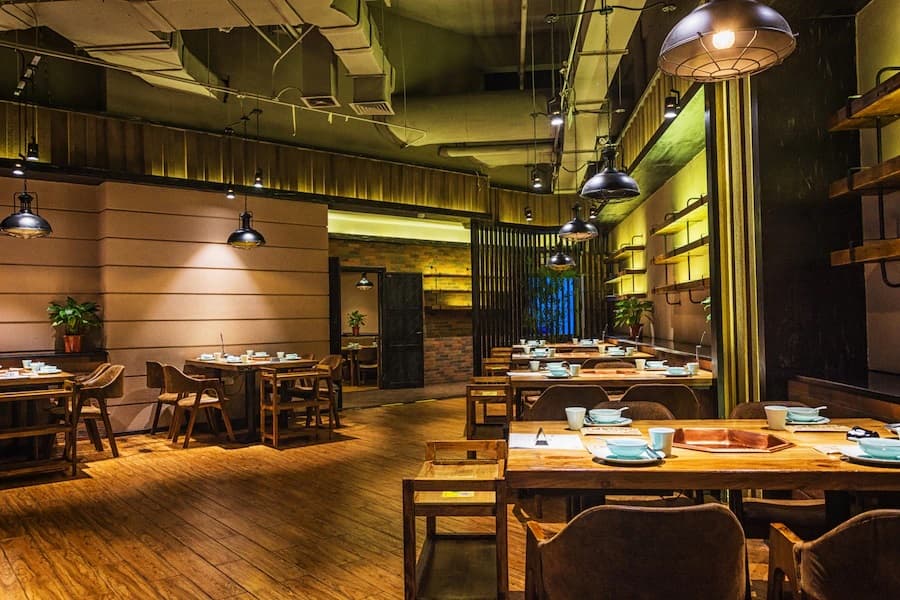
Casual dining sits between the formality of fine dining and the speed of a café, and its furniture reflects that middle ground. Buyers in this segment favour durable side chairs that read relaxed rather than stiff, sturdy four-tops that flex into larger groupings, and a finish palette warm enough to feel welcoming yet hard-wearing enough to survive families and large parties. Industrial-leaning looks — metal-framed chairs with timber seats, raw-edged tabletops, exposed joinery — stay popular in casual rooms because they hide wear gracefully and signal an unpretentious mood. The style you pick should still trace back to durability, because casual dining usually means higher covers and faster turns than a fine dining room ever sees.
Let the floor plan set the furniture list
Seating capacity, table sizes and aisle widths all belong to the layout, and the layout comes first. Fix the plan, count the covers it supports, then buy against that number rather than against a catalogue. Our separate guide to restaurant furniture layout covers the plan itself: table spacing, aisle and accessibility clearances, capacity by room shape, and the arrangements that suit each restaurant type. Work through that first, come back here with a covers figure, and every choice below gets easier.
Furnishing small restaurant spaces
Small rooms reward disciplined choices. In a compact restaurant, pick chairs with slim profiles and tables that nest, and lean on banquette seating along the walls because a fixed bench recovers the dead space a freestanding chair wastes behind it. Wall-run banquettes also let you slide tables together for larger parties without buying extra chairs. As a planning sanity check, give circulation and service a generous share of the floor — roughly a third — because a plan that starves the aisles below a quarter of the room almost always slows service. The goal in a small space stays constant: maximise covers without making guests feel they share a table with strangers.
How to Choose Restaurant Furniture by Category
Once your concept and layout settle, work category by category. Each furniture type carries its own durability traps and material choices, so the smartest buyers specify them in sequence — tables, chairs, booths and bar stools — and confirm that every category shares a coherent finish palette. The table below maps each category to the materials that hold up in service and the concepts they suit best.
| Category | Best-fit materials | Suits which concept | Durability watch-point |
|---|---|---|---|
| Dining tables & tabletops | Solid timber, HPL / compact laminate, natural stone, powder-coated steel base | All concepts; stone for upscale, laminate for high-turnover | Edge banding and base stability under daily cleaning |
| Dining chairs | Solid hardwood frames, welded or powder-coated metal frames | Casual to fine dining, by finish and upholstery | Joint reinforcement; back-leg stress under leaning |
| Booth & banquette seating | Hardwood or steel substructure, fire-rated foam, contract upholstery | Diners, bistros, space-tight rooms | Foam density and seam strength under constant compression |
| Bar & counter stools | Solid wood, welded metal, reinforced footrest | Bars, cafés, communal counters | Correct seat-to-counter height; footrest wear |
Restaurant tables and tabletop materials
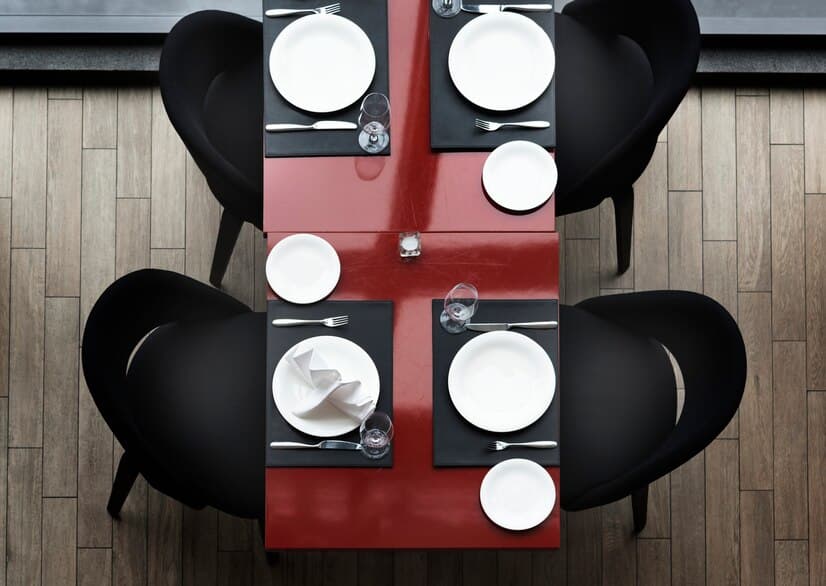
Tables take the heaviest abuse of any piece in the room, so the tabletop material decides how the dining area ages. Solid timber brings warmth and repairs well by sanding, but it asks for sealing against moisture. High-pressure laminate and compact surfaces resist scratches, heat and sanitizer, which makes them the workhorse of high-turnover venues. Natural stone reads as premium and shrugs off heat, though it adds weight and asks for sealing. Compare the trade-offs in depth in our guide to restaurant tabletop materials, then pair the top with a base heavy enough to stop the wobble that annoys guests. For the finished pieces, our restaurant tables ship with matched bases sized to each top.
Table shape changes the math of a room as much as the material does. Square and rectangular tops pack more covers into a grid and combine cleanly for larger parties, which makes them the default for high-density layouts. Round tops ease circulation in tight aisles and seat odd numbers more graciously, but they waste a little floor compared with squares of the same reach. Many rooms mix the two — squares and rectangles along the walls for efficiency, a few rounds in the open floor for flow. Whatever shape you choose, weight the base for the top it carries, because an undersized base turns a beautiful table into a wobble.
Restaurant chairs that survive daily service
Chairs fail at the joints first, so frame construction matters more than any other single factor. Solid hardwood frames — beech, oak, ash — carry the load and let a workshop repair a loose joint instead of scrapping the chair. Welded or powder-coated metal frames suit industrial and contemporary rooms and resist the racking forces that loosen weaker builds when guests tip back. We manufacture seating exclusively in solid wood and metal because those two material families hold their structure across years of contract use. Our companion guide on how to choose restaurant chairs breaks down wood against metal, stacking versus fixed designs, and the weight a contract chair must bear.
Booth and banquette seating
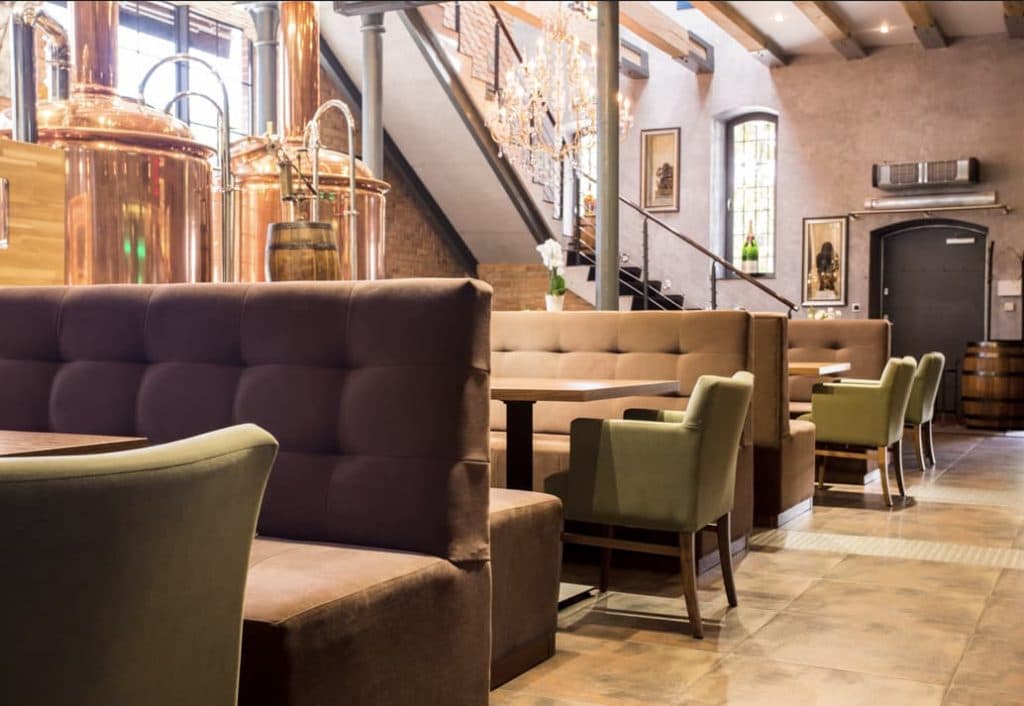
Booths and banquettes turn awkward perimeter space into your most profitable seats, and guests consistently ask for them. A well-built booth pairs a reinforced hardwood or steel substructure with fire-rated foam and a contract-grade upholstery that resists abrasion and cleans easily between covers. A banquette run along a wall gives you flexible covers, because staff slide tables together for a party of six and apart for two pairs. Read our detailed breakdown of restaurant booth seating for cushion depth, seat height and the divider options that give guests a sense of privacy.
Booth dimensions reward careful specification. A seat depth near 45 to 50 centimetres supports most adults without forcing them to perch or sink, and a seat height around 45 centimetres pairs cleanly with a standard dining table. Set the table-to-booth gap so guests slide in without squeezing, and choose a back height that suits the room — taller backs carve out intimate pockets, lower backs keep an open, social feel. Banquette runs let you vary table sizes along a single bench, so plan the table widths and the spacing before the upholstery goes on.
Bar stools and counter height
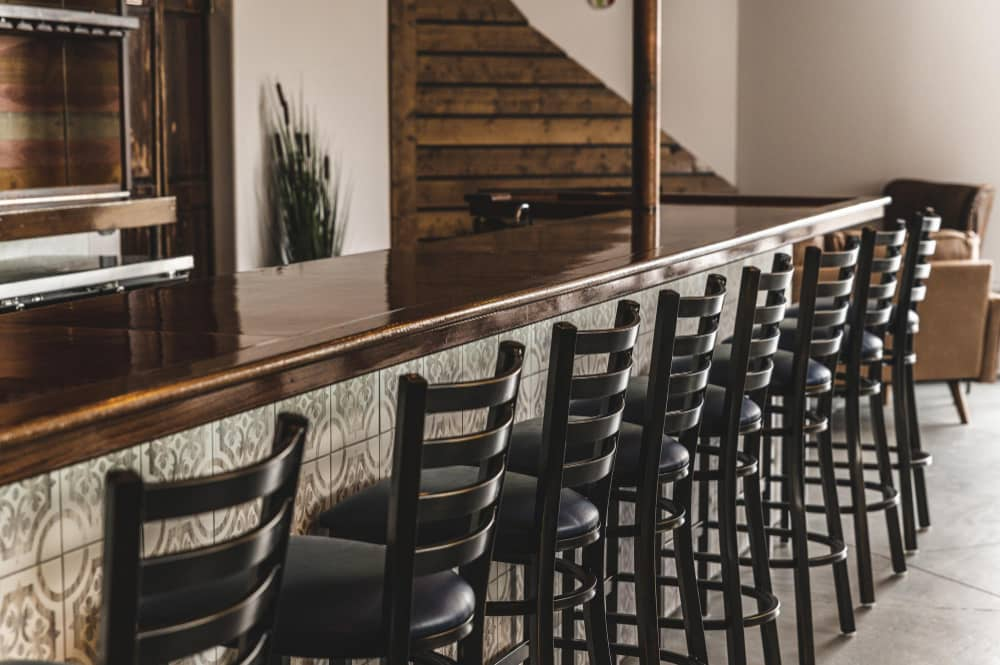
Bar stools fail when the height misses the counter, so measure before you order. A standard counter near 90 centimetres wants a stool seat around 60 to 65 centimetres; a taller bar near 105 to 110 centimetres wants a seat near 75 to 80. Allow roughly 25 to 30 centimetres between the seat and the underside of the counter so guests sit without cramping their knees. A solid footrest takes the load off the legs and protects the frame from the wear that loosens cheaper stools. Browse height-matched options in our bar stool range.
Outdoor terraces and patios follow a different durability logic — UV exposure, rain and temperature swings demand weatherproofed frames and finishes. We cover that topic separately, so when you plan a terrace, see our dedicated outdoor furniture guidance rather than carrying indoor specifications outside.
Ergonomics and guest comfort
Comfort keeps guests at the table long enough to order another course, and ergonomics drives comfort more than any finish does. A dining seat near 45 centimetres high suits a standard table, gives most adults clearance for their legs and lets them rise without a struggle. Seat depth and back angle decide whether a chair supports the lower back or forces guests to perch on the edge; a slight recline and a contoured back ease longer meals, while a more upright seat encourages the quicker turns a café wants. Match the ergonomics to the dwell time your concept targets rather than copying a competitor, because a fine dining armchair and a café side chair solve opposite problems. Staff comfort counts too — servers who lift and reset chairs all shift benefit from frames light enough to handle yet sturdy enough to survive constant movement.
Materials, Durability and Commercial-Grade Construction
Material choice quietly decides every other outcome — comfort, cleaning, lifespan and the resale of the space when you refit. Restaurant furniture that looks identical on opening night diverges dramatically after a year of service, and the difference traces back to how the manufacturer built and finished each piece. This is where knowing how to choose restaurant furniture pays off most clearly, because the cues that separate a ten-year frame from a twelve-month one rarely show in a photograph.
Best materials for durable restaurant furniture
Four material families earn their place in a working dining room. Solid hardwood gives strength and a warmth guests respond to, and it repairs by sanding and refinishing. Powder-coated and welded steel resists racking and suits high-traffic and contemporary settings. High-pressure laminate and compact surfaces defend tabletops against heat, scratches and constant sanitizer. Natural stone delivers a premium tactile finish that ages slowly. Each family carries trade-offs in weight, cost and maintenance, but every one of them outlasts the lightweight residential builds that tempt buyers on price alone.
Choosing between these materials comes down to the demands of each surface and the mood of the room. A high-turnover café that wipes its tables hundreds of times a day leans on laminate and metal for their resistance to abrasion and corrosion. A destination restaurant that wants guests to run their hands across a warm surface reaches for solid timber or stone and accepts the extra care those materials ask for. Most rooms blend them — laminate or stone tops on metal or timber bases, hardwood chairs around them — so the dining area pairs the right surface with the right structure. Decide which surfaces face the heaviest contact, specify the toughest materials there, and let the lower-stress pieces carry the finishes that set your tone.
Upholstery fabric, durability and fire safety
Upholstery decides comfort and compliance in equal measure. Contract environments demand fabrics that survive heavy abrasion — measured in Martindale rub counts — and resist staining from food and drink. Just as importantly, restaurant upholstery must meet fire-safety standards, because many jurisdictions require flame-retardant or fire-rated coverings in commercial seating. When you specify a booth or an upholstered chair, ask the manufacturer for the abrasion rating and the fire certification in writing, and confirm the fabric cleans with the products your staff already use.
What commercial grade really means
“Commercial grade” carries no single legal definition, so buyers must read the construction, not the label. Look for reinforced corner blocks, mortise-and-tenon or welded joints, frame timber thick enough to resist flex, denser seat foam and finishes tested against abrasion. A manufacturer who builds for hospitality states these specifications openly and warranties them. Ask any prospective supplier to detail the joinery, the foam density, the finish testing and the warranty term — and treat a vague answer as a warning. The pieces that earn the commercial-grade name justify it on paper, not just in the showroom.
One practical test cuts through the marketing: ask the manufacturer what happens when a joint loosens or a finish wears. A contract builder answers with a repair path, a spare-parts policy and a warranty term; a retail seller answers with a return window or a shrug. That single question reveals whether a supplier truly builds for hospitality or simply sells furniture that happens to sit in restaurants.
Confirm the fire standard before production, not after the container lands
Fire-safety standards for upholstery vary by country, and an export order can fail an inspection if the foam or fabric meets the wrong national code. Confirm which standard applies in your market before production starts — retrofitting compliant materials after manufacture costs far more than specifying them correctly at the outset.
Color, Aesthetics and the Guest Experience
Furniture sets the visual tone of a room before a guest reads a single word of the menu. Color, finish and form carry your brand at the table, and small choices — a stain that leans warm or cool, a frame that reads sleek or rustic — add up to the impression guests remember. Aesthetics never override durability, but among equally robust options, the look should pull guests toward the feeling your concept promises.
Choosing colors and finishes
Color in a dining room does real work: warm tones invite lingering, cooler and brighter palettes encourage quicker turns, and contrast guides the eye toward the features you want guests to notice. Coordinate your furniture finishes with the floor, the walls and the lighting rather than choosing them in isolation, because a tone that looks rich under warm light falls flat under cool fixtures. Our guide to color in restaurant interior design shows how palette choices shape mood and pace across different service styles.
Should restaurant chairs match the table?
Chairs do not need to match the table, and deliberate contrast often reads as more considered than a matched set. A common and durable approach pairs a lighter timber or painted chair with a darker tabletop, or sets a metal-framed chair against a warm wood top. The discipline lies in limiting your palette: choose two or three finishes and repeat them across the room so the contrast looks intentional rather than accidental. Matched sets suit formal rooms; mixed-but-coordinated palettes suit casual and contemporary ones.
Matching a modern or classic aesthetic
A modern aesthetic favours clean lines, slim metal frames, neutral upholstery and minimal ornament; a classic room leans on timber warmth, turned legs and richer textures. Decide which direction your concept points, then hold every furniture choice to it. Guests forgive a limited menu far more readily than a dining room that cannot decide what it wants to be, so consistency across tables, chairs and seating earns more than any single statement piece.
How to Choose Restaurant Furniture Without Overspending
Budget discipline separates projects that open on time from projects that stall. Knowing how to choose restaurant furniture on a fixed budget means spending where wear concentrates and economising where it does not — and never confusing a low purchase price with a low total cost. The sections below cover what a fit-out actually costs, how to vet a supplier and the commercial terms that protect an international order.
How much does it cost to furnish a restaurant?
Furnishing cost scales with seat count, material grade and the share of custom work, so build the budget from the seat up. Price each seat as a bundle — its chair or booth share, its slice of a table, and a contingency for the pieces that wear first, such as chairs and upholstered seating. Allocate more of the budget to the categories that take daily abuse and less to the pieces that simply hold position. A realistic fit-out budget always carries a replacement reserve, because chairs and cushions wear before tables do, and a reserve keeps a tired room from undercutting a strong menu.
Choosing a restaurant furniture supplier
The supplier decides whether your specification survives contact with production. Vet any restaurant furniture supplier on four points: the construction detail they disclose, the warranty they stand behind, the lead time they commit to in writing, and their track record shipping to your market. A manufacturer that works trade-and-project only — rather than retail — builds to contract standards by default and supports reorders that match your original finish. Ask for references from comparable projects and confirm who handles freight, customs and any post-delivery support.
Lead times, shipping terms and warranty
International furniture orders live or die on the commercial terms. Contract manufacturers typically quote production lead times of several weeks — commonly four to eight — before a piece ships, so plan backward from your opening date with a buffer for freight and customs. Confirm whether the quote uses FOB or CIF terms, because that single line decides who pays and insures the cargo across the ocean. Pin down the warranty term and what it covers; a serious manufacturer backs frames and joints for years, not months. Our own contract orders ship to thirty-plus countries under FOB or CIF terms with a two-year warranty, which gives buyers a clear baseline to compare any quote against.
Restaurant furniture versus hotel furniture
Contract buyers who furnish both a restaurant and a hotel often assume the two share a catalogue, but the use cases diverge. Restaurant furniture prioritises turnover, cleanability and concentrated wear in the dining area; hotel furniture spreads across guest rooms, lobbies and public areas with a heavier emphasis on long-stay comfort and a wider mix of case goods. A piece engineered for a hotel lobby may underperform under restaurant turnover, and the reverse holds too. Specify each environment on its own terms rather than stretching one order across both.
Plan the order around your opening date
A furniture order sets the critical path for an opening more often than the kitchen fit-out does, so build the schedule backward from the day you serve the first cover. Add the production lead time, the ocean freight, the customs clearance and a buffer for the snags that every project hits, then place the order against that date rather than the date you hope to open. Confirm the pieces that wear first — chairs and upholstered seating — ship in the same batch so the room opens as one coordinated set, and keep a small reserve of the highest-traffic items on hand for the first replacements. A buyer who treats the order as a project milestone, not an errand, opens on time with the room as drawn.
Sustainability and Long-Term Value
Durability and sustainability point in the same direction: a frame that lasts a decade keeps furniture out of a landfill and keeps money in your account. Buyers increasingly ask manufacturers about responsibly sourced timber, low-emission finishes and the repairability that lets a workshop renew a piece instead of replacing it. These questions reward the same construction that contract use demands, so a sustainable specification and a durable one rarely conflict.
Repairability and reorder consistency
The most sustainable restaurant furniture is the piece you never throw away. Solid timber frames sand and refinish; quality metal frames re-coat; modular booths re-upholster without scrapping the substructure. Pair that repairability with a manufacturer who holds tooling and specifications, and a damaged chair becomes a single replacement that matches the rest of the room rather than a reason to refit the whole floor. When you vet a supplier, ask how long they keep a model in production and whether they support spare parts, because that answer protects the look of your dining room years after opening night.
Maintenance and Longevity
The work does not end at delivery. A maintenance routine protects the investment and keeps the room looking the way it did on opening night, which guests notice even when they cannot name why a place feels cared for.
Cleaning and maintaining commercial restaurant furniture
Match the cleaning method to the material, and train staff to follow it. Sealed timber wants a damp cloth and a periodic refinish rather than soaking; laminate and stone tolerate stronger sanitizers; metal frames want a wipe that prevents corrosion at the welds and joints. Tighten chair and stool joints on a schedule before they loosen into wobble, and rotate booth cushions where the design allows so the foam wears evenly. A short weekly inspection catches the small failures — a loose glide, a frayed seam — long before they become a guest complaint or a replacement.
Eight Mistakes to Avoid When Buying Restaurant Furniture
Most restaurant furniture disappointments trace back to the same handful of decisions, and every one of them happens before the order ships. These eight cost operators more money than any other part of the process.
1. Buying Residential Furniture for a Commercial Room
A dining chair built for a family kitchen sees perhaps a thousand sittings a year. The same chair in a restaurant sees twenty thousand. Joints loosen, foam collapses and fabric wears through inside a season. Commercial-grade construction is not a premium version of the same product; it is a different product. Our comparison of commercial and residential furniture sets out where the difference sits.
2. Ordering Before the Layout Is Final
Furniture bought before the floor plan settles rarely fits it. Table sizes, chair widths and banquette runs all depend on aisle widths and cover counts, and changing any of them after production starts means a new order rather than an amendment. Lock the layout, count the covers, then order.
3. Choosing by Photograph Instead of Sample
A photograph shows colour and shape. It hides frame construction, foam density, weld quality and how a finish feels under a hand. Order a sample chair and a sample table top from every shortlisted supplier, sit on them, and put them through a week of real service in a corner of the room if you can.
Field insight
The sample test that predicts year three
Take the sample chair, tip it back on two legs with your weight in it, and rock. That is what a guest does every service. A chair that creaks or flexes at the joint on day one has already told you how it will fail.
4. Underestimating Minimum Order Quantities and Lead Times
Contract factories produce in batches, so a 12-chair order and a 200-chair order are very different conversations. Ask for the minimum order per item, not per project, and ask what the lead time becomes once the sample is approved rather than once the enquiry lands. Four to eight weeks of production is normal for a made-to-order contract piece, and shipping sits on top of that.
5. Skipping Fire and Compliance Certificates
Upholstered restaurant seating has to meet the fire standard of the market it lands in, and the standard varies by country. Ask for the certificate at sample stage and check it names the exact fabric and filling combination you ordered. A certificate for a different fabric is not a certificate. Our explainer on Crib 5 covers the test used across much of the United Kingdom.
6. Comparing Quotes That Are Not Comparable
One supplier quotes FOB, another CIF, a third ex-works. One includes packing and one does not. One prices a chair with a 25,000 rub fabric and another with 100,000. Put every quote on the same basis before you compare a single number: the same incoterm, the same fabric grade, the same frame material, the same quantity, and packing included.
| Put on the same basis | Ask every supplier |
|---|---|
| Incoterm | Is this ex-works, FOB or CIF, and to which port? |
| Fabric | Which rub count and which fire certificate? |
| Frame | Solid timber, laminated timber or metal, and what section? |
| Foam | Which density, and is it combustion modified? |
| Packing | Export packing included, and how many units per container? |
| Warranty | How long, and does it cover the frame and the upholstery separately? |
7. Treating the Cheapest Quote as the Cheapest Furniture
Price per chair says very little. Price per chair divided by the years it survives says everything. A chair at half the price that lasts a third as long costs more, and it costs it again in the labour of replacing it and the covers lost while the room is short of seating. Ask each supplier what they expect the piece to do in year five.
8. Leaving Quality Control Until the Container Arrives
Once furniture has crossed a border, putting a fault right costs far more than the fault. Inspect at the factory before the container loads, against a written checklist agreed in advance. Our quality control checklist lists what to check and at which stage.
And one that is really a layout mistake
Aisle widths and table spacing cause more complaints than any furniture choice, but they belong to the floor plan rather than the order. Settle them in your restaurant furniture layout before the quantities go to a factory.
Buying Restaurant Furniture From Turkey
Turkey supplies a large share of the contract furniture used across Europe, the Middle East and Africa, and the reasons are practical: established timber and metal industries, short shipping routes, and factories that build to order rather than to stock. Buying well from Turkey follows the same rules as buying well anywhere, with a few specifics worth knowing.
What a Turkish Contract Factory Should Offer
- Made to order, not catalogue only. A contract factory changes dimensions, finishes and fabrics to suit your room rather than selling you the nearest standard item.
- In-house production across materials. Timber, metal, upholstery and finishing under one roof means one lead time and one quality standard rather than four.
- Export documentation as routine. Fire certificates, packing lists, certificates of origin and container loading plans should arrive without being chased.
- Samples before production. A factory confident in its work will build one chair and one table and ship them to you.
- Spare parts held. Matching fabric, the same frame finish and replacement glides available three years later.
Understand FOB, CIF and Who Carries the Risk
Most Turkish quotes arrive FOB or CIF. FOB places the goods on the vessel at the Turkish port and hands you the freight, insurance and import from there. CIF adds freight and insurance to the destination port. Neither covers customs clearance, duty or inland delivery at your end, so budget for those separately. Ask which port the quote assumes, because a quote to one port and a delivery to another rarely cost the same.
Field insight
Visit the factory, or send someone who will
A half-day at the plant tells you what six weeks of emails cannot: whether the upholstery line is staffed properly, whether timber is stored dry, and whether the finishing booth is clean. If travel is impossible, appoint a third-party inspector in Turkey. It costs a fraction of one container.
Plan the Programme Backwards From Opening Night
Work back from the date the room has to serve its first cover. Allow two to three weeks for samples and approval, four to eight weeks of production, two to four weeks of shipping depending on the route, and one to two weeks for clearance and delivery. That is three to four months from first enquiry to furniture in place, and compressing it usually costs more than starting earlier.
We manufacture restaurant chairs, restaurant tables and booth and banquette seating in Istanbul for projects across more than thirty countries. See the full restaurant furniture range, visit our factory and showroom, or send us your floor plan and we will come back with a seating layout and a quotation on a single basis.
Frequently Asked Questions
How do you choose restaurant furniture?
Define your concept and seating capacity first, then select commercial-grade pieces in order: tables and tabletops, chairs, booth or banquette seating, and bar stools. Match each piece to your service style and traffic, choose solid wood and metal over light residential builds, confirm fire-rated upholstery, and lock down lead times and warranty before you pay a deposit.
What factors should you consider when choosing restaurant furniture?
Weigh four factors together: your concept and service style, your layout and seating capacity, the durability and material grade of each piece, and your budget including a replacement reserve. Resolve the concept and layout first, because they decide the quantities and dimensions, then specify materials and construction to match the traffic each piece will face.
What is the 30/30/30 rule for restaurants?
In furniture planning, the 30/30/30 idea splits a dining area roughly into thirds: about a third for circulation and service space, about a third for the seating footprint, and the rest for entry, waiting and flexible zones. Treat it as a planning sanity check rather than a fixed law — a layout that starves circulation below a quarter of the room usually struggles to serve guests quickly.
What are the most durable materials for restaurant furniture?
Solid hardwood and welded or powder-coated metal lead for frames, while high-pressure laminate, compact surfaces and natural stone lead for tabletops. Each outlasts lightweight residential construction by years. Pair the material to the use — laminate for high-turnover tops, stone for premium rooms, hardwood and metal for chairs and stools that take daily stress.
Should restaurant chairs match the table?
No. Coordinated contrast often looks more deliberate than a matched set. Pair a lighter chair finish with a darker top, or a metal frame with a warm wood surface, and limit the room to two or three repeating finishes so the mix reads as intentional. Reserve fully matched sets for formal rooms where uniformity reinforces the tone.
How much does restaurant furniture cost?
Cost scales with seat count, material grade and the share of custom work, so budget per seat rather than per piece. Spend more on the categories that wear first — chairs and upholstered seating — and hold a replacement reserve. Always weigh purchase price against total cost of ownership, since a cheap chair replaced five times costs far more than one solid frame.
What is the 80/20 rule for restaurants?
The 80/20 idea observes that roughly 80 percent of results often come from 20 percent of inputs. Most of your guest comfort and most of your wear concentrate in a minority of pieces — usually the chairs and upholstered seating that take constant daily stress. Direct the larger share of attention and budget toward that critical fifth, and economise on the pieces that simply hold position.
What are the rules for arranging restaurant furniture?
Four principles cover most arrangements: protect clear circulation aisles wide enough for staff to pass, balance the room so density spreads evenly, give every seat a clear path to an exit, and group tables so staff combine and separate them as party sizes change. Apply all four together and the floor serves guests quickly while holding its full cover count.
What are the most common mistakes when buying restaurant furniture?
The commonest mistakes are buying residential furniture for a commercial room, ordering before the layout is final, choosing from photographs instead of samples, underestimating minimum orders and lead times, skipping fire certificates, comparing quotes on different incoterms, treating the cheapest quote as the cheapest furniture, and leaving quality control until the container arrives.
How long does it take to order restaurant furniture from Turkey?
Allow three to four months from first enquiry to furniture in place: two to three weeks for samples and approval, four to eight weeks of production, two to four weeks of shipping, and one to two weeks for customs clearance and delivery. Work backwards from your opening date rather than forwards from today.
What is the difference between FOB and CIF when buying furniture?
FOB places the goods on the vessel at the supplier’s port and leaves freight, insurance and import to you. CIF adds sea freight and insurance to your destination port. Neither includes customs clearance, duty or inland delivery, so budget for those separately and make sure every quote you compare uses the same incoterm.