Quick answer
Efficient banquet chair storage starts with stackable chairs and folding tables, then the right equipment to hold them. Stack chairs eight to ten high on a matched trolley, fold and store tables on edge on a table dolly, and keep both in a dry store off the floor and protected from knocks. Done well, a few hundred chairs and their tables store in a fraction of the floor a set-up room needs — freeing space the venue pays rent on and keeping the inventory ready for the next event.
Good banquet chair storage is one of the most overlooked decisions a venue makes, yet it quietly shapes the labour, the rent and the readiness of the whole operation. A room full of chairs and tables earns money for a few hours; for the rest of the week, the same furniture has to live somewhere dry, tidy and out of the way — and how you store it decides how much space it eats, how fast it sets up, and how long it lasts. To see the stackable chairs, folding tables and trolleys that make storage easy, browse our banquet furniture collection; below, we set out how to store a banquet inventory efficiently.
This guide covers how much space banquet chairs and tables really need, the trolleys, dollies and racks that hold and move them, the methods that get the most from a small storeroom, how to protect furniture so it comes out event-ready, and the best practices that keep an inventory organised. Every recommendation assumes a working venue that sets up and breaks down constantly, where storage is part of the operation rather than an afterthought.
Why Efficient Banquet Chair Storage Matters
Storage looks like a back-of-house detail, but it carries real costs and real benefits. The space an inventory occupies is space the venue pays rent on; the time staff spend wrestling furniture in and out is labour; and the way furniture sits between events decides whether it comes out ready or damaged. Efficient storage turns all three from a drain into a saving.
Storage space is money
Every square metre a store occupies is a square metre the venue cannot let or use for events. Furniture that stores tightly — stacked chairs, folded tables — reclaims floor that sprawling, non-stacking furniture wastes, and across a few hundred chairs that reclaimed space adds up to a room. Treating the storage footprint as a line on the rent, not a free afterthought, is what turns efficient storage into a measurable saving.
Protection keeps the inventory event-ready
Furniture lives harder in a bad store than at an event. Chairs knocked together, tables leaned against a damp wall, covers dragged across a dusty floor — poor storage damages an inventory between bookings, so chairs come out scratched, stained or rusted. Good storage protects the furniture so it arrives at the next event looking as it should, which extends its life and protects the look of every room it furnishes.
The storeroom is where banquet furniture gets damaged, not the event
Operators picture furniture wearing out at events and overlook the store, where most of the damage actually happens — frames scratched in a careless stack, tops chipped against a wall, covers marked on a dusty floor. Treat the store as part of the furniture’s working life: stack it on trolleys, keep it off the floor, and the inventory lasts years longer than one left to fend for itself between bookings.
How Much Storage Space Banquet Chairs and Tables Need
The first question every venue asks is how much room the inventory needs, and the honest answer depends entirely on whether the furniture stacks and folds. The table below sets out the storage footprint for stacking chairs and folding tables, so you can size a store to your inventory rather than guess.
| Item | Set up | Stored (stacked / folded) |
|---|---|---|
| 1 banquet chair | ≈ 0.4 m² with clearance | Shares one stack footprint |
| 100 stacking chairs | ≈ 50–60 m² set up | ≈ 4–6 m² on trolleys |
| 1 round table (folded) | ≈ 3 m² with chairs | Stores on edge on a dolly |
| 10 round tables (folded) | ≈ 30 m² in use | ≈ 2–3 m² on a dolly |
| Rectangular tables (folded) | Varies by length | Stack flat on a cart |
The stacked-chair footprint
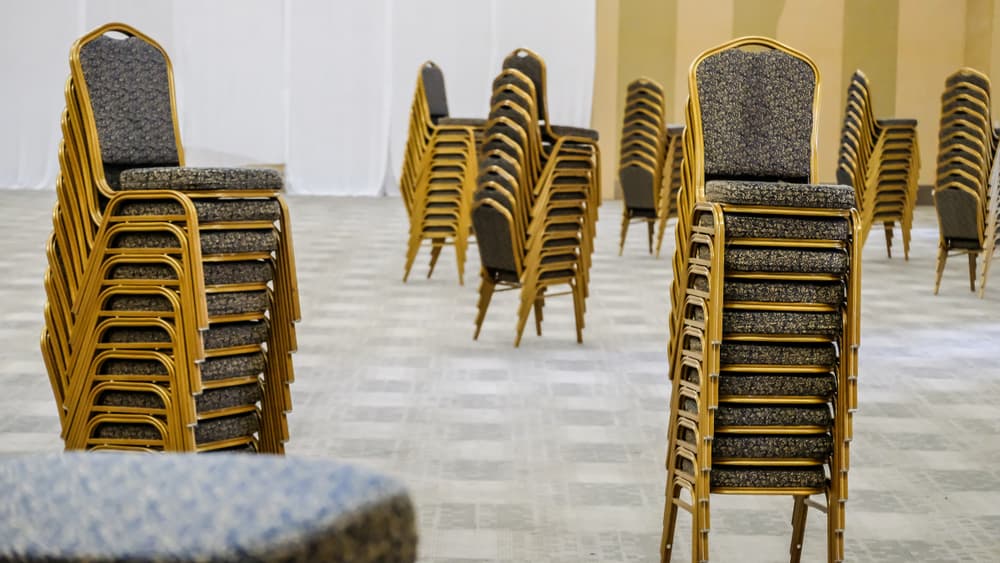
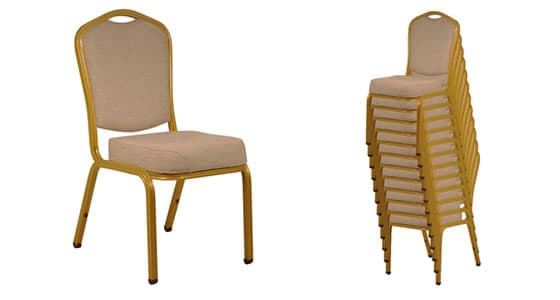
A stacking banquet chair is the difference between a tidy store and a sprawling one. A chair that stacks ten high lets a hundred chairs sit in ten stacks on a few trolleys, taking barely more floor than a handful of chairs set out — perhaps four to six square metres against the fifty or sixty the same chairs cover in a set-up room. The stack height is the single biggest factor in how much room the inventory needs, which is why stackable banquet chairs sit at the heart of efficient storage.
The folded-table footprint
Tables follow the same logic through folding. A folding round table stores on its edge on a table dolly, so ten rounds that cover thirty square metres in use settle into two or three square metres on a single dolly. Rectangular folding tables stack flat on a cart, taking even less. The fold is what makes table storage efficient, so choose folding tables from the start — our folding banquet tables guide covers the frames that fold and store best, and the range sits on our banquet tables page.
Why the stored footprint belongs in the buying decision
Most venues choose chairs and tables on the price and the look, then discover the storage problem after delivery. The stored footprint belongs in the buying decision from the start, because a non-stacking chair or a non-folding table costs the venue storeroom space at every event for its whole life. Two chairs that look identical can need ten times the storage, so ask for the stack height and the folded depth before you order — the furniture that stores tightest often proves the cheapest to own once the rent on its storage is counted.
Calculating your storeroom size
Sizing a store is simple once the furniture stacks and folds. Count your largest event’s chairs and tables, divide the chairs by the stack height to get the number of stacks, and add the dolly footprints for the tables, then allow room to move trolleys in and out. Working from the stored footprint — not the set-up area — keeps the store realistically small, and confirms whether a space can hold the inventory before you commit to it.
Banquet Chair Storage Equipment: Trolleys, Dollies and Racks
Efficient storage is as much about the equipment as the furniture, because a trolley or dolly is what turns a stack into a movable, protected unit. Match the equipment to the furniture, and the whole inventory stores and moves as a system.
Chair trolleys and dollies
A chair trolley is the workhorse of banquet storage. It holds a tall stack of chairs, keeps the frames off the floor and protected, and lets one staff member wheel a whole column in a single trip — for storage and for setup alike. Match the trolley to the chair so the stack sits secure, and buy enough to hold the full inventory. Our banquet chair stacking trolley is built to carry a matched stack safely.
Table dollies and carts
Tables need their own equipment. A table dolly holds folded round tables on edge so they store compactly and roll out without lifting, while a flat cart stacks rectangular tables for the same easy movement. The dolly protects the tops and edges from the knocks that storage otherwise inflicts, and it turns a heavy, awkward table into a wheeled load. Buy the table dollies alongside the tables so the storage system is complete from day one.
Storage racks and choosing the right system
For venues with the height, racking adds another dimension. Sturdy storage racks let trolleys and dollies sit in organised bays, lift lighter items off the floor, and turn a tall store into usable capacity. When choosing a storage system, match it to your chairs and tables, your storeroom shape and your handling routine — a heavy-duty, mobile system suits a busy venue, while a simple set of trolleys suits a smaller one. The right system is the one that fits the furniture and the space you actually have.
How to Store Banquet Chairs and Tables Efficiently
With the right furniture and equipment, efficient banquet chair storage comes down to method. A few habits turn a cluttered store into an organised, fast-moving one that resets a room in minutes.
Stack, fold and organise by type
Organisation starts with grouping. Stack chairs on their trolleys by type and finish, fold tables onto their dollies by size, and keep each group in its own zone so staff find what a setup needs without hunting. A store organised by furniture type loads and unloads far faster than a jumbled one, and it makes the inventory countable at a glance, which matters when an event needs a known number of chairs and tables.
Maximising a small storeroom
Tight stores reward the most discipline. Stack chairs to their full safe height, use the room’s height with racking, keep trolleys in tight rows with just enough aisle to move them, and store tables on edge to take the least floor. A small store works when every item stacks or folds and every centimetre earns its place, so choosing furniture for its stored footprint matters most where space is scarce. The same maximising mindset that fills a room with covers fills a store with inventory.
Labelling, inventory and readiness
A labelled, counted store is a fast store. Mark zones and trolleys with what they hold, keep a simple inventory of chairs and tables by type, and check stock against upcoming events so a setup never finds itself short. A store that staff can read and count turns a frantic search into a quick load, and it flags a shortfall or a damaged batch before it derails an event rather than during it.
Protecting Banquet Furniture in Storage
Storage is not just about fitting furniture in — it is about keeping it event-ready. A few protective habits stop the store from quietly wearing the inventory down between bookings.
Keep it dry and off the floor
Damp and floors are the enemies of stored furniture. Moisture invites rust on metal frames and mould on fabric, while a furniture left directly on a floor takes knocks and damp from below. Storing chairs on trolleys and tables on dollies lifts the inventory off the floor, and a dry, ventilated store keeps rust and mould away — the two simplest habits that add years to a banquet inventory’s life.
Covers and surface protection
Covers earn their keep in storage. Breathable covers over stacked chairs and folded tables keep dust off the upholstery and scratches off the finishes, so furniture comes out clean and ready rather than needing a wipe-down before every event. Choose breathable covers rather than sealed ones, which can trap moisture, and the inventory stays protected without inviting the damp that sealed wrapping causes.
Long-term protection between seasons
Furniture stored for a quiet season needs extra care. For long stretches between events, cover the inventory, check the store stays dry and ventilated, and inspect a sample on a schedule so a developing problem — a damp patch, a rusting frame — gets caught early. A little attention during a quiet period keeps the whole inventory ready for the season ahead, rather than revealing damage on the morning of the first event back.
Lifting furniture off the floor is the cheapest protection there is
The single habit that protects a stored inventory most costs almost nothing: keep everything on trolleys and dollies, off the floor. A floor brings damp from below, traffic from the side and dust from everywhere, and furniture left on it absorbs all three. Wheel the inventory up onto its equipment, and rust, knocks and moisture lose their easiest route in.
Banquet Chair Storage Best Practices and Maintenance
Efficient storage stays efficient only if the team works it well and the equipment is kept up. A few routines protect both the furniture and the system that holds it.
Loading and unloading safely
Most storage damage happens in the handling, so train the team to load and unload with care. Stack chairs squarely so the column stays stable, wheel trolleys rather than dragging furniture, and lift folded tables onto dollies rather than sliding them across a floor. Safe handling protects both the inventory and the staff, and it keeps the stacks and dollies tidy enough to move quickly when a setup calls.
Maintaining racks, trolleys and dollies
The storage equipment needs care too. Check trolley and dolly wheels run freely, tighten any loosening frames, and keep racks clear and sound, so the system that protects the furniture stays reliable. A seized wheel or a wobbling rack slows every move and risks a spill, so a quick check of the equipment on a schedule keeps the whole store working smoothly.
Rotation and keeping stock ready
A little rotation keeps an inventory even. Where a venue has more chairs than a single event needs, rotating which stacks set up spreads the wear so no batch tires faster than the rest, and checking stock against the calendar keeps the right numbers ready. A store that rotates and counts its inventory stays balanced and event-ready, rather than wearing one set hard while another sits untouched.
Buying Storage Solutions
Storage equipment is part of a banquet order, not an afterthought, so plan it alongside the chairs and tables. Buying the system from the same supplier keeps everything matched and working together.
Custom and large-scale storage
Large venues benefit from a planned system. A hotel or events hall storing hundreds of chairs and dozens of tables gains from trolleys, dollies and racks sized and matched to its inventory and its storeroom, and a manufacturer can supply the equipment to suit the furniture exactly. Plan the storage capacity around your largest event plus a margin, so the system holds the whole inventory with room to grow.
Choosing a supplier for furniture and storage
Buying the furniture and the storage together pays off. A supplier that provides the chairs, tables, trolleys and dollies as a matched set ensures the stacks fit the trolleys and the tables fit the dollies, which a mixed-source inventory rarely manages. Ask how the trolleys match the chairs, the dollies match the tables, and what the equipment holds. Our guide to choosing a banquet furniture supplier sets out the questions to ask.
Storage within the wider inventory
Storage is the back half of a banquet inventory, so plan it with the front. Choose stackable chairs and folding tables, match them to trolleys and dollies, and buy the set from one supplier so the whole system works together from event to store and back. Our pillar on how to choose banquet furniture sets storage in the wider picture, and to start a project, our banquet furniture range is the place to begin.
Store a banquet inventory the way you run an event: with a system. Choose chairs and tables that stack and fold, match them to trolleys and dollies, keep everything dry and off the floor, and organise the store by type — and the furniture sets up in minutes, stores in a fraction of the space, and lasts for years of bookings.
Frequently Asked Questions
How much storage space do banquet chairs need?
It depends almost entirely on the stack height. A hundred stacking chairs that cover fifty to sixty square metres set up store in roughly four to six square metres on trolleys when stacked ten high. To size a store, divide your largest event’s chairs by the stack height to get the number of stacks, then allow room to move the trolleys.
How do you store banquet chairs and tables efficiently?
Use stackable chairs and folding tables, then the right equipment: stack chairs on matched trolleys, store folded round tables on edge on a table dolly, and stack rectangular tables flat on a cart. Keep everything off the floor in a dry store, organised by type, covered against dust, and labelled so staff load and unload quickly.
What equipment do you need to store banquet chairs?
The core equipment is a chair trolley or dolly matched to the chairs, a table dolly for folded round tables, and a flat cart for rectangular ones. Venues with height can add storage racks to organise trolleys in bays. The key is matching the equipment to the furniture, so stacks sit secure and roll out for both storage and setup.
How do you store banquet furniture in a small space?
Stack chairs to their full safe height, store tables folded on edge to take the least floor, use the room’s height with racking, and keep trolleys in tight rows with just enough aisle to move them. A small store works when every item stacks or folds, so choose furniture for its stored footprint and organise the room by type so nothing is wasted.
How do you protect banquet chairs in storage?
Keep chairs on trolleys off the floor in a dry, ventilated store, and cover stacks with breathable covers to keep dust off the upholstery and scratches off the frames. Avoid sealed wrapping, which traps moisture. Inspect the inventory on a schedule, especially during long quiet periods, so any damp or rust is caught before an event.
How many banquet chairs fit on a storage trolley?
A matched trolley typically holds a tall stack of chairs across one or two columns — often a few dozen — depending on the chair and trolley design. Buy the trolley with the chairs, sized to the stack, and confirm the figure with the maker for your specific model, so the whole stack sits secure for storage and transport.
How do you store folding banquet tables?
Fold the tables and store round ones on edge on a table dolly, which holds several compactly and rolls them out without lifting. Stack rectangular folding tables flat on a cart. Keep them off the floor in a dry store, protected from knocks, so the tops and edges stay undamaged and the tables come out event-ready.